
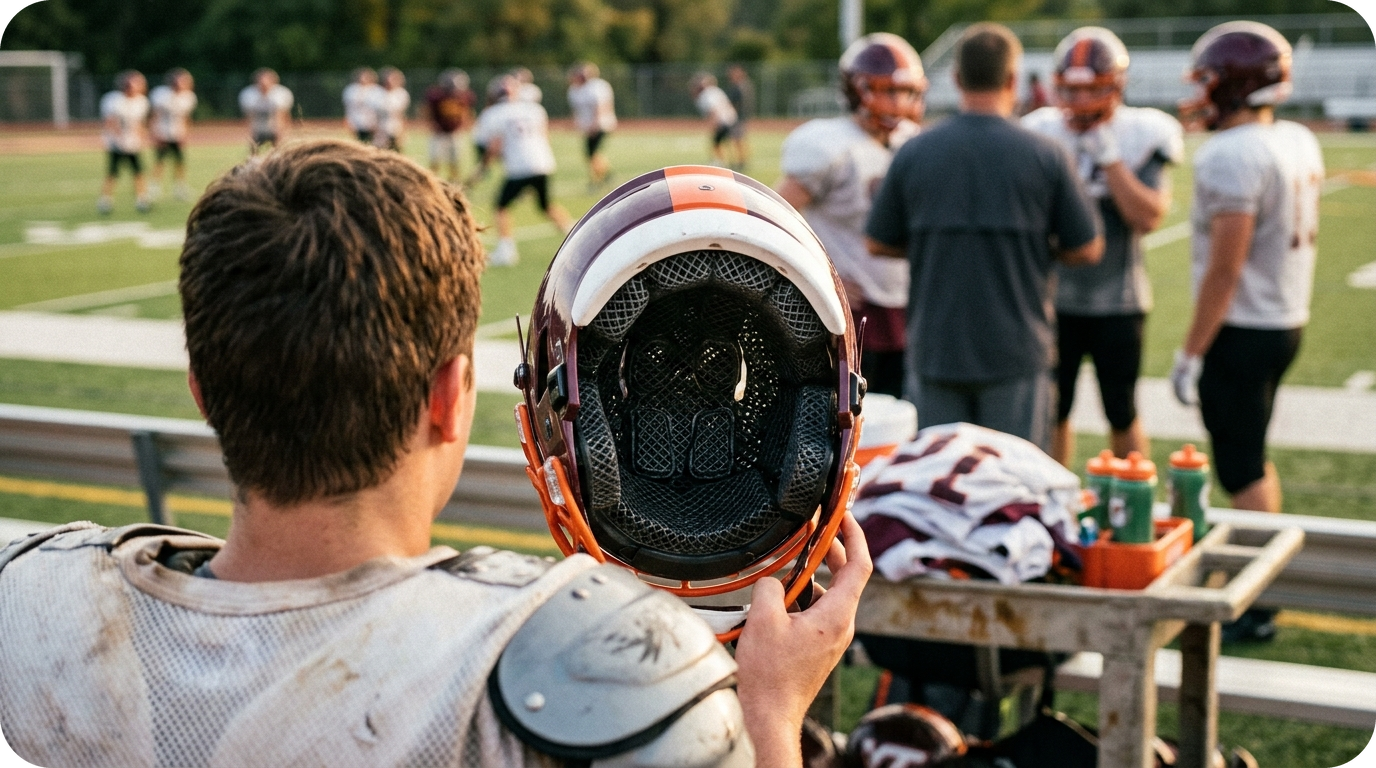
스포츠 보호장비 시장을 보면 최근 흥미로운 변화가 감지됩니다. 오랫동안 헬멧과 패드의 표준 소재로 자리 잡았던 성형 폼(molded foam)이, 컴퓨터로 정밀하게 설계한 3D프린팅 격자(래티스) 구조로 조금씩 대체되고 있습니다. 폼은 재질 특성이 전체적으로 균일해서 "부드러움"과 "충격 흡수"를 부위별로 다르게 배분하기가 어렵습니다. 래티스 구조는 바로 이 한계를 겨냥합니다.
이 흐름을 상업 제품으로 구체화한 사례가 SYZMIK Sports의 X7C+ 보호 헤드밴드입니다. 이 제품은 폼을 3D프린팅 래티스로 교체해 뇌진탕 위험 감소 지표를 77% 개선했다고 밝혔는데, 흥미로운 점은 두께를 늘리지 않고도 이 결과를 얻었다는 것입니다. 여기서 자연스럽게 질문이 떠오릅니다. 래티스(격자) 패딩은 어떻게 충격을 흡수하며, 이를 대량 생산할 수 있는가?
이 질문은 스포츠 장비 하나의 이야기로 끝나지 않습니다. 복잡한 형상을 금형 없이 만들고, 신체나 수량에 맞춰 유연하게 생산해야 하는 제조 과제는 여러 산업에서 반복되기 때문입니다. X7C+ 사례를 제조 관점에서 풀어보겠습니다.
SYZMIK X7C+ : 폼으로는 만들 수 없던 다중존 구조
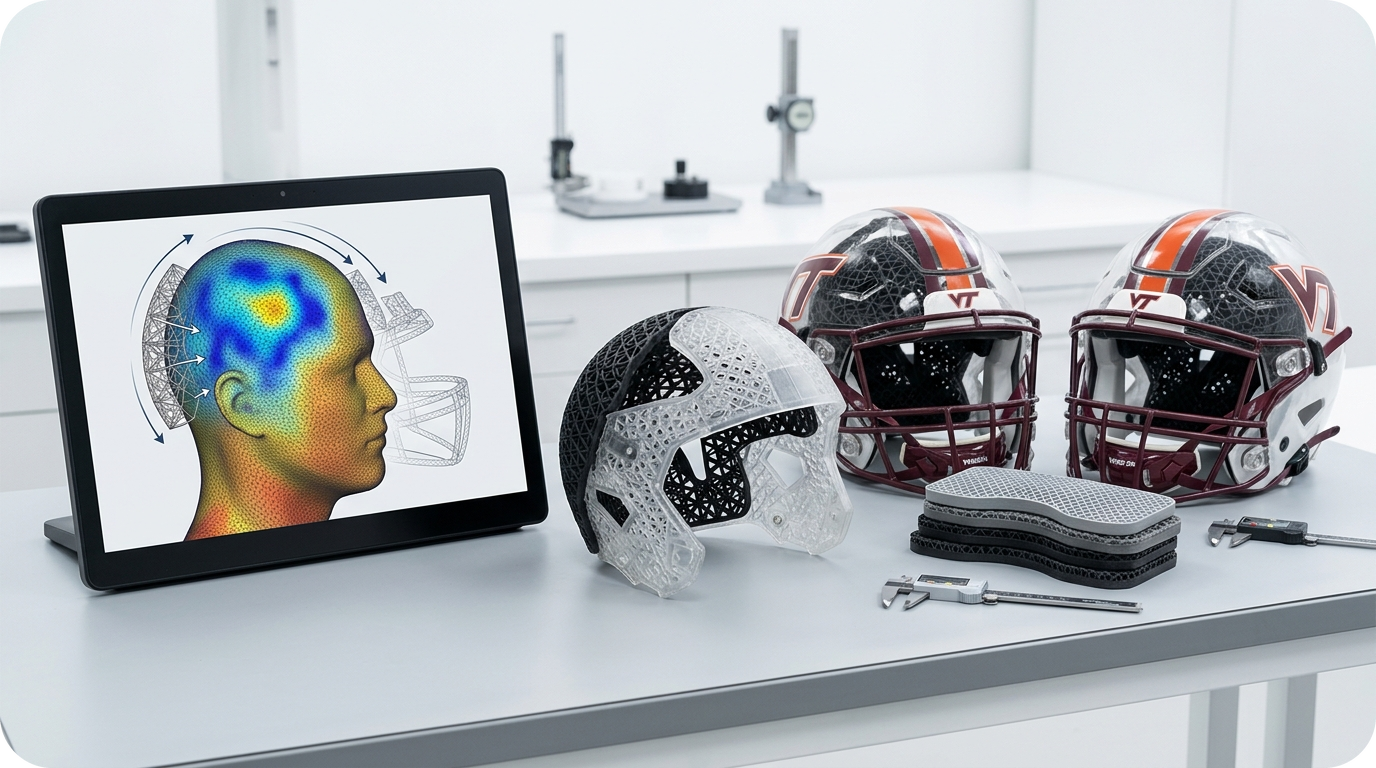
X7C+의 핵심은 MATRIXFRD라는 이름의 3D프린팅 구조 래티스입니다. SYZMIK는 이 패딩을 파트너사인 Carbon의 디지털 광합성(Digital Light Synthesis) 공정으로 제작했고, 소재로는 에너지 흡수에 특화된 변형률 민감(strain-rate sensitive) 엘라스토머인 EPU 45를 사용했습니다. 평소에는 격자가 자연스럽게 휘어 착용감과 통기성을 확보하고, 충격이 가해지면 해당 부위가 국부적으로 단단해지며 에너지를 흡수·분산하는 구조입니다.
문제는 이런 다중존(multi-zonal) 구조가 기존 제조 방식으로는 구현하기 매우 어렵다는 점입니다. 성형 폼은 하나의 재질을 틀에 부어 굳히는 방식이라, 한 부위는 부드럽게 다른 부위는 단단하게 하는 세밀한 성능 배분이 사실상 불가능합니다. SYZMIK가 "폼으로는 달성할 수 없는(not achievable with molded foam)" 구조라고 표현한 이유가 여기에 있습니다.
여기서 두 가지 제조 난점이 드러납니다.
- 금형으로 만들 수 없는 형상: 부위마다 격자 밀도와 강성이 다른 래티스는 사출·성형용 금형으로 뽑아낼 수 있는 형태가 아닙니다. 금형 자체가 균일 충전을 전제로 설계되기 때문입니다.
- 두께를 늘리지 않아야 하는 제약: 보호 성능을 높이려고 패드를 두껍게 만들면 착용 부담이 커집니다. 같은 두께에서 성능을 끌어올리려면 내부 구조를 정밀하게 최적화하는 설계가 필수입니다.
이 두 조건을 동시에 만족시키려면, 형상 자유도가 높고 설계 데이터를 그대로 물성으로 옮길 수 있는 적층제조 방식이 사실상 유일한 통로가 됩니다.
UCLA에서 CCM까지 : 폼을 대체한 래티스의 수렴
X7C+의 접근은 특정 브랜드만의 실험이 아닙니다. 3D Printing Industry의 보도를 보면, 폼을 컴퓨터로 튜닝한 3D프린팅 래티스로 대체하려는 시도는 스포츠 보호장비 전반에서 수년째 축적되어 왔습니다. UCLA 연구진은 2014년 무렵부터 NFL 선수의 뇌진탕과 반복 충격에 따른 장기 뇌 손상을 막기 위한 3D프린팅 마이크로래티스를 연구하기 시작했습니다.
이 초기 연구는 상업 영역으로 이어졌습니다. Carbon과 CCM Hockey는 전통적인 폼 대신 디지털 프린팅 래티스 구조를 적용한, NHL 인증을 받은 세계 최초의 하키 헬멧 라이너를 3D프린팅으로 만들었습니다. 서로 다른 종목의 장비들이 결국 같은 해법으로 수렴하고 있는 셈입니다. 폼이 재현할 수 없는 "형상(geometry)"이 그 공통분모입니다.
이 흐름이 제조 관점에서 던지는 시사점은 분명합니다. 보호 성능의 승부처가 소재의 두께가 아니라 내부 구조 설계로 옮겨가고 있다는 것입니다. 그리고 그 구조는 개별 신체 프로파일과 종목별 요구, 그때그때 다른 생산 수량에 유연하게 대응해야 합니다. 금형을 새로 파는 방식으로는 이 반복적인 조정과 유연한 양산을 감당하기 어렵습니다. 바로 이 대목에서 제조 방식 자체를 다시 볼 필요가 생깁니다.
산업용 SLA로 본 래티스 양산의 조건

앞서 본 래티스 패딩의 제조 과제는 결국 세 가지로 요약됩니다. 금형으로 만들 수 없는 복잡한 격자 형상, 신체·종목별 맞춤 대응, 그리고 유연하게 조절되는 생산 수량입니다. 이런 가능성은 실제 산업 현장에서는 산업용 SLA 3D프린팅을 통해 더욱 정밀하게 구현될 수 있습니다. 바로 이 지점에서 금형 없이 반복 생산하는 방식이 강점을 발휘합니다.
SLA 방식은 디지털 설계 데이터를 그대로 부품으로 옮기기 때문에, 부위별로 밀도가 다른 래티스 구조를 금형 제약 없이 구현할 수 있습니다. 설계를 수정하면 새 금형을 기다릴 필요 없이 곧바로 다시 출력해 검증할 수 있어, 격자 밀도와 존 배치를 반복 조정해야 하는 개발·양산 전환 구간에 잘 맞습니다. GLUCK의 산업용 SLA는 최대 ±0.05mm 정밀도와 Ra 0.8 수준의 표면조도를 구현하며, 후가공 시 사출품과 구별이 어려운 마감으로 외장 커버·하우징 같은 부품까지 최종 부품으로 활용할 수 있습니다.
다만 SLA가 모든 경우의 정답은 아닙니다. 동일 규격을 초대량으로 찍어내는 단순 형상이라면, 개당 단가 측면에서 기존 사출·성형 폼이 여전히 유리할 수 있습니다. SLA가 힘을 발휘하는 구간은 오히려 금형으로 만들기 어려운 복잡 형상, 개별 맞춤이 필요한 다품종, 그리고 초도·브릿지부터 반복 소량~중량으로 이어지는 유연한 양산입니다. GLUCK은 약 45기의 산업용 SLA 장비와 365일 24시간 운용 체계, 연 23만 개 이상의 생산 능력을 기반으로 이 구간의 반복 생산을 지원하고 있습니다.
SYZMIK X7C+가 보여준 것은 소재를 바꾼 이야기가 아니라, 제조 방식이 바뀌면 성능 설계의 폭도 함께 넓어진다는 사실입니다. 폼으로는 두께를 늘려야 했던 성능 개선을, 래티스는 구조 설계로 풀어냈습니다.
물론 이런 전환이 모든 보호장비에 즉시 적용되는 것은 아닙니다. 종목 특성, 인증 요건, 목표 수량에 따라 기존 방식이 더 합리적인 경우도 있습니다. 다만 복잡한 형상과 맞춤 성능을 금형 없이 반복 생산해야 하는 과제 앞에서는, 산업용 SLA가 현실적인 선택지로 검토될 수 있습니다.
GLUCK은 반복 생산이 가능한 산업용 SLA 3D프린팅 인프라를 기반으로
보호장비·기능성 부품 개발과 양산 전환 과정에 필요한 3D프린팅 제조 솔루션을 지원하고 있습니다.
지금 글룩을 확인해보세요!
📩 글룩 홈페이지 & 온라인 견적: https://www.glucklab.com
📂 글룩 포트폴리오: 글룩 포트폴리오 확인하기 (https://glucklab.com/bbs/bbs_list.php?code=portfolio)
References
[1] 3D Printing Industry, "SYZMIK's X7C+ Cuts Concussion Risk 77% With 3D Printed Lattice Padding," 3dprintingindustry.com. Link: https://3dprintingindustry.com/news/syzmiks-x7c-cuts-concussion-risk-77-with-3d-printed-lattice-padding-253942/

77% Lower Concussion Risk: The SYZMIK Headband That Replaced Foam and the Production Puzzle It Left Behind
A notable change is emerging in the sports protective gear market. Molded foam, long the standard material for helmets and pads, is gradually being replaced by computationally designed 3D printed lattice structures. Foam has uniform material properties, making it difficult to vary "softness" and "impact absorption" by zone. Lattice structures target exactly this limitation.
A case that turns this trend into a commercial product is SYZMIK Sports' X7C+ Protective Headband. The product replaced foam with a 3D printed lattice and reported a 77% improvement in concussion risk reduction—and notably achieved this without adding thickness. This naturally raises a question: how exactly does lattice padding absorb impact, and can such a complex structure actually be mass-produced?
This question extends well beyond a single piece of sports equipment. The manufacturing challenge of making complex shapes without molds and producing them flexibly to fit bodies or quantities recurs across many industries. Let's examine the X7C+ case from a manufacturing perspective.
SYZMIK X7C+: A Multi-Zonal Structure Foam Couldn't Make
At the core of the X7C+ is a 3D printed structural lattice named MATRIXFRD. SYZMIK produced this padding using Carbon's Digital Light Synthesis process in partnership, using EPU 45—a strain-rate sensitive elastomer engineered for energy absorption. In normal use the lattice flexes naturally for comfort and breathability, but under impact the relevant zone stiffens locally to absorb and disperse energy.
The problem is that such a multi-zonal structure is very hard to achieve with conventional methods. Molded foam pours a single material into a mold and cures it, making it virtually impossible to finely distribute performance—soft in one area, stiff in another. This is why SYZMIK describes it as a structure "not achievable with molded foam."
Two manufacturing difficulties emerge here.
- A shape molds can't make: A lattice with varying grid density and stiffness per zone is not a form that can be pulled from an injection or molding tool, since molds themselves are designed around uniform fill.
- The constraint of not adding thickness: Making a pad thicker to boost protection increases wearing burden. Raising performance at the same thickness requires precise optimization of the internal structure.
To satisfy both conditions simultaneously, an additive manufacturing method with high geometric freedom—one that translates design data directly into physical properties—becomes practically the only path.
From UCLA to CCM: The Convergence of Lattices Replacing Foam
The X7C+ approach is not one brand's isolated experiment. According to 3D Printing Industry, efforts to replace foam with computationally tuned 3D printed lattices have been accumulating across sports protection for years. UCLA researchers began studying 3D printed microlattices around 2014 to protect NFL players from concussions and long-term brain trauma caused by repeated head impacts.
That early work led into commercial efforts. Carbon and CCM Hockey went on to 3D print the world's first NHL-certified hockey helmet liner, built around a digitally printed lattice structure in place of traditional foam. Equipment from different sports is converging on the same solution—the common denominator being "geometry" that foam cannot replicate.
The implication for manufacturing is clear: the battleground for protective performance is shifting from material thickness to internal structural design. And that structure must flexibly respond to individual body profiles, sport-specific requirements, and varying production quantities. Cutting a new mold each time can't handle this repeated tuning and flexible production. This is precisely where it becomes necessary to reconsider the manufacturing method itself.
The Conditions for Lattice Production, Seen Through Industrial SLA
The manufacturing challenges of the lattice padding above come down to three points: complex grid shapes molds can't make, customized response by body and sport, and flexibly adjusted production quantities. Such possibilities can be realized even more precisely in real industrial settings through industrial SLA 3D printing. This is exactly where mold-free repeat production shows its strength.
SLA translates digital design data directly into parts, so it can implement lattice structures with varying density by zone without mold constraints. When a design is revised, you can reprint and verify immediately without waiting for a new mold—well suited to development and production-transition phases requiring repeated tuning of lattice density and zoning. GLUCK's industrial SLA achieves up to ±0.05mm precision and Ra 0.8 surface roughness, with finishing hard to distinguish from injection-molded parts, enabling exterior covers and housings to be used as end-use parts.
That said, SLA is not the answer in every case. For simple shapes churned out in high volume at a single spec, conventional injection or molded foam may still be more favorable on unit cost. Where SLA excels is instead complex shapes hard to make with molds, high-variety parts requiring individual customization, and flexible production spanning early and bridge runs into repeated low-to-mid volume. GLUCK supports repeat production in this segment with around 45 industrial SLA machines, a 365-day 24-hour operation, and a production capacity of over 230,000 units per year.
What the SYZMIK X7C+ shows is not a story of changing materials, but the fact that when the manufacturing method changes, the range of performance design widens too. What foam had to solve by adding thickness, the lattice solved through structural design.
Of course, this shift doesn't apply instantly to every piece of protective gear. Depending on sport characteristics, certification requirements, and target quantities, conventional methods can be more sensible. Still, when the task is to repeatedly produce complex shapes and customized performance without molds, industrial SLA can be reviewed as a realistic option.
GLUCK supports the 3D printing manufacturing solutions needed for protective gear and functional part development and production transition, based on an industrial SLA 3D printing infrastructure capable of repeat production.
Check out GLUCK now!
📩 GLUCK Website & Online Quote: https://www.glucklab.com
📂 GLUCK Portfolio: View GLUCK Portfolio (https://glucklab.com/bbs/bbs_list.php?code=portfolio)
References
[1] 3D Printing Industry, "SYZMIK's X7C+ Cuts Concussion Risk 77% With 3D Printed Lattice Padding," 3dprintingindustry.com. Link: https://3dprintingindustry.com/news/syzmiks-x7c-cuts-concussion-risk-77-with-3d-printed-lattice-padding-253942/
#글룩 #GLUCK #3D프린팅 #산업용3D프린팅 #SLA3D프린팅 #래티스구조 #DfAM #보호장비 #금형없는양산 #반복생산 #3DPrinting #IndustrialSLA #LatticeStructure #AdditiveManufacturing #ProtectiveGear #MoldFreeProduction #SportsEquipment
원문 기사 이미지 출처
- [본문] SYZMIK’s X7C+ Debuts MATRIXFRD. Photo via SYZMIK Sports — 출처: 3dprintingindustry.com — https://3dprintingindustry.com/news/syzmiks-x7c-cuts-concussion-risk-77-with-3d-printed-lattice-padding-253942/?utm_source=rss&utm_medium=rss&utm_campaign=syzmiks-x7c-cuts-concussion-risk-77-with-3d-printed-lattice-padding
'인사이트 (Insights)' 카테고리의 다른 글
| 시속 320km 고속열차 앞부분을 금형 없이 만든 철도 회사 (0) | 2026.08.31 |
|---|---|
| 손에 딱 맞는다는 것 : 인간공학이 지그·핸들·그립 양산을 바꾸는 방식 (0) | 2026.08.31 |
| 오픈소스 휴머노이드 : 로봇 부품을 금형 없이 양산한다는 것 (0) | 2026.08.31 |
| 3D프린팅으로 배포된, 영화 '프로젝트 헤일메리' 외계인 로키! (3) | 2026.04.30 |
| 34g 초소형 비행 로봇 벌, 3D프린팅으로 제작한 드론 수십 마리 (1) | 2026.04.08 |