
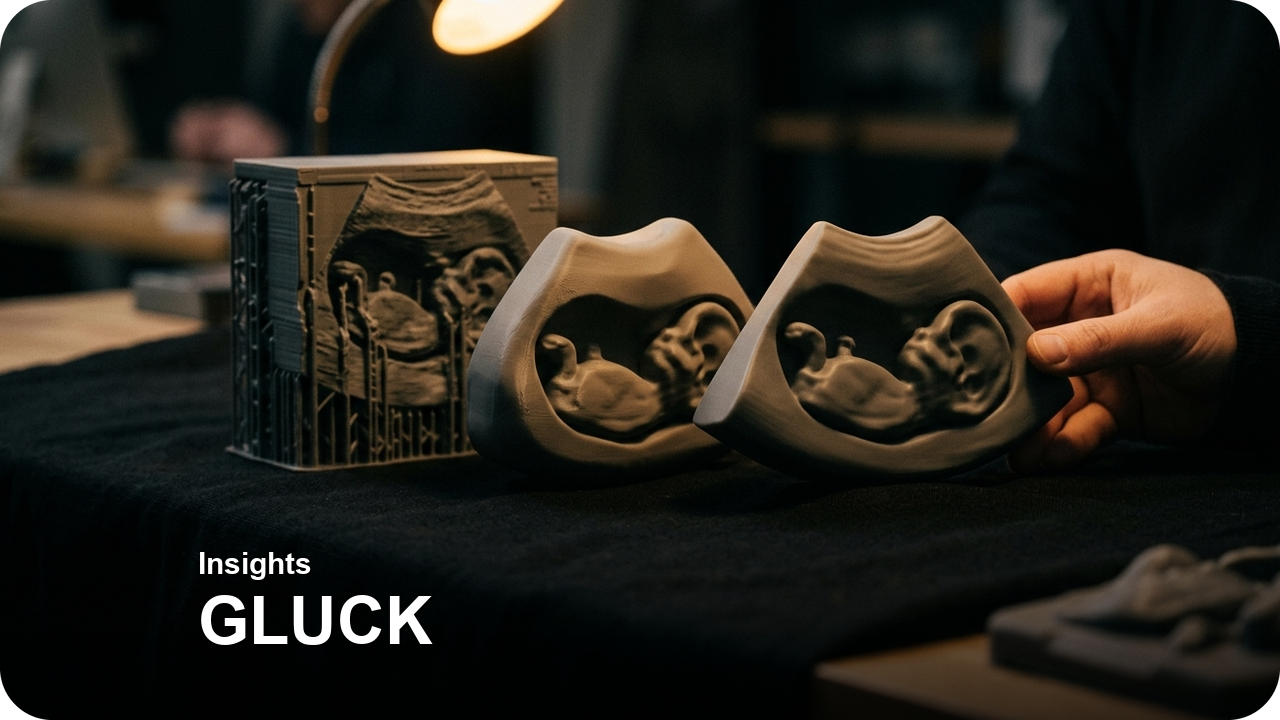
임신 20주 초음파 사진은 많은 부모에게 아이와의 첫 만남입니다. 그런데 그 화면을 볼 수 없는 사람에게는 이 순간이 온전히 전해지지 않습니다. 영국의 시각장애인 지원 단체가 진행한 한 조사에서, 시각장애가 있는 성인 2,000명 중 54%가 일반 임신 초음파 검사가 더 포용적이어야 한다고 답했습니다. 그리고 64%에 가까운 응답자가 초음파를 직접 손으로 만질 수 있다면 이 순간에 더 함께한다고 느낄 것이라고 했습니다.
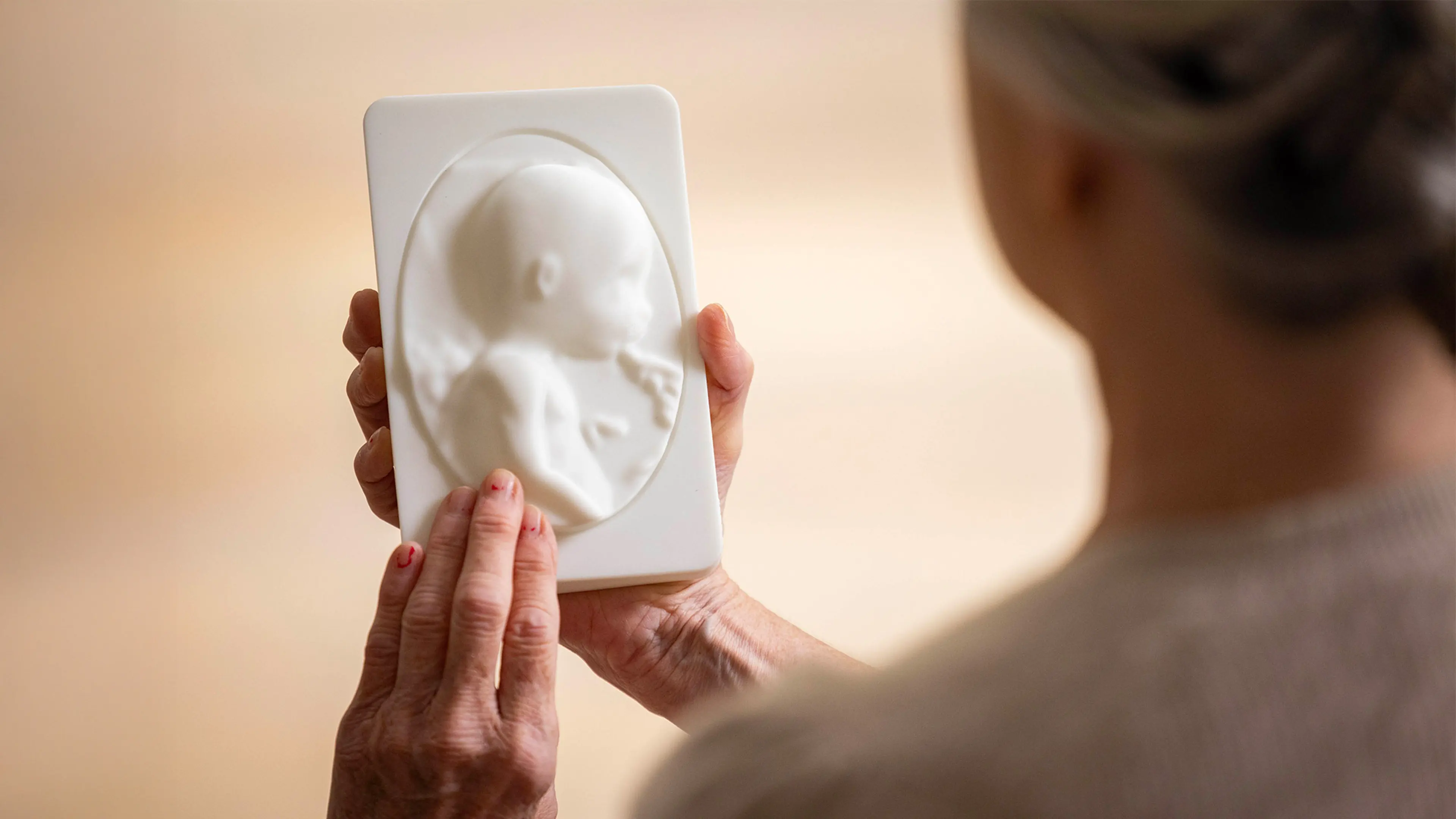
이 조사에서 출발한 'First Hello' 프로젝트는 20주 초음파 데이터를 3D프린팅으로 옮겨, 눈으로 볼 수 없는 부모가 아이의 윤곽을 손끝으로 만질 수 있게 했습니다. 촉각 초음파를 처음 받은 한 예비 아빠는 "촉각 스캔을 처음 손에 쥐었을 때는 정말 놀라운 경험이었다"며, 이 프로젝트가 자신에게 그 특별한 순간을 되돌려주었다고 말했습니다. 화면 속 데이터가 손으로 만질 수 있는 실물이 된 것입니다.
그런데 이 프로젝트를 제조 관점에서 보면 흥미로운 질문이 떠오릅니다. 개인마다 완전히 다른 초음파 데이터를 하나씩 촉각 실물로 만드는 맞춤 제작은 대체 어떻게 반복적으로 가능할까요? 모든 결과물이 서로 다른 이 생산 방식이 왜 기존 제조로는 어려운지, 제조 관점에서 짚어보겠습니다.
First Hello : 데이터 하나가 실물 하나가 되는 제작 흐름
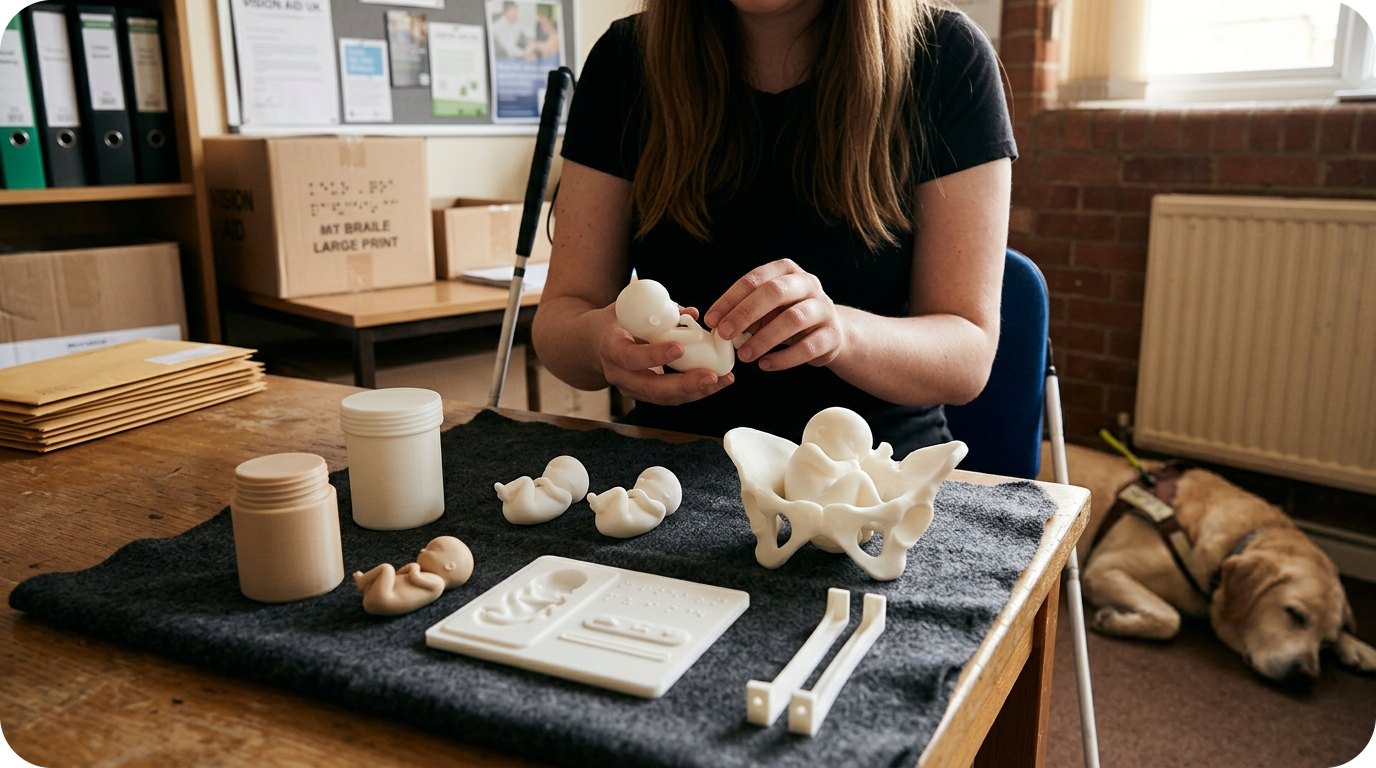
First Hello 서비스의 제작 흐름은 단순해 보이지만, 제조 관점에서는 중요한 특징이 있습니다. 부모가 표준 20주 2D 초음파 스캔 이미지(JPG 또는 PNG, 10MB 이하)를 업로드하면, 이 이미지가 렌더로 변환되고, 3D프린팅으로 출력되어 배송됩니다. 서비스는 무료이며, 제작에서 배송까지 약 일주일이 걸립니다.
여기서 핵심은 업로드되는 모든 초음파가 서로 다르다는 점입니다. 태아의 자세, 얼굴 윤곽, 촬영 각도가 매번 다르기 때문에, 두 개의 동일한 결과물이 존재하지 않습니다. 이 초기 파일럿은 50개의 촉각 초음파만 제공하는 소규모 시범 사업이지만, 그 안에 담긴 제조 원리는 규모가 커져도 그대로 이어집니다.
기존 대량 생산 방식으로 이런 오브제를 만든다고 가정하면 바로 벽에 부딪힙니다. 금형(사출용 틀)은 하나의 고정된 형상을 수천, 수만 번 반복해 찍어내는 데 최적화된 방식입니다. 형상이 매번 달라지는 제품에는 근본적으로 맞지 않습니다.
- 형상마다 새 금형: 초음파가 하나씩 다르면, 논리적으로는 결과물마다 금형을 새로 만들어야 합니다. 금형 하나에 수천만 원대 비용과 수 주의 제작 기간이 드는 것을 고려하면, 개별 맞춤 오브제에는 성립하지 않는 구조입니다.
- 소량·개별화의 한계: 최소 주문 수량(MOQ)을 채워야 단가가 맞는 금형 방식은, 단 한 명을 위한 한 개짜리 제작과는 애초에 경제 논리가 다릅니다.
이 방식은 초음파에만 국한되지 않습니다. 개인 데이터를 실물로 옮기는 모든 제작 — 개인 신체 스캔 기반 보조기구, 촉각 학습 교구, 맞춤 기념 오브제 — 에 똑같이 적용되는 제조 과제입니다.
완전 개별화 오브제 : 왜 금형으로는 만들 수 없을까요?
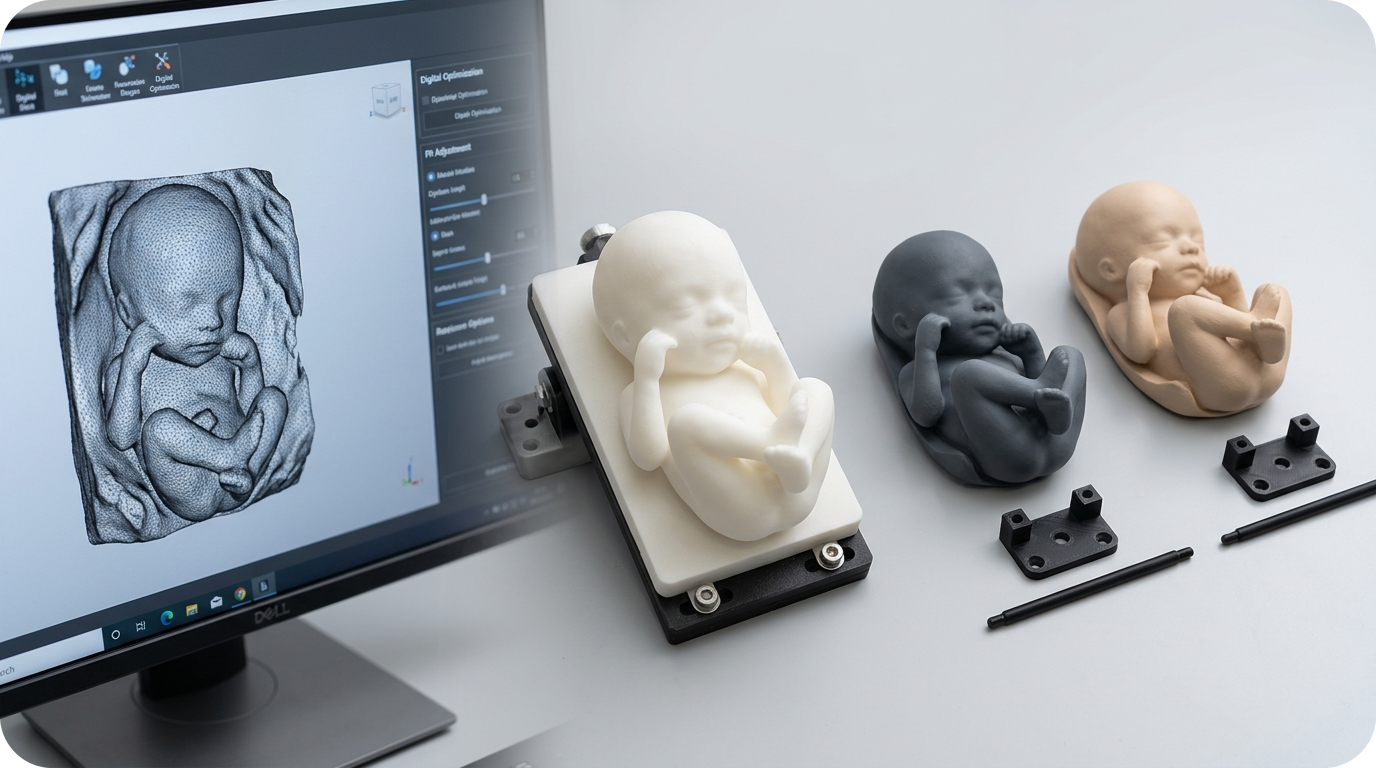
제조에서 '양산'이라고 하면 보통 똑같은 물건을 대량으로 찍어내는 것을 떠올립니다. 하지만 First Hello 같은 프로젝트가 요구하는 것은 정반대입니다. 매번 다른 형상을, 그러나 동일한 품질로, 반복적으로 만들어내는 능력입니다. 이것을 제조 용어로 매스 커스터마이제이션(Mass Customization, 대량 맞춤 생산)이라고 부릅니다.
금형 기반 제조는 이 지점에서 구조적 한계를 드러냅니다. 금형은 '형상 고정'이 전제입니다. 한 번 만든 틀은 그 형상만 찍을 수 있고, 형상을 바꾸려면 틀을 새로 파야 합니다. 반면 개인 데이터 기반 오브제는 데이터가 곧 형상이고, 그 데이터가 매번 다릅니다. 고정된 틀과 변하는 데이터라는 두 원리가 정면으로 충돌합니다.
CNC 절삭 가공을 떠올릴 수도 있습니다. 다만 초음파의 유기적인 곡면과 미세한 요철을 하나씩 깎아내는 것은 형상 제약이 크고, 개별 파일마다 가공 경로를 다시 짜야 해 소량 개별화에는 비효율적입니다.
결국 이런 완전 개별화 제작이 성립하려면, 금형이나 고정된 가공 세팅 없이 디지털 데이터를 그대로 형상으로 변환해 하나씩 만들어내는 방식이 필요합니다. 데이터가 바뀌어도 추가 도구 비용 없이 다음 결과물을 만들 수 있어야, 비로소 한 명을 위한 한 개짜리 생산이 반복 가능한 서비스가 됩니다.
데이터를 실물로 : 산업용 SLA 3D프린팅의 자리
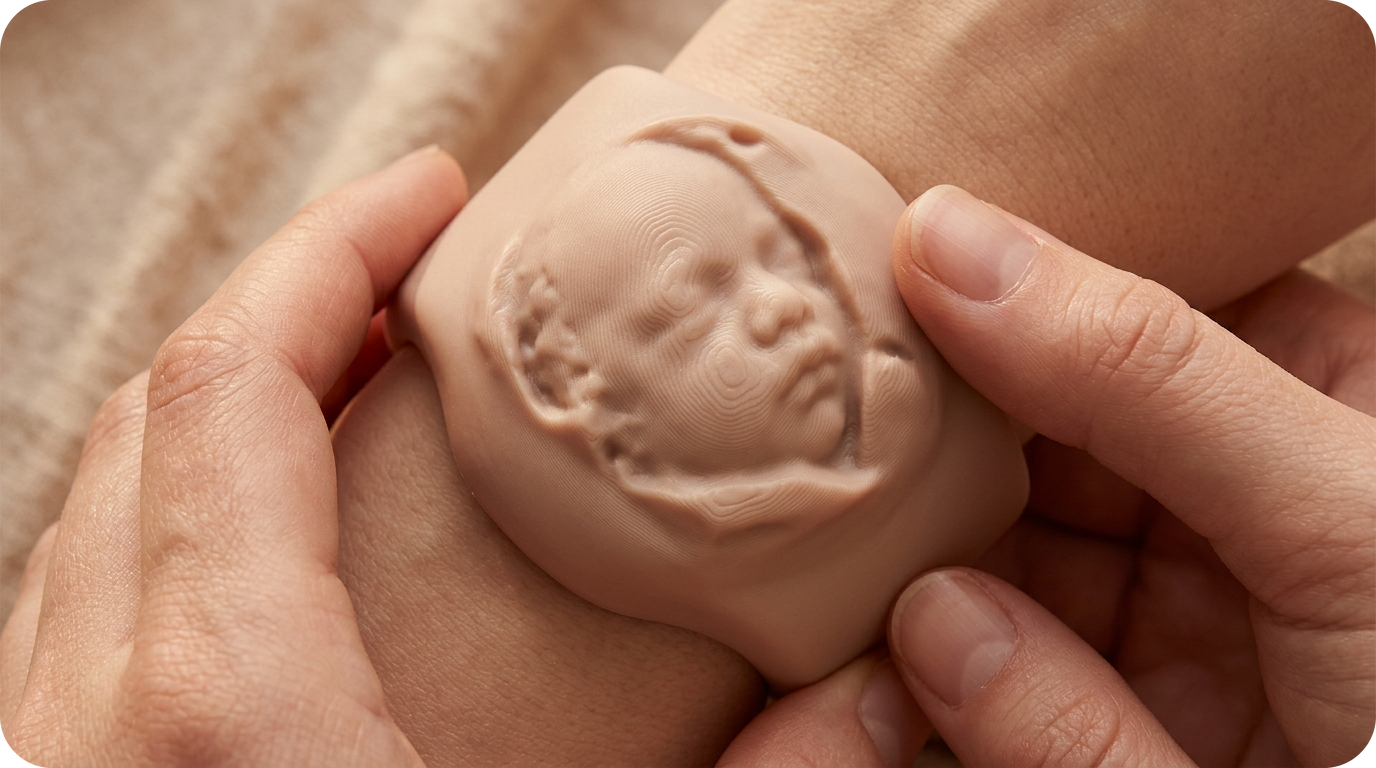
이런 개별 맞춤 제작은 산업 현장에서는 산업용 SLA 3D프린팅을 통해 더 정밀하게 구현됩니다. SLA는 디지털 설계 데이터를 그대로 형상으로 변환하는 방식이라, 금형이 필요 없습니다. 데이터만 교체하면 서로 다른 형상을 연달아 출력할 수 있어, 결과물이 매번 다른 개별화 생산에 구조적으로 적합합니다.
특히 초음파 모델처럼 손끝으로 윤곽을 읽는 촉각 오브제는 표면 품질이 곧 제품의 가치입니다. GLUCK의 산업용 SLA는 300mm 기준 최대 ±0.05mm의 정밀도와 Ra 0.8 수준의 매끄러운 표면을 구현하며, 후가공 시 사출품과 구별이 어려운 마감을 만들어냅니다. 미세한 곡면과 요철을 정밀하게 재현해야 하는 촉각 제작에 부합하는 특성입니다.
무엇보다 중요한 것은 이 방식이 일회성 제작에 그치지 않는다는 점입니다. GLUCK은 45기의 산업용 SLA 장비를 365일 24시간 운용하며 연간 23만 개 이상의 부품을 생산합니다. 서로 다른 형상을 하나씩, 그러나 반복적으로 만들어내는 이 규모감이야말로, 50개의 파일럿이 향후 수천·수만 개의 개별 오브제 서비스로 확장될 때 필요한 제조 기반입니다. 개별 맞춤을 진입점으로 삼아 중·대량 반복 양산으로 이어지는 구간에서 SLA의 강점이 뚜렷합니다.
다만 SLA가 모든 경우에 정답인 것은 아닙니다. 형상이 하나로 고정되고 동일 제품을 수만 개 이상 찍어내는 초대량 단순 생산이라면 사출 성형이 단가에서 유리하고, 고하중을 견뎌야 하는 금속 구조 부품은 금속 가공이 맞습니다. SLA는 형상이 매번 다르거나, 복잡한 형상을 금형 없이 반복 생산해야 하는 조건에서 현실적인 선택지가 됩니다.
초음파 데이터를 손으로 만질 수 있는 실물로 옮긴 이 프로젝트는, 개인 데이터를 실물로 변환하는 맞춤 제조가 기술적으로 충분히 가능한 시대가 되었음을 보여줍니다. 데이터가 곧 형상이 되는 이 흐름 속에서, 금형 없이 서로 다른 형상을 정밀하게 반복 생산하는 능력은 점점 더 많은 제조 현장에서 필요해지고 있습니다.
핵심은 '똑같이 많이'가 아니라 '저마다 다르게, 그러나 안정적으로'입니다. 개인화된 오브제와 데이터 기반 제품을 실제로 양산 가능한 서비스로 전환하고자 하는 제조사에게, 산업용 SLA 3D프린팅은 현실적인 선택지가 됩니다.
GLUCK은 반복 생산이 가능한 산업용 SLA 3D프린팅 인프라를 기반으로
개인 맞춤 오브제·데이터 기반 제품 개발과 양산 전환 과정에 필요한 3D프린팅 제조 솔루션을 지원하고 있습니다.
지금 글룩을 확인해보세요!
📩 글룩 홈페이지 & 온라인 견적: https://www.glucklab.com
📂 글룩 포트폴리오: 글룩 포트폴리오 확인하기
References
[1] 3DPrint.com, "UK Sight Loss Charity 3D Printing Ultrasounds for Visually Impaired Parents-to-Be," 3DPrint.com. Link: https://3dprint.com/332478/uk-charity-3d-prints-ultrasounds-for-visually-impaired-parents/
English Version
Touching an Ultrasound: Moving Personal Data into Physical Objects Through Custom Manufacturing
For many parents, the 20-week pregnancy ultrasound is their first encounter with their child. Yet for those who cannot see the screen, this moment is not fully conveyed. In one survey by a UK sight loss charity, 54% of 2,000 adults with visual impairment said standard pregnancy scans should be more inclusive. And nearly 64% said they would feel more included in this milestone if they could physically feel the sonogram.
The 'First Hello' project, born from this survey, moved 20-week ultrasound data into 3D printing so that parents who cannot see could feel the contours of their baby with their fingertips. One expectant father who received a tactile ultrasound said, "Holding the tactile scan for the very first time was an incredible experience," noting the project gave that special moment back to him. Data on a screen became something you can physically touch.
But viewed from a manufacturing perspective, an intriguing question arises. How can custom production of tactile physical objects — one at a time, from ultrasound data that differs for every person — be made repeatable? Let us examine, from a manufacturing standpoint, why this production method, where every result differs, is difficult with conventional manufacturing.
First Hello: When One Piece of Data Becomes One Physical Object
The First Hello service's production flow looks simple, but has an important manufacturing characteristic. When parents upload their standard 20-week 2D ultrasound scan image (JPG or PNG, 10MB or less), the image is converted into a render, 3D printed, and shipped. The service is free, and takes about one week from production to delivery.
The key here is that every uploaded ultrasound differs. Because the baby's posture, facial contours, and imaging angle differ each time, no two identical results exist. This initial pilot is a small-scale trial making only 50 tactile ultrasounds available, but the manufacturing principle within it carries over as scale grows.
Assume you tried to make such objects with conventional mass production — you immediately hit a wall. A mold (an injection template) is optimized for repeatedly stamping one fixed shape thousands or tens of thousands of times. It fundamentally does not fit products whose shape changes each time.
- A new mold per shape: If each ultrasound differs, logically you would need a new mold per result. Given each mold costs tens of thousands of dollars and takes weeks to make, this structure simply does not hold for individualized custom objects.
- Limits of small-batch individualization: Mold-based methods, which require meeting a minimum order quantity (MOQ) to make unit costs work, follow entirely different economics from making a single piece for a single person.
This is not limited to ultrasounds. The same manufacturing challenge applies to all production that moves personal data into physical form — personal body-scan-based aids, tactile learning tools, custom memorial objects.
Fully Individualized Objects: Why Can't Molds Make Them?
In manufacturing, "mass production" usually conjures stamping out identical items in bulk. But what projects like First Hello require is the opposite. It is the ability to make a different shape each time, yet at consistent quality, repeatedly. In manufacturing terms, this is called Mass Customization.
Mold-based manufacturing reveals its structural limit here. Molds presume "fixed shape." A template once made can only stamp that one shape; to change it, you must cut a new one. Meanwhile, personal-data-based objects treat data itself as form, and that data differs every time. The two principles — a fixed template and changing data — collide head-on.
You might think of CNC machining. However, carving out the organic curves and fine textures of an ultrasound one by one carries heavy shape constraints, and re-planning the tool path for each individual file is inefficient for small-batch individualization.
Ultimately, for such fully individualized production to work, you need a method that converts digital data directly into form and makes each one, without molds or fixed machining setups. Only when the next result can be made without additional tooling cost even as data changes does one-piece-per-person production become a repeatable service.
From Data to Object: Where Industrial SLA 3D Printing Fits
Such custom production is realized more precisely in industry through industrial SLA 3D printing. SLA converts digital design data directly into form, so no mold is needed. Simply swapping data lets you print different shapes in succession, making it structurally suited to individualized production where results differ each time.
In particular, for tactile objects like ultrasound models — where contours are read by fingertip — surface quality is the product's value itself. GLUCK's industrial SLA achieves up to ±0.05mm precision (per 300mm) and Ra 0.8-level smooth surfaces, producing finishes hard to distinguish from injection-molded parts after post-processing. These traits match tactile production that must precisely reproduce fine curves and textures.
Most importantly, this method does not stop at one-off production. GLUCK operates 45 industrial SLA machines 24/7/365, producing over 230,000 parts annually. This scale of making different shapes one at a time, yet repeatedly, is precisely the manufacturing foundation needed when a 50-unit pilot expands into a service of thousands or tens of thousands of individual objects. SLA's strength is clear in the segment where custom fitting serves as an entry point leading into mid-to-high-volume repeat production.
That said, SLA is not the answer in every case. For high-volume simple production stamping out tens of thousands of identical products with one fixed shape, injection molding is cheaper per unit; for metal structural parts that must bear heavy loads, metal machining fits. SLA becomes a realistic option under conditions where the shape differs each time, or where complex shapes must be repeat-produced without molds.
This project, which moved ultrasound data into physical objects you can touch, shows we have entered an era where custom manufacturing converting personal data into physical form is technically feasible. Amid this flow where data becomes form, the ability to precisely repeat-produce different shapes without molds is increasingly needed across more manufacturing sites.
The point is not "many identical" but "each different, yet stable." For manufacturers seeking to turn personalized objects and data-driven products into genuinely producible services, industrial SLA 3D printing becomes a realistic option.
GLUCK supports the 3D printing manufacturing solutions needed for developing and transitioning to production of personalized objects and data-driven products, based on industrial SLA 3D printing infrastructure capable of repeat production.
Check out GLUCK now!
📩 GLUCK Website & Online Quote: https://www.glucklab.com
📂 GLUCK Portfolio: View the GLUCK Portfolio
References
[1] 3DPrint.com, "UK Sight Loss Charity 3D Printing Ultrasounds for Visually Impaired Parents-to-Be," 3DPrint.com. Link: https://3dprint.com/332478/uk-charity-3d-prints-ultrasounds-for-visually-impaired-parents/
#글룩 #GLUCK #3D프린팅 #산업용3D프린팅 #SLA3D프린팅 #맞춤제조 #매스커스터마이제이션 #개인맞춤오브제 #데이터기반양산 #촉각오브제 #금형없는생산 #3DPrinting #IndustrialSLA #MassCustomization #TactileObject #SLA3DPrinting #AdditiveManufacturing #CustomManufacturing #DataDrivenProduction
'인사이트 (Insights)' 카테고리의 다른 글
| 난초 한 송이를 위한 AI 로봇, 감성 오브제가 된 로봇의 외장은 어떻게 만들까 (0) | 2026.09.15 |
|---|---|
| 접착제 없이 조립되는 스니커즈 : 3D프린팅 밑창과 전통 갖신의 결합 (0) | 2026.09.14 |
| 애플이 새 아이폰 힌지 커버를 금형 없이 찍어낸 이유 (0) | 2026.09.11 |
| ICON은 하나의 건설 시스템으로 전혀 다른 집을 찍어낸다 : '같은 공정, 다른 결과물'의 원리 (0) | 2026.09.11 |
| 수술실의 진짜 비용 : 의료 3D프린팅이 '시제품'을 넘어 양산으로 가야 하는 이유 (0) | 2026.09.08 |