
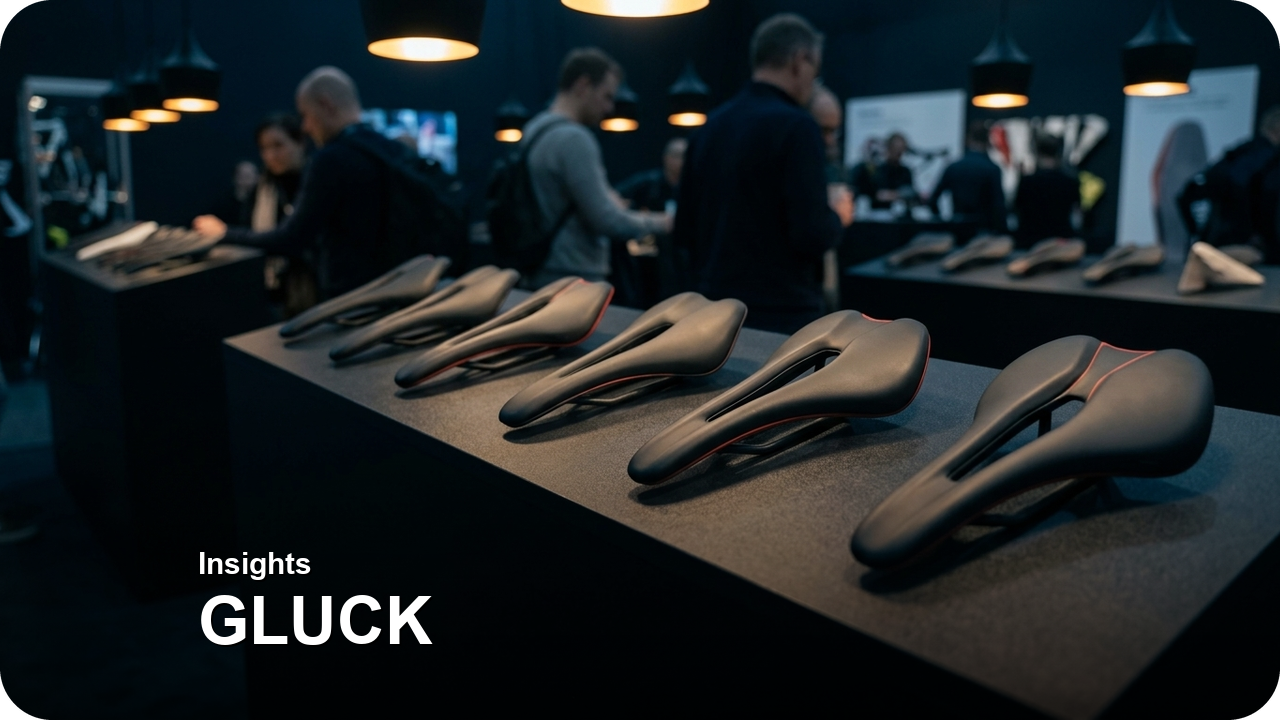
자전거 선수들 사이에서 오래전부터 나온 이야기가 있습니다. "안장은 결국 자기 몸에 맞는 걸 찾아야 한다"는 말입니다. 앉는 자세, 골반 너비, 체중 분포가 사람마다 다르니 같은 안장이라도 누군가에겐 명품이고 누군가에겐 고통입니다. 그런데 최근 이 문제를 '더 좋은 표준 안장'이 아니라 '아예 사람마다 다른 안장'으로 풀려는 흐름이 나타나고 있습니다.
이탈리아의 안장 브랜드 셀레 이탈리아(Selle Italia)가 최근 선보인 신제품이 그런 사례입니다. 선수 개개인의 착좌 압력 데이터를 측정하고, 그 데이터에 맞춰 형상을 바꾼 안장을 3D프린팅으로 제작한다는 것입니다. 표준 사이즈 몇 종을 고르는 방식이 아니라, 압력 분포라는 개인 데이터가 곧 제품의 형상이 되는 방식입니다.
여기서 제조 관점의 질문이 자연스럽게 생깁니다. 개인 데이터 기반 맞춤 제품을 어떻게 양산 규모로 만들 수 있을까요? 하나씩 손으로 깎는 커스텀은 이해가 되지만, 그것을 여러 명분·반복적으로 만들어내는 건 전혀 다른 이야기이기 때문입니다. 이 글에서는 셀레 이탈리아의 사례를 '개별 맞춤 양산(Mass Customization)'의 대표 장면으로 보고, 그 안에 숨은 제조 숙제를 짚어보겠습니다.
셀레 이탈리아 : 압력 데이터가 곧 형상이 되는 안장
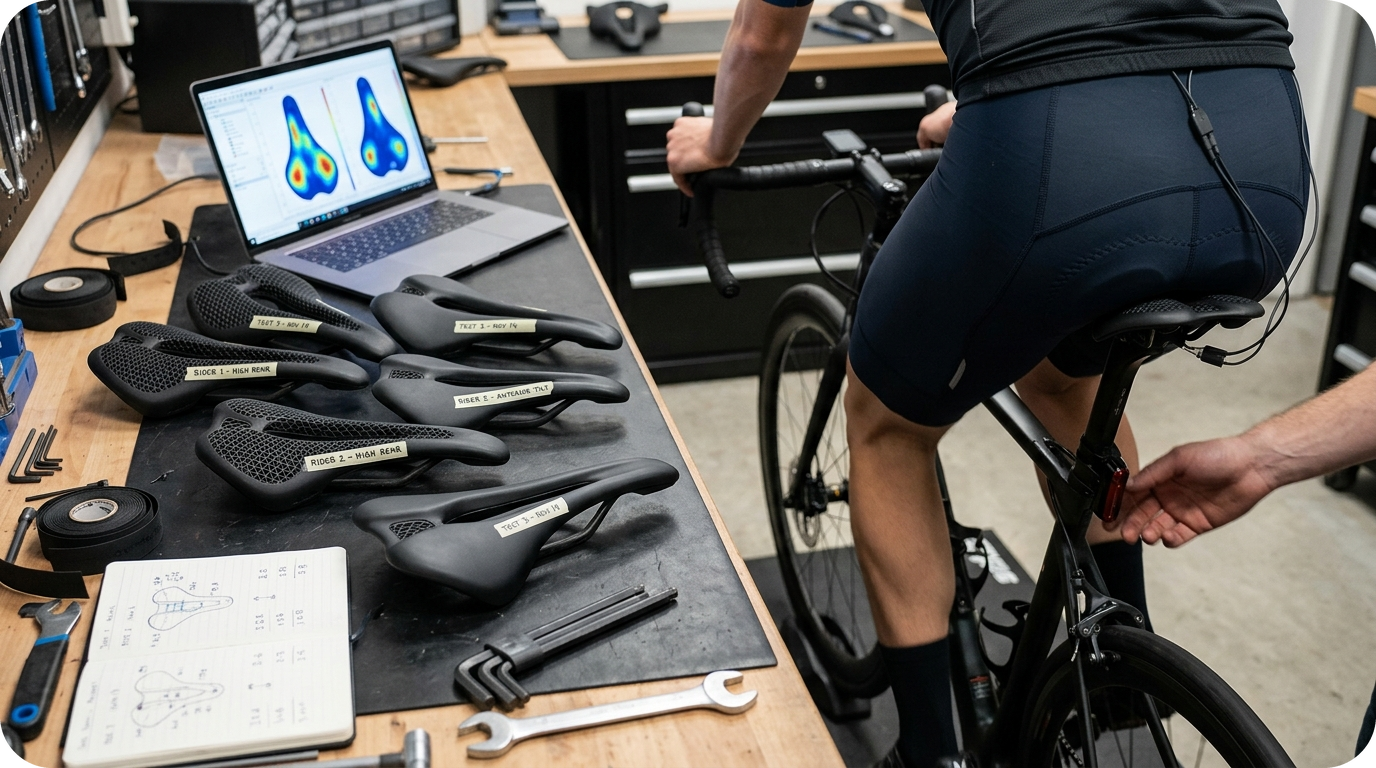
셀레 이탈리아의 접근에서 핵심은 '측정'입니다. 라이더가 실제로 앉았을 때 어느 부위에 압력이 집중되는지를 데이터로 잡고, 그 압력이 몰리는 곳은 부드럽게, 하중을 받아야 하는 곳은 단단하게 구조를 조정합니다. 안장 상단의 격자(lattice) 구조를 부위별로 다르게 설계해 쿠션감을 국소적으로 조율하는 방식입니다.
문제는 이 구조를 기존 방식으로 만들려 할 때 드러납니다. 사람마다 압력 분포가 다르니 형상이 저마다 달라지는데, 사출 성형은 형상 하나당 금형 하나가 필요합니다. 개인 맞춤을 하려면 사람 수만큼 금형을 만들어야 하고, 이는 비용과 시간 모두에서 사실상 불가능한 구조입니다.
- 금형 비용의 벽: 사출은 형상이 바뀔 때마다 새 금형이 필요해, 개인별로 형상이 달라지는 제품에는 초기 투자와 리드타임 부담이 감당하기 어렵습니다.
- 복잡 형상의 벽: 부위별로 밀도가 다른 내부 격자 구조는 절삭이나 사출로 구현하기가 매우 까다롭습니다.
셀레 이탈리아가 이 두 벽을 넘은 방법이 바로 3D프린팅입니다. 개인의 압력 데이터를 디지털 설계에 반영하고, 그 파일을 그대로 출력하면 금형 없이도 사람마다 다른 안장이 만들어집니다. 형상이 달라져도 바뀌는 것은 데이터 파일뿐이라는 점이 이 방식의 본질입니다.
개별 맞춤 양산(Mass Customization)이라는 관점
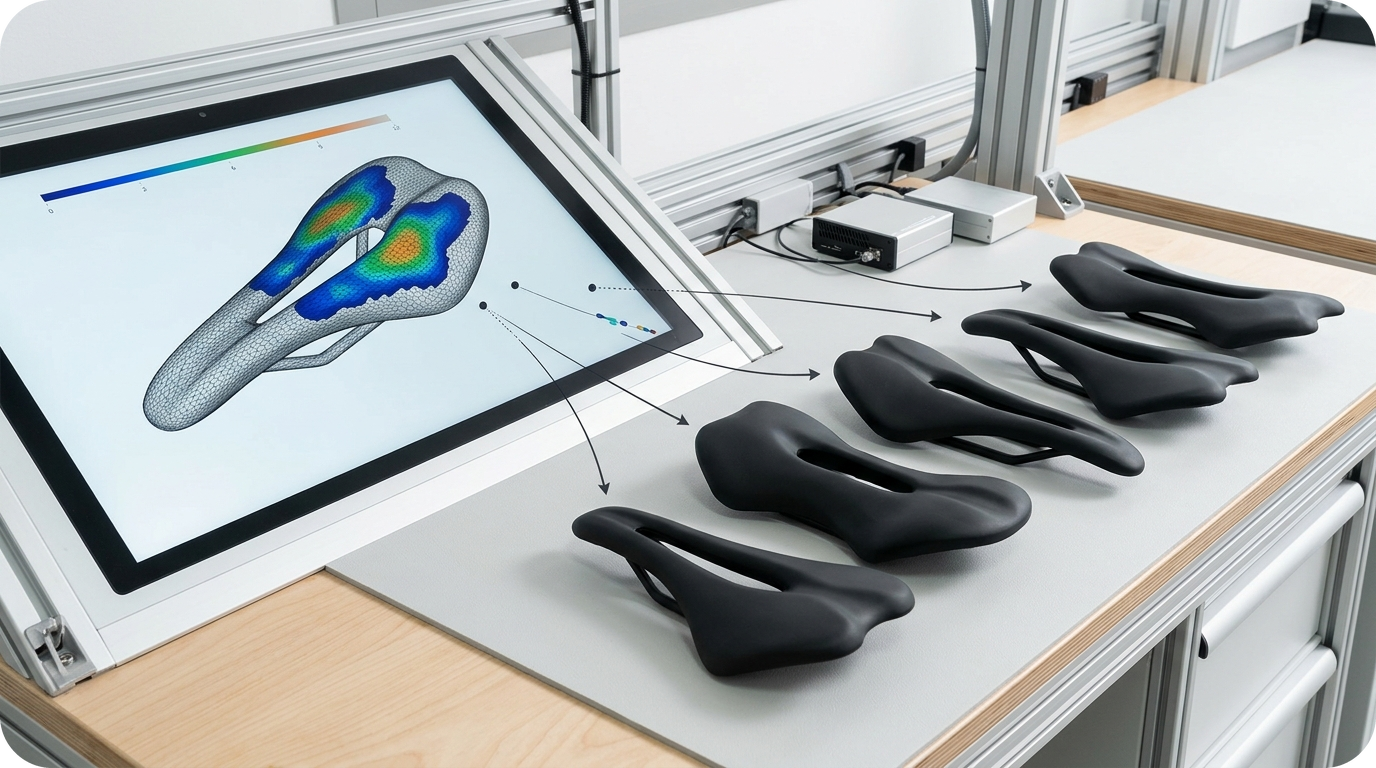
안장 사례가 흥미로운 이유는, 이것이 '특별한 스포츠 용품 이야기'가 아니라 제조 전반에 걸친 흐름의 한 장면이기 때문입니다. 의료기기 핸들이 사용자 손 크기에 맞춰지고, 웨어러블 기기가 착용자 신체에 맞춰지는 것처럼, 점점 더 많은 제품이 '평균값'이 아니라 '개인값'으로 만들어지고 있습니다.
이때 제조사가 던져야 할 질문은 '만들 수 있는가'가 아니라 '반복해서 균일하게 양산할 수 있는가'입니다. 개인화 제품의 핵심 난제는 형상이 매번 달라진다는 점, 그리고 그 다른 형상을 같은 품질로 계속 찍어내야 한다는 점에 있습니다. 즉 진짜 경쟁력은 '얼마나 다양한 형상을 얼마나 안정적으로 반복 생산하느냐'에서 나옵니다.
바로 이 지점에서 개별 맞춤 양산의 기준이 달라집니다. 양산 여부를 판단하는 축이 '몇 개를 만드느냐'라는 절대 수량에서, '형상이 얼마나 자주 바뀌고 얼마나 다품종이냐'로 옮겨가는 것입니다. 형상이 계속 달라지는 제품이라면 금형 기반 방식보다 디지털 설계를 그대로 생산으로 연결하는 방식이 유리해집니다.
산업용 SLA 3D프린팅으로 개인화를 반복 양산하기
💡 개인 데이터로 형상을 바꾸는 것까지는 설계의 영역이지만, 그 바뀐 형상을 균일한 품질로 반복 생산하는 것은 제조 인프라의 영역입니다. 바로 이 지점에서 산업용 SLA 3D프린팅이 유력한 선택지로 부상합니다.
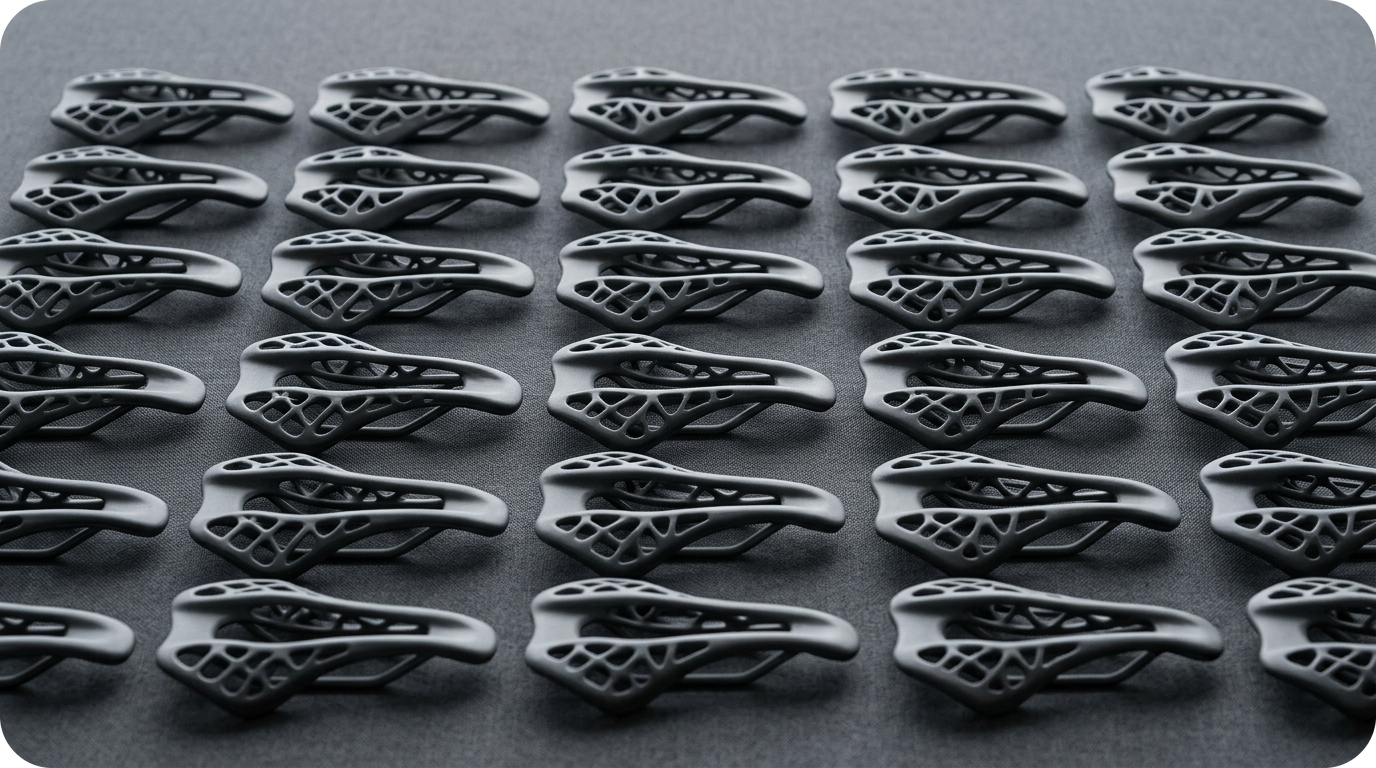
산업용 SLA 3D프린팅은 금형 없이 디지털 설계 파일만으로 생산합니다. 사람마다 형상이 달라도 설계 파일만 교체하면 같은 라인에서 이어서 생산할 수 있어, 개별 맞춤과 반복 양산이 동시에 가능합니다.
안장의 미세한 격자 구조처럼 복잡한 내부 형상을 정밀하게 구현하는 데도 강점이 있고, 표면 품질이 매끄러워 하우징·커버·핸들류를 후가공 최소화로 최종 부품에 가깝게 쓸 수 있습니다.
다만 SLA가 모든 경우의 정답은 아닙니다. 완전히 동일한 단일 형상을 수십만 개 이상 찍어내는 초대량 생산이거나, 고하중을 받는 금속 부품이라면 사출이나 절삭 같은 기존 방식이 개당 단가와 물성 면에서 더 유리합니다. SLA가 진짜 힘을 발휘하는 지점은 형상이 자주 바뀌고 개인마다 다른 다품종 개별 형상을 반복 양산해야 하는 구간입니다.
GLUCK은 약 45기의 산업용 SLA 장비로 365일 24시간 운용 체계를 갖추고, 연 23만 개 이상의 반복 양산 물량을 소화하는 디지털 파운드리입니다. 최대 ±0.05mm 정밀도와 Ra 0.8 수준의 표면조도로 개별 형상을 정밀하게 재현하며, 로봇 외장 커버, 생산라인 지그·치구·검사구, 의료기기 하우징 같은 서로 다른 형상의 부품을 같은 라인에서 반복 생산해 왔습니다. 안장처럼 개인 데이터로 형상이 달라지는 제품도 이 인프라 위에서 양산 규모로 구현될 수 있습니다.
압력 데이터로 만드는 안장은 하나의 사례일 뿐입니다. 앞으로 더 많은 제품이 '평균'이 아니라 '개인'을 기준으로 설계될 것이고, 그때마다 제조사는 개별 형상을 어떻게 반복 양산할지 답해야 합니다. 초도 검증부터 중·대량 반복 양산까지, 형상이 계속 달라지는 제품을 금형 없이 만들어야 하는 제조사에게 산업용 SLA는 현실적인 선택지입니다. 물론 단일 형상 초대량이라면 기존 방식이 낫다는 판단도 함께 필요합니다.
GLUCK은 반복 생산이 가능한 산업용 SLA 3D프린팅 인프라를 기반으로
개인 맞춤·다품종 제품 개발과 양산 전환 과정에 필요한 3D프린팅 제조 솔루션을 지원하고 있습니다.
지금 글룩을 확인해보세요!
📩 글룩 홈페이지 & 온라인 견적: https://www.glucklab.com
📂 글룩 포트폴리오: 글룩 포트폴리오 확인하기
References
[1] VoxelMatters, "Selle Italia launches 3D printed saddle shaped by individualized pressure data," voxelmatters.com. Link: https://www.voxelmatters.com/selle-italia-launches-3d-printed-saddle-shaped-by-individualized-pressure-data/
English Version
One Saddle Per Rider: The Secret Behind Mass-Producing Saddles Made by Scanning Hip Pressure
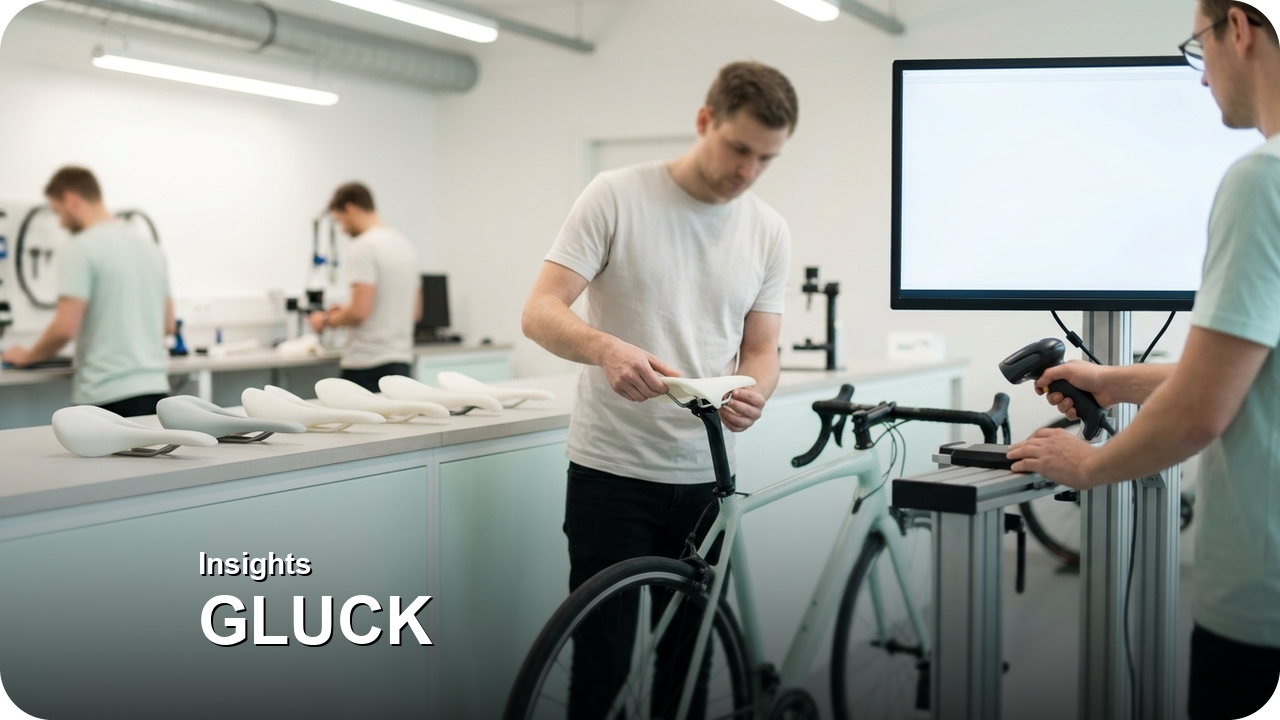
There is a saying that has long circulated among cyclists: "In the end, you have to find the saddle that fits your own body." Since riding posture, pelvis width, and weight distribution differ from person to person, the same saddle can be a masterpiece for one rider and a source of pain for another. Recently, however, a trend has emerged that tries to solve this problem not with a "better standard saddle," but with "a different saddle for each person entirely."
A new product recently unveiled by the Italian saddle brand Selle Italia is one such case. The idea is to measure each rider's individual seating pressure data and, based on that data, produce a saddle whose shape has been altered via 3D printing. Rather than choosing among a few standard sizes, it is an approach in which the individual data of pressure distribution itself becomes the shape of the product.
Here, a question from a manufacturing perspective naturally arises. How can you make individual-data-based custom products at mass-production scale? Carving custom items one by one by hand is understandable, but making them for many people, repeatedly, is an entirely different story. In this article, we view the Selle Italia case as a representative scene of Mass Customization and examine the manufacturing challenge hidden within it.
Selle Italia: A Saddle Where Pressure Data Becomes the Shape
The core of Selle Italia's approach is "measurement." It captures as data where pressure concentrates when a rider actually sits, then adjusts the structure so that pressure-concentrated areas are made soft and load-bearing areas are made firm. It is an approach that designs the lattice structure on top of the saddle differently by region to locally tune the cushioning feel.
The problem reveals itself when you try to make this structure with conventional methods. Because pressure distribution differs from person to person, each shape ends up different—yet injection molding requires one mold per shape. To do personalization, you would have to make as many molds as there are people, which is a structure that is virtually impossible in both cost and time.
- The Mold Cost Wall: Injection molding requires a new mold whenever the shape changes, so for products whose shape differs by individual, the burden of initial investment and lead time is hard to bear.
- The Complex-Shape Wall: An internal lattice structure with different densities by region is very difficult to reproduce with machining or molding.
The way Selle Italia overcame these two walls is exactly 3D printing. By reflecting an individual's pressure data into the digital design and printing that file as is, a different saddle for each person is made without any mold. The essence of this approach is that even when the shape changes, the only thing that changes is the data file.
The Perspective of Mass Customization
The saddle case is interesting because it is not a "special sporting goods story" but a single scene in a broader manufacturing trend. Just as medical device handles fit a user's hand size and wearables fit the wearer's body, more and more products are made from "individual values" rather than "average values."
Here, the question a manufacturer must ask is not "can it be made" but "can it be reproduced uniformly at scale." The core challenge of personalized products is that the shape changes each time, and that different shape must keep being produced at the same quality. In other words, real competitiveness comes from "how many varied shapes you can produce repeatedly and stably."
This is where the criteria for Mass Customization change. The axis for judging viability shifts from absolute quantity—"how many do you make"—to "how often the shape changes and how varied it is." For products whose shapes keep changing, connecting digital design directly to production becomes more advantageous than mold-based methods.
Repeatably Mass-Producing Personalization with Industrial SLA 3D Printing
💡 Changing shape with individual data is the realm of design, but repeatedly producing that changed shape at uniform quality is the realm of manufacturing infrastructure. This is exactly where industrial SLA 3D printing emerges as a strong option.
Industrial SLA 3D printing produces from digital design files alone, without molds. Even when each person's shape differs, simply swapping the design file allows continued production on the same line—enabling personalization and repeatable mass production at once. It also excels at precisely realizing complex internal shapes like a saddle's fine lattice, and its smooth surface quality means housings, covers, and handles can be used close to end-use parts with minimal post-processing.
That said, SLA is not the answer in every case. For ultra-high-volume production of a single identical shape in the hundreds of thousands, or for load-bearing metal parts, conventional methods like injection molding or machining are more favorable in per-unit cost and material properties. SLA truly shines when you must repeatedly mass-produce varied, individually different shapes that change often.
GLUCK operates roughly 45 industrial SLA machines under a 365-day, 24-hour system, functioning as a digital foundry that handles over 230,000 units annually in repeat production. With precision up to ±0.05mm and surface roughness around Ra 0.8, it precisely reproduces individual shapes, and it has repeatedly produced differently shaped parts—such as robot exterior covers, production-line jigs and inspection fixtures, and medical device housings—on the same line. Products like saddles, whose shape changes with individual data, can also be realized at mass-production scale on this infrastructure.
The pressure-data saddle is just one example. More products will be designed around "individuals" rather than "averages," and each time, manufacturers must answer how to repeatedly mass-produce individual shapes. From initial validation to mid-to-high-volume repeat production, industrial SLA is a realistic option for manufacturers who must make continuously changing shapes without molds. Of course, the judgment that conventional methods are better for single-shape ultra-high volumes is needed as well.
Based on repeatable industrial SLA 3D printing infrastructure, GLUCK supports the 3D printing manufacturing solutions needed for the development and mass-production transition of personalized and multi-variety products.
Check out GLUCK now!
📩 GLUCK Website & Online Quote: https://www.glucklab.com
📂 GLUCK Portfolio: View GLUCK Portfolio
References
[1] VoxelMatters, "Selle Italia launches 3D printed saddle shaped by individualized pressure data," voxelmatters.com. Link: https://www.voxelmatters.com/selle-italia-launches-3d-printed-saddle-shaped-by-individualized-pressure-data/
#글룩 #GLUCK #3D프린팅 #산업용3D프린팅 #SLA3D프린팅 #맞춤양산 #개별맞춤양산 #MassCustomization #압력데이터안장 #셀레이탈리아 #금형없이 #반복생산 #중대량양산 #DfAM #SLA3DPrinting #AdditiveManufacturing #MassProduction #FlexibleSeriesProduction #CustomManufacturing #SelleItalia
'인사이트 (Insights)' 카테고리의 다른 글
| 초음파 사진을 손으로 만지다 : 5,000명 중 절반이 원한 '만질 수 있는 기록'을 실물로 옮기는 제조 (0) | 2026.09.16 |
|---|---|
| 난초 한 송이를 위한 AI 로봇, 감성 오브제가 된 로봇의 외장은 어떻게 만들까 (0) | 2026.09.15 |
| 접착제 없이 조립되는 스니커즈 : 3D프린팅 밑창과 전통 갖신의 결합 (0) | 2026.09.14 |
| 애플이 새 아이폰 힌지 커버를 금형 없이 찍어낸 이유 (0) | 2026.09.11 |
| ICON은 하나의 건설 시스템으로 전혀 다른 집을 찍어낸다 : '같은 공정, 다른 결과물'의 원리 (0) | 2026.09.11 |