

최근 자동화 전시회나 로봇 업계 소식을 보면, 협동로봇(사람과 같은 공간에서 함께 일하는 로봇)의 세대 교체 주기가 눈에 띄게 빨라지고 있습니다. 스마트폰이 해마다 새 모델을 내놓듯, 로봇 플랫폼도 AI 연동·센서 확장·페이로드 향상을 앞세워 짧은 주기로 업그레이드되는 흐름이 자리 잡고 있습니다.
이런 흐름을 상징적으로 보여준 무대가 미국 시카고에서 열린 IMTS(International Manufacturing Technology Show)입니다. 유니버설 로봇(Universal Robots)은 이 자리에서 AI 대응을 전면에 내세운 차세대 협동로봇 플랫폼 'Gen 7'을 공개했습니다. 더 높은 연산 성능과 확장성을 갖춰, 앞으로 로봇이 더 다양한 현장에 더 빠르게 투입될 수 있음을 예고한 발표였습니다.
그런데 로봇 본체가 세대를 거듭할 때마다, 겉으로 잘 드러나지 않는 곳에서 조용히 커지는 수요가 있습니다. 바로 로봇을 감싸는 외장 하우징, 손끝에 달리는 엔드이펙터(로봇이 물건을 집거나 작업하는 말단 도구), 그리고 현장마다 다른 지그·치구입니다. 로봇 플랫폼이 이렇게 빠르게 바뀌는 시대에, 세대마다 달라지는 외장과 부품을 어떻게 조달해야 할까요? 이 글은 그 지점을 제조 관점에서 짚어봅니다.
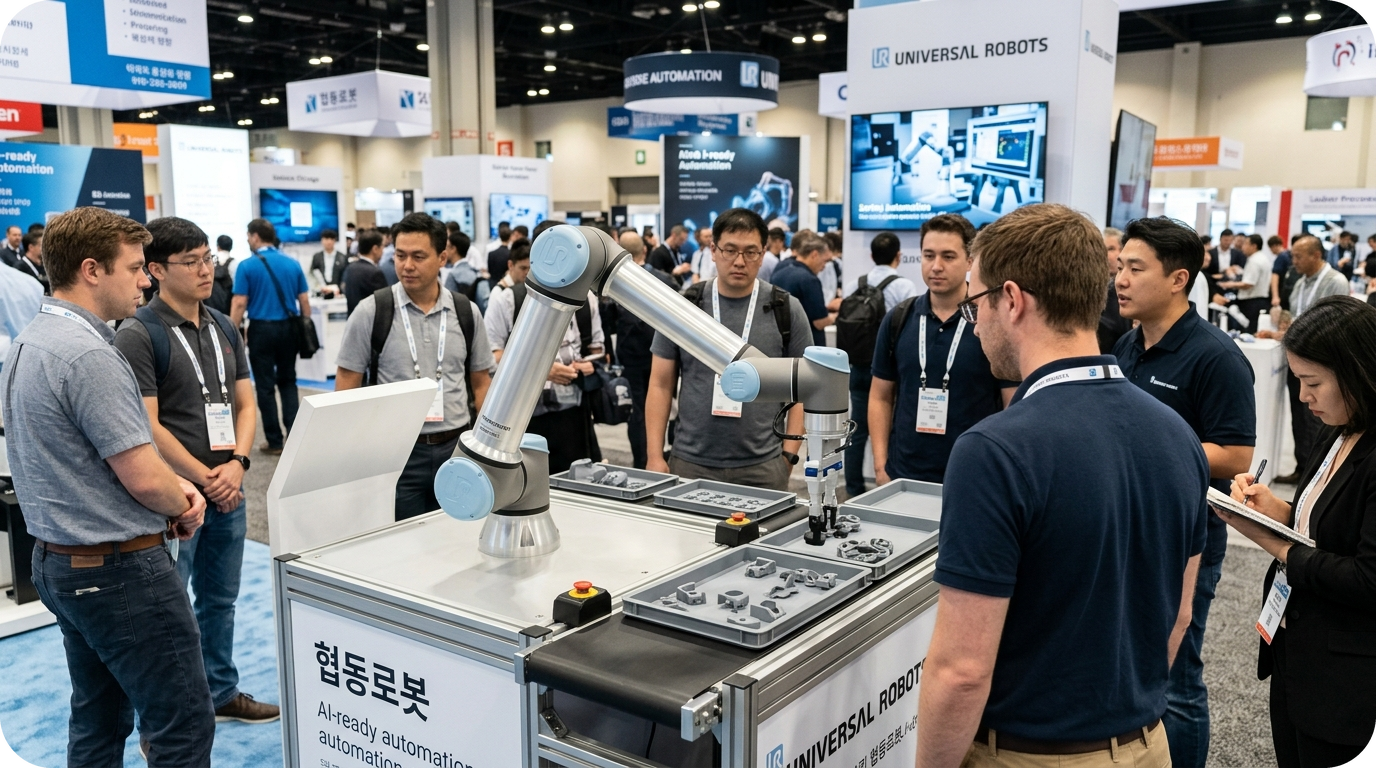
유니버설 로봇 Gen 7과 빨라지는 세대 교체
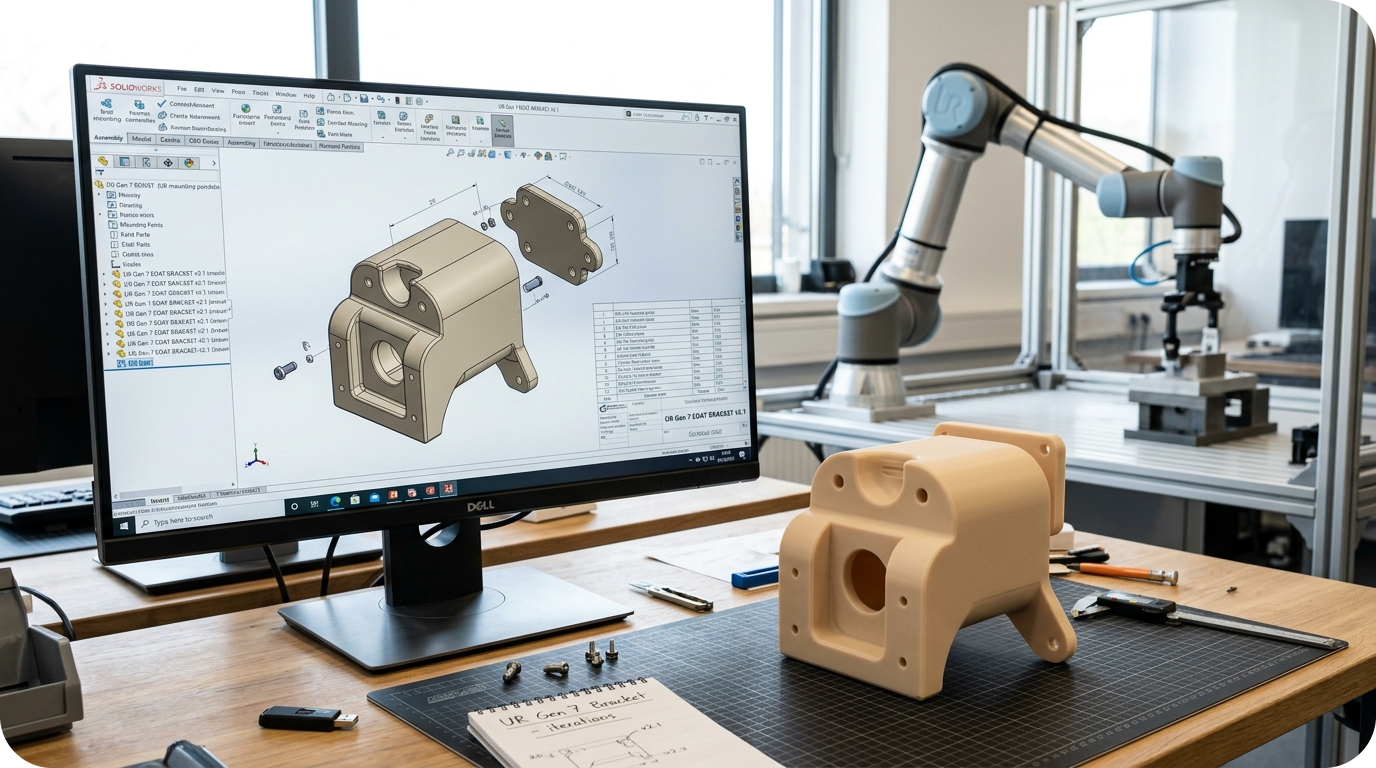
유니버설 로봇이 공개한 Gen 7은 AI 기반 자동화를 겨냥한 새 협동로봇 플랫폼입니다. 향상된 연산 성능과 확장성을 바탕으로, 비전 검사·물류 이송·조립 보조 등 더 넓은 작업에 로봇을 유연하게 투입할 수 있도록 설계되었습니다. 로봇 자체가 하나의 소프트웨어 플랫폼처럼 발전하고 있다는 신호입니다.
문제는 로봇 본체의 진화 속도가 빨라질수록, 그 로봇을 실제 현장에 맞추는 외장과 부품의 교체 주기도 함께 짧아진다는 점입니다. 새 세대 로봇은 크기·마운트 위치·센서 배치가 이전 세대와 달라지기 때문에, 기존 커버나 브라켓을 그대로 쓰기 어려운 경우가 많습니다.
여기서 제조 현장은 두 가지 고민에 부딪힙니다. 첫째, 세대마다 바뀌는 외장 하우징과 커버를 금형 없이 어떻게 조달할 것인가입니다. 형상이 계속 바뀌는데 형상마다 새 금형을 파는 방식은 비용과 시간 부담이 큽니다. 둘째, 현장마다 다른 엔드이펙터와 치구를 소량 다품종으로 만들어야 한다는 점입니다. 같은 로봇이라도 집는 대상이 달라지면 손끝 도구도 달라지기 때문입니다.
세대가 바뀔 때마다 반복되는 외장·치구 조달의 벽
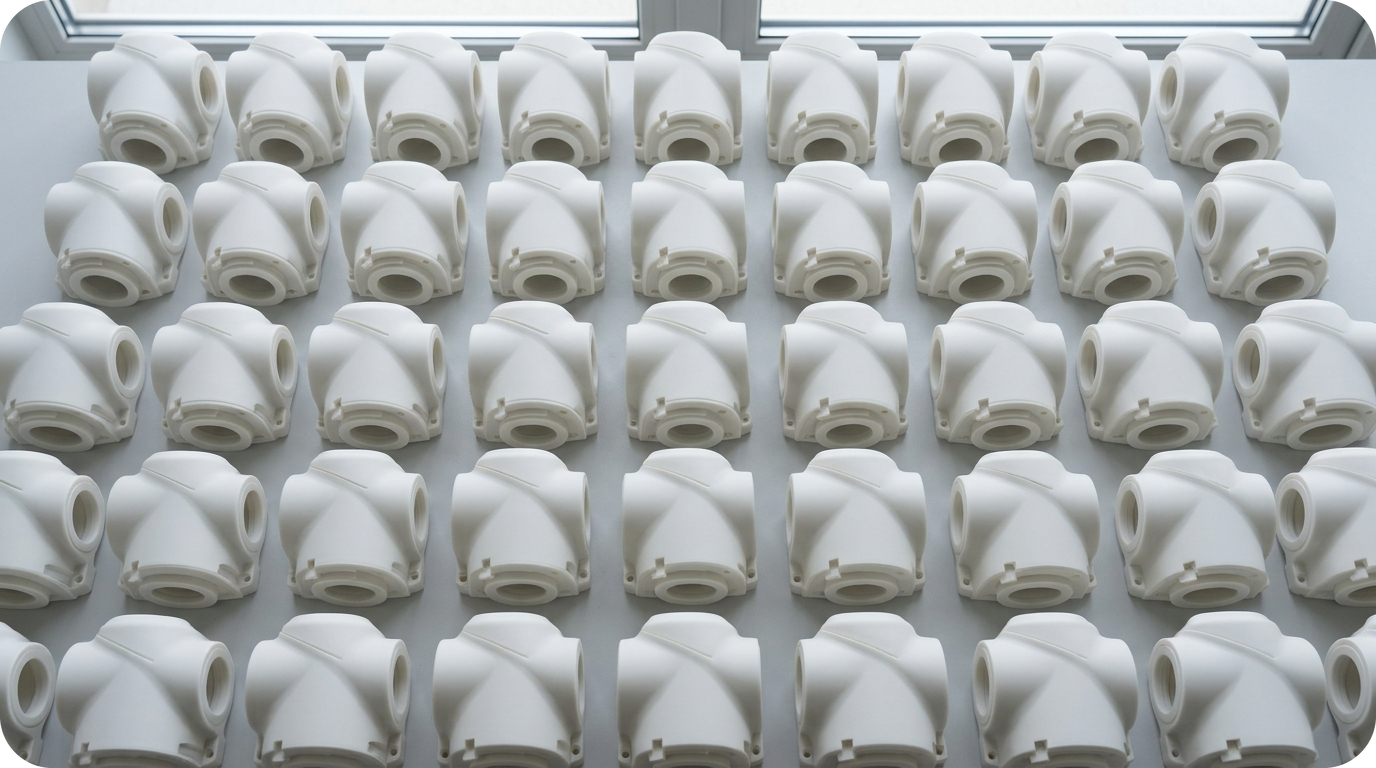
로봇 외장과 엔드이펙터를 기존 방식으로 조달하려면 대개 금형을 새로 제작하거나 CNC로 절삭해야 했습니다. 문제는 이 과정이 로봇 세대 교체 주기와 잘 맞지 않는다는 점입니다.
- 형상마다 새 금형: 사출 방식은 개당 단가가 낮지만, 형상이 바뀔 때마다 새 금형이 필요합니다. 세대 교체가 잦은 로봇 외장에서는 금형비를 물량으로 상각하기도 전에 다음 세대가 나오는 경우가 많습니다.
- 언더컷과 복잡 형상: 로봇 커버는 곡면과 내부 리브, 센서·배선을 위한 홈이 많아 언더컷(금형에서 빠지지 않는 안쪽 형상)이 생기기 쉽습니다. 이런 구조는 금형 설계를 복잡하게 만들고 비용을 끌어올립니다.
- 소량 다품종의 MOQ 벽: 엔드이펙터와 치구는 현장마다 사양이 달라 한 종류를 수백~수천 개씩 찍는 사출의 최소주문수량(MOQ)과 맞지 않습니다. 물량은 적은데 종류는 많은, 전형적인 다품종 소량~중량 구간입니다.
이런 조건에서는 형상이 바뀔 때마다 설계를 곧바로 반영해 다시 만들 수 있는 제조 방식이 훨씬 잘 맞습니다. 로봇처럼 플랫폼이 빠르게 진화하는 분야일수록, 조달 방식의 유연성이 곧 개발 속도로 이어지기 때문입니다.
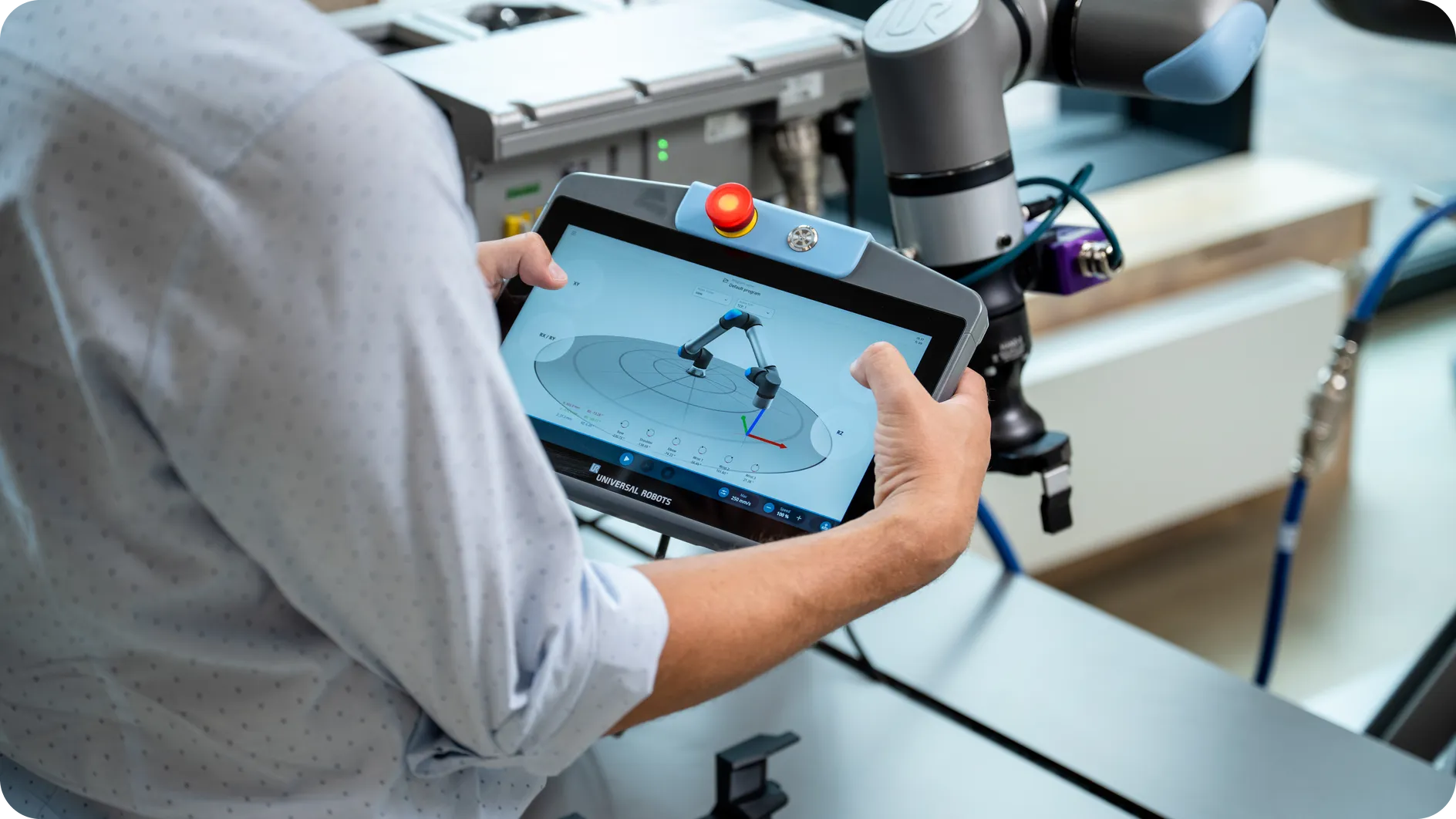
로봇 외장·치구 반복 양산에 적합한 산업용 SLA 3D프린팅
이런 소량 다품종 외장·부품 수요는 산업 현장에서 산업용 SLA 3D프린팅을 통해 현실적으로 구현될 수 있습니다. SLA는 금형 없이 설계 데이터를 곧바로 부품으로 연결하므로, 세대 교체마다 형상이 바뀌는 로봇 외장·엔드이펙터·치구를 반복 생산하기에 적합한 방식입니다.
특히 표면 품질과 정밀도가 중요한 로봇 외장 커버에서 강점이 뚜렷합니다. GLUCK의 산업용 SLA는 300mm 기준 최대 ±0.05mm 정밀도와 Ra 0.8 수준의 표면을 구현하며, 후가공 시 사출품과 구별이 어려운 마감을 얻을 수 있습니다. 곡면과 내부 리브가 많은 커버, 배선용 홈이 복잡한 하우징도 별도의 금형 설계 없이 형상 그대로 만들 수 있습니다. GLUCK은 45기의 산업용 SLA 장비를 365일 24시간 운용하며, 로봇 외장 커버 소량 양산과 생산라인 지그·치구·검사구 같은 부품을 실제로 반복 생산해 왔습니다.
다만 SLA가 모든 경우에 정답인 것은 아닙니다. 형상이 이미 고정되어 있고 수만 개 이상을 동일하게 찍어내는 단순 부품이라면, 개당 단가 면에서 여전히 사출이 유리합니다. 큰 하중을 견뎌야 하는 구조용 금속 부품 역시 SLA 폴리머의 영역과는 다릅니다. GLUCK이 다루는 지점은 SLA 폴리머 하우징·커버·치구 영역이며, 형상이 자주 바뀌고 물량이 소량~중량 규모인 구간에서 강점을 발휘합니다.
정리하면, 협동로봇의 세대 교체가 빨라질수록 로봇 그 자체보다 로봇을 감싸고 보조하는 부품의 조달 유연성이 경쟁력을 좌우하게 됩니다. 설계 변경이 잦은 초기 양산에서 시작해 중·대량 반복 양산으로 이어지는 로봇 외장·치구 구간에서, 금형 없는 반복생산은 현실적인 선택지가 됩니다.
로봇 플랫폼은 앞으로도 계속 진화할 것이고, 그때마다 외장과 부품은 다시 설계될 것입니다. 이 반복되는 흐름을 얼마나 빠르고 정밀하게 뒷받침하느냐가, 로봇을 실제 현장에 투입하는 속도를 결정하는 요소가 됩니다.
GLUCK은 반복 생산이 가능한 산업용 SLA 3D프린팅 인프라를 기반으로
로봇 외장·부품 개발과 양산 전환 과정에 필요한 3D프린팅 제조 솔루션을 지원하고 있습니다.
지금 글룩을 확인해보세요!
📩 글룩 홈페이지 & 온라인 견적: https://www.glucklab.com
📂 글룩 포트폴리오: 글룩 포트폴리오 확인하기
References
[1] Engineering.com, "Universal Robots unveils Gen 7 platform for AI-ready automation," Engineering.com. Link: https://www.engineering.com/universal-robots-unveils-gen-7-platform-for-ai-ready-automation/
English Version
When Cobots Evolved to a New Generation at IMTS, Robot Housing Manufacturing Changed With Them
Looking at recent automation trade shows and robotics news, the generational turnover of collaborative robots (cobots that work alongside people in the same space) has been accelerating noticeably. Just as smartphones release a new model every year, robot platforms are now upgrading on short cycles, driven by AI integration, expanded sensing, and improved payload.
A stage that symbolized this trend was IMTS (International Manufacturing Technology Show) in Chicago. Universal Robots revealed its next-generation cobot platform, "Gen 7," built around AI-ready automation. With higher computing performance and expandability, it signaled that robots can be deployed faster and across a wider range of environments going forward.
Yet each time the robot body advances a generation, a quiet demand grows in places that aren't easily visible: the exterior housings that wrap the robot, the end-effectors mounted at its fingertips (the tools that grip or work with objects), and the site-specific jigs and fixtures. In an era where robot platforms change this quickly, how should we source the exteriors and parts that differ with every generation? This article examines that question from a manufacturing perspective.
Universal Robots Gen 7 and the Accelerating Generation Cycle
The Gen 7 revealed by Universal Robots is a new cobot platform aimed at AI-based automation. Built on enhanced computing performance and expandability, it is designed to flexibly deploy robots across a wider range of tasks—vision inspection, material handling, assembly assistance, and more. It signals that the robot itself is evolving like a software platform.
The challenge is that as the robot body evolves faster, the replacement cycle of the exteriors and parts that fit that robot to the actual site also shortens. New-generation robots often differ from the previous generation in size, mount position, and sensor layout, making it difficult to reuse existing covers or brackets as-is.
Here, the shop floor faces two concerns. First, how to source the exterior housings and covers that change each generation without molds. When shapes keep changing, cutting a new mold for every shape carries heavy cost and time burdens. Second, the need to produce site-specific end-effectors and fixtures in low-volume, high-mix batches. Even for the same robot, a different gripping target means a different end tool.
The Recurring Wall of Sourcing Exteriors and Fixtures Every Generation
Sourcing robot exteriors and end-effectors the traditional way usually meant cutting a new mold or machining with CNC. The problem is that this process doesn't align well with the cobot generation cycle.
- A new mold for every shape: Injection molding offers low per-unit cost, but each shape change requires a new mold. For frequently updated robot exteriors, the next generation often arrives before the tooling cost can be amortized across volume.
- Undercuts and complex geometry: Robot covers have many curved surfaces, internal ribs, and grooves for sensors and wiring, making undercuts (inner shapes that won't release from a mold) likely. Such structures complicate mold design and drive up cost.
- The MOQ wall of high-mix, low-volume: End-effectors and fixtures vary by site, so they don't fit the minimum order quantities (MOQ) of injection molding, which stamps out hundreds to thousands of one type. Few units but many types—a classic high-mix, low-to-mid-volume range.
Under these conditions, a manufacturing method that can immediately reflect design changes and remake parts is a far better fit. The faster a platform evolves, the more sourcing flexibility translates directly into development speed.
Industrial SLA 3D Printing Suited for Repeatable Production of Robot Exteriors and Fixtures
This high-mix, low-volume demand for exteriors and parts can be realistically implemented in the field through industrial SLA 3D printing. SLA connects design data directly to parts without molds, making it well suited to repeatedly producing robot exteriors, end-effectors, and fixtures whose shapes change with each generation.
Its strengths are especially clear in robot exterior covers, where surface quality and precision matter. GLUCK's industrial SLA achieves up to ±0.05mm accuracy at 300mm and surface quality around Ra 0.8, with a finish that, after post-processing, is hard to distinguish from injection-molded parts. Covers with many curved surfaces and internal ribs, or housings with complex wiring grooves, can be made as-is without separate mold design. GLUCK operates 45 industrial SLA machines around the clock, 365 days a year, and has repeatedly produced parts such as small-batch robot exterior covers and production-line jigs, fixtures, and inspection tools.
That said, SLA is not the answer in every case. For a simple part whose shape is already fixed and stamped out identically in the tens of thousands, injection molding still wins on per-unit cost. Structural metal parts that must bear heavy loads are also outside the domain of SLA polymers. GLUCK's scope is SLA polymer housings, covers, and fixtures, showing its strengths in ranges where shapes change often and volumes are low-to-mid.
In short, the faster cobots turn over generations, the more the sourcing flexibility of the parts that wrap and support the robot—rather than the robot itself—determines competitiveness. In the range of robot exteriors and fixtures that begins with frequent design changes in early production and extends into mid-to-high-volume repeatable production, mold-free repeatable manufacturing becomes a realistic option.
Robot platforms will keep evolving, and each time, exteriors and parts will be redesigned. How quickly and precisely this recurring cycle is supported becomes a factor that determines how fast robots reach the actual field.
GLUCK supports the 3D printing manufacturing solutions needed for robot exterior and part development and the transition to mass production, based on an industrial SLA 3D printing infrastructure capable of repeatable production.
Check out GLUCK now!
📩 GLUCK Website & Online Quote: https://www.glucklab.com
📂 GLUCK Portfolio: View the GLUCK Portfolio
References
[1] Engineering.com, "Universal Robots unveils Gen 7 platform for AI-ready automation," Engineering.com. Link: https://www.engineering.com/universal-robots-unveils-gen-7-platform-for-ai-ready-automation/
#글룩 #GLUCK #3D프린팅 #산업용3D프린팅 #SLA3D프린팅 #협동로봇 #로봇하우징 #엔드이펙터 #지그치구 #금형없는양산 #소량다품종 #중대량양산 #Cobot #UniversalRobots #Gen7 #RobotHousing #SLA3DPrinting #AdditiveManufacturing #DfAM #FlexibleSeriesProduction
원문 기사 이미지 출처
'인사이트 (Insights)' 카테고리의 다른 글
| 미 해군이 42,000명에게 지급하는 '귀 스캔 맞춤 청력보호구', 개별 형상을 양산으로 바꾸는 방법 (0) | 2026.09.21 |
|---|---|
| 셀레 이탈리아 : 엉덩이 압력을 스캔해 만든 '1인 1안장' 양산의 비밀 (0) | 2026.09.17 |
| 난초 한 송이를 위한 AI 로봇, 감성 오브제가 된 로봇의 외장은 어떻게 만들까 (0) | 2026.09.15 |
| 접착제 없이 조립되는 스니커즈 : 3D프린팅 밑창과 전통 갖신의 결합 (0) | 2026.09.14 |
| 애플이 새 아이폰 힌지 커버를 금형 없이 찍어낸 이유 (0) | 2026.09.11 |