
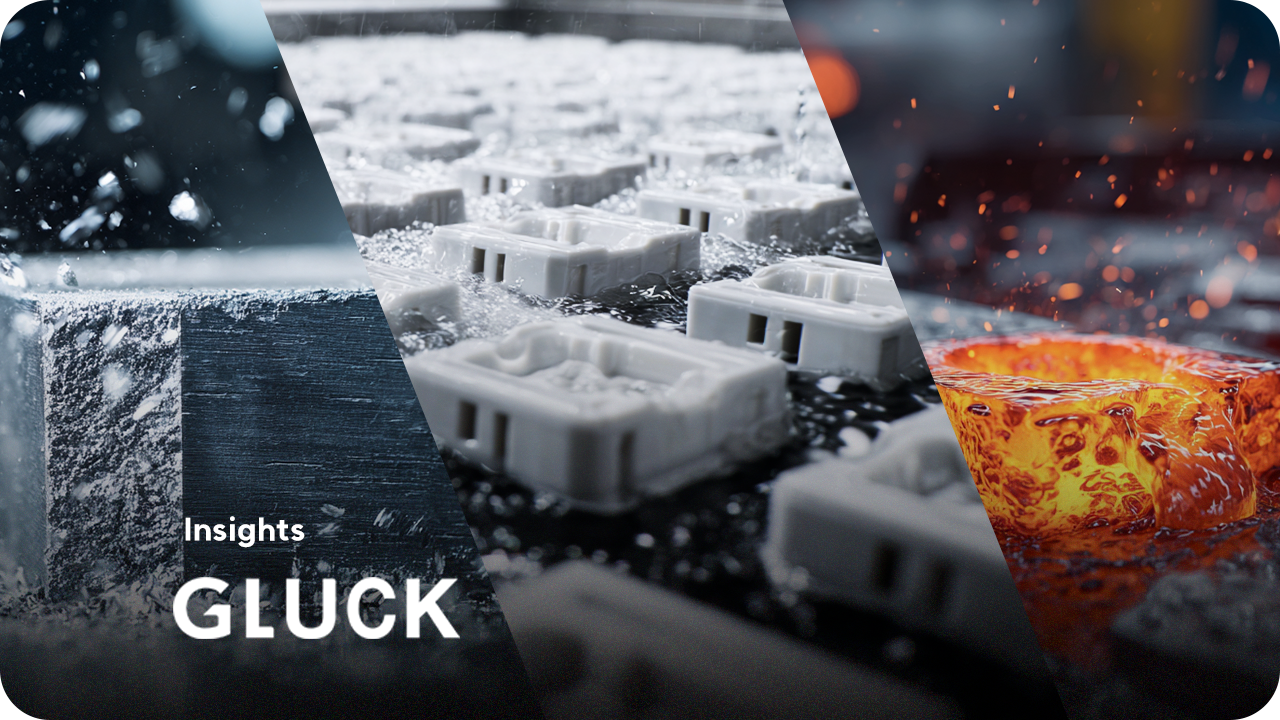
2026년 새해가 밝았습니다! 지난 한 해 동안 글룩을 믿고 맡겨주신 수많은 고객사와 파트너 여러분께 깊은 감사의 말씀을 전합니다.
2026년에도 귀사에 더 큰 성장과 좋은 성과가 함께하시길 기원하며, 연초를 맞아 많은 기업이 공통적으로 고민하고 있는 부분을 정리해 드리고자 합니다.
연초가 되면 많은 기업, 특히 신제품 출시를 앞둔 R&D 팀과 스타트업은 '생산 전략 '이라는 중대한 과제에 직면합니다. 아이디어를 기획하고 시제품을 검증하는 단계를 넘어, 실제 시장에 제품을 내놓기 위한 '양산'을 결정해야 하는 시기이기 때문입니다. 이때 제조 기업들이 가장 난관에 봉착하는 구간이 바로 '100개에서 5,000개 사이의 초기 생산 물량'입니다. 대량 생산을 하기엔 초기 투자 비용이 부담스럽고, 수작업으로 제작하기엔 단가가 맞지 않는구간입니다.
오늘 글룩의 2026년 첫 번째 인사이트에서는 이 구간에서 가장 효율적인 제조 공법이 무엇인지, 사출 성형, CNC 가공, 산업용 3D프린팅의 기술적·경제적 비교 분석을 통해 명합한 해답을 제시해 드립니다.
초기 시장 검증을 위한 '최적 수량'의 함정
많은 기업이 신제품을 출시할 때 겪는 일반적인 상황을 하나의 시나리오를 통해 확인 할 수 있습니다.

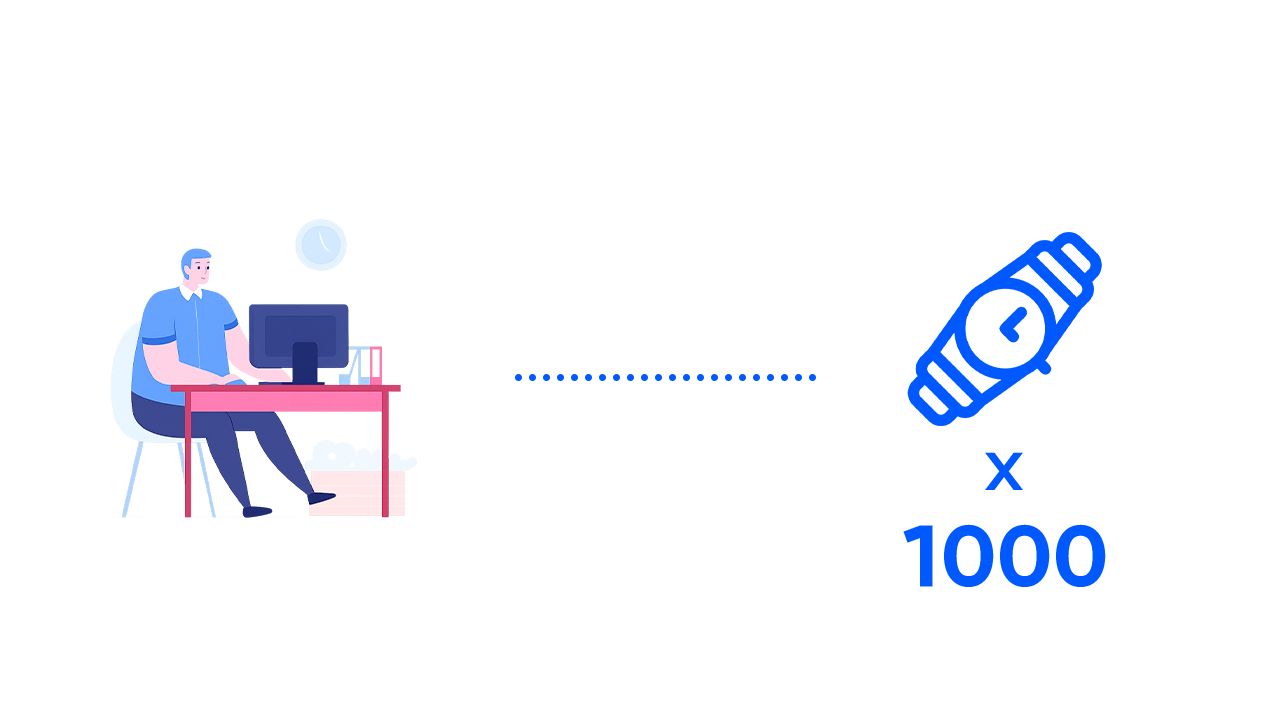
예시 시나리오ㅣ 한 헬스케어 디바이스 제조 기업이 1년간의 개발 끝에 '신형 웨어러블 기기'를 완성했습니다. 본격적인 런칭 전, 크라우드 펀딩이나 B2B 시장 테스트를 위해 약 1,000개의 물량이 필요한 상황입니다.
금형 사출 견적 의뢰 시: 🙋🏼 "개당 단가는 수백 원대로 저렴하지만, 초기 금형 제작비만 최소 수백만 원이 발생합니다. 1,000개 생산 시 제품 원가에 금형비가 그대로 전가되어 난감상황입니다. 최소 5,000개~1만 개 이상은 생산해야 경제성이 확보됩니다."
CNC 가공 견적 의뢰 시: 🙋 "금형은 필요 없지만, 복잡한 3차원 곡면을 구현하기 위해 가공 시간이 매우 깁니다. 개당 가공 단가가 수만 원대로 매우 높게 책정되며, 1,000개를 깎아내는 데 소요되는 물리적 리드타임이 너무 길어 납기를 맞추기 어렵습니다.
산업용 3D프린팅 견적 의뢰 시: 🙋🏻 "초기 투자비용은 '0원'이지만, 사출 성형에 비해 개당 생산 단가는 높습니다. 1,000개 생산 시 총비용이 금형 제작비보다 저렴한지 손익분기점을 면밀히 따져봐야 하며, 표면 품질이나 물성이 실제 양산품 수준에 도달할 수 있는지에 대한 검증이 필요합니다."
결국, 실무 담당자는 '높은 초기 비용(금형)', '높은 개당 단가(CNC)', '생산 단가와 품질 검증(3D프린팅)' 사이에서 고민하게 됩니다.
하지만 최근 제조업계 데이터에 따르면, 100개에서 5,000개 사이의 구간에서는 산업용 3D프린팅이 총소요비용 과 리스크 관리 측면에서 가장 합리적인 대안으로 떠오르고 있습니다.
3대 제조 방식의 기술적·경제적 비교 분석
실무진들의 의사결정을 돕기 위해 각 금형사출, CNC, 3D프린팅의 장단점을 객관적으로 비교해 드립니다.
① 금형 사출
금속으로 제작된 몰드에 녹여진 소재를 고압으로 주입하여 찍어내는 방식입니다.
- 비용 구조: 높은 초기 투자비 + 매우 낮은 개당 생산비.
- 특징: 수만 개 이상의 대량 생산 시 압도적인 효율을 자랑합니다. 하지만 금형에서 제품이 빠져나와야 하므로 '언더컷' 등 형상 제약이 많고, 설계 변경 시 금형을 수정하거나 폐기해야 하는 리스크가 큽니다.
- 리드타임: 수 주 ~ 수 개월, 금형 제작 기간이 포함 되어 있습니다.
- 적합 생산 구간: 10,000개 이상의 확정된 대량 생산

② CNC 가공
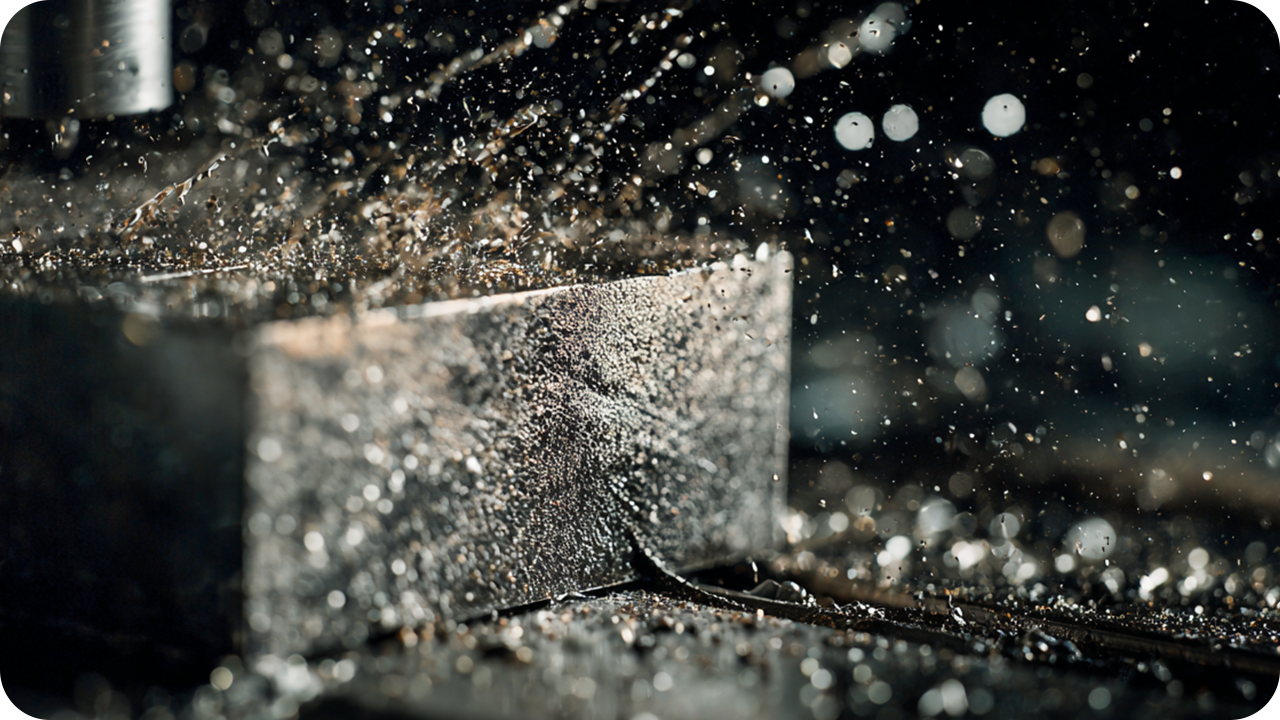
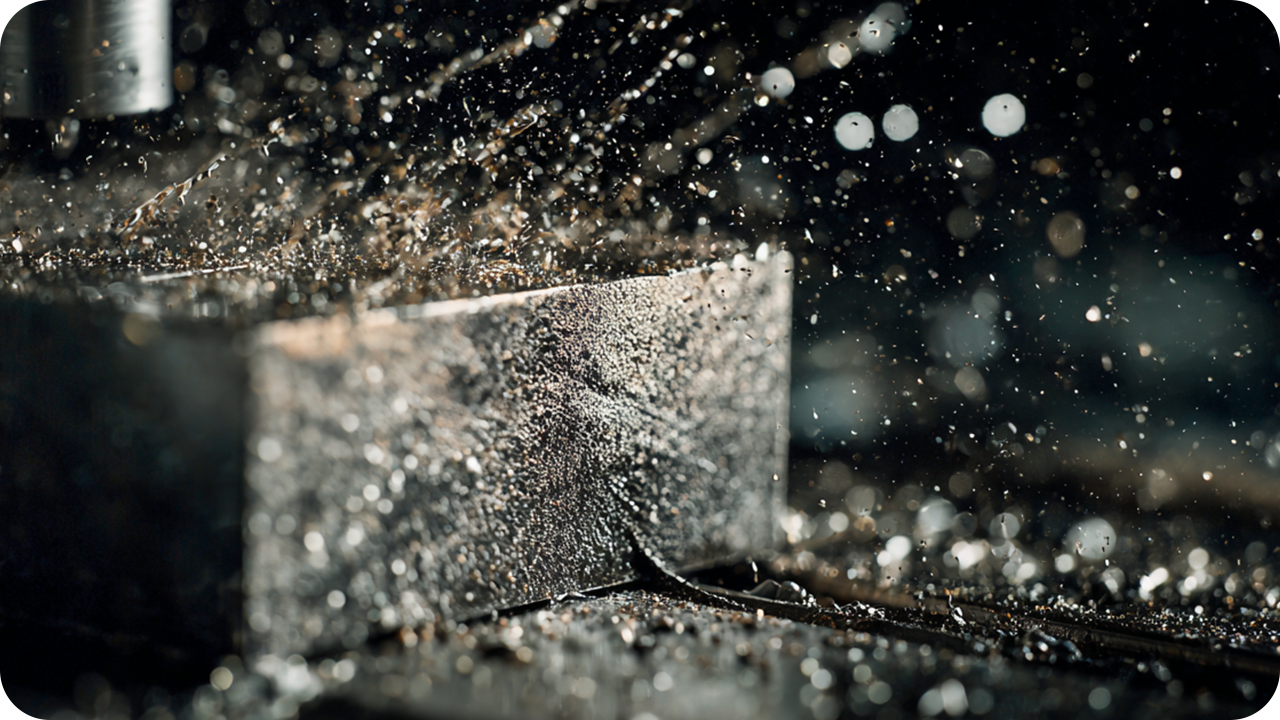
원소재를 공구로 깎아내어 형상을 만드는 절삭 가공 방식입니다.
- 비용 구조: 중간 수준의 초기 비용 + 높은 개당 생산비.
- 특징: 정밀도가 높고 금속 가공에 유리하지만, 재료 손실이 많고 형상이 복잡할수록 가공 시간이 늘어납니다. 언더컷 등 공구가 닿지 않는 형상은 제작이 불가능합니다.
- 리드타임: 개당 가공 시간이 길어 대량 생산에는 부적합합니다.
- 적합 생산 구간: 100개 미만의 고정밀 금속 부품.
③ 산업용 3D프린팅
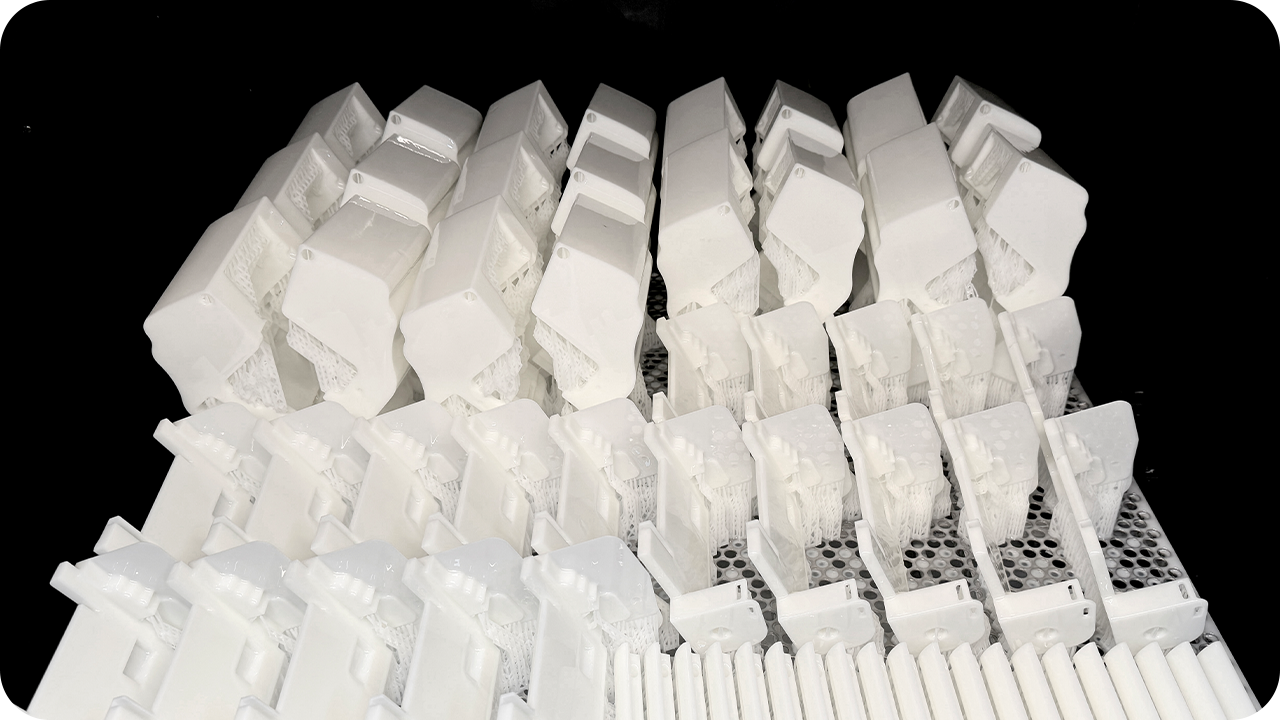
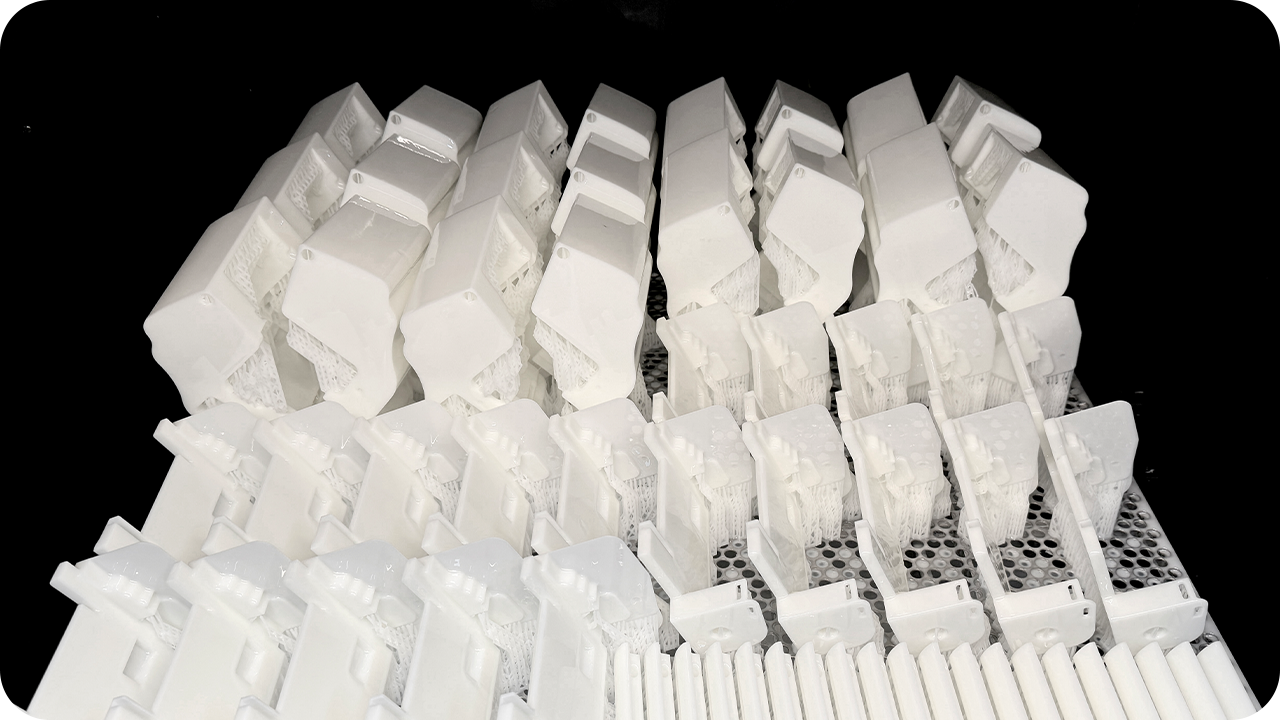
3D 모델링 데이터를 기반으로 소재를 한 층씩 적층하여 형상을 만드는 방식입니다.
- 비용 구조: 초기 투자비 '0원' + 일정한 개당 생산비.
- 특징: 금형과 같은 툴링이 필요 없어 초기 비용이 발생하지 않습니다. 복잡한 내부 구조나 언더컷도 제약 없이 구현 가능하며 형상의 복잡도와 상관없이 제작 비용이 일정합니다.
- 리드타임: 수 일 ~ 수 주, 데이터만 있으면 즉시 생산됩니다.
- 적합 생산 구간: 100개 ~ 5,000개 사이의 다품종 소량 생산 및 초기 양산.
왜 100~5,000개 구간에서는 3D프린팅이 효율적인가요?
생산 수량이 5,000개 이하일 때, 산업용 3D프린팅의 총소요비용이 금형 사출보다 효율적인 이유를 세가지 단계로 설명 할 수 있습니다
첫째, 수량별 단가 구조
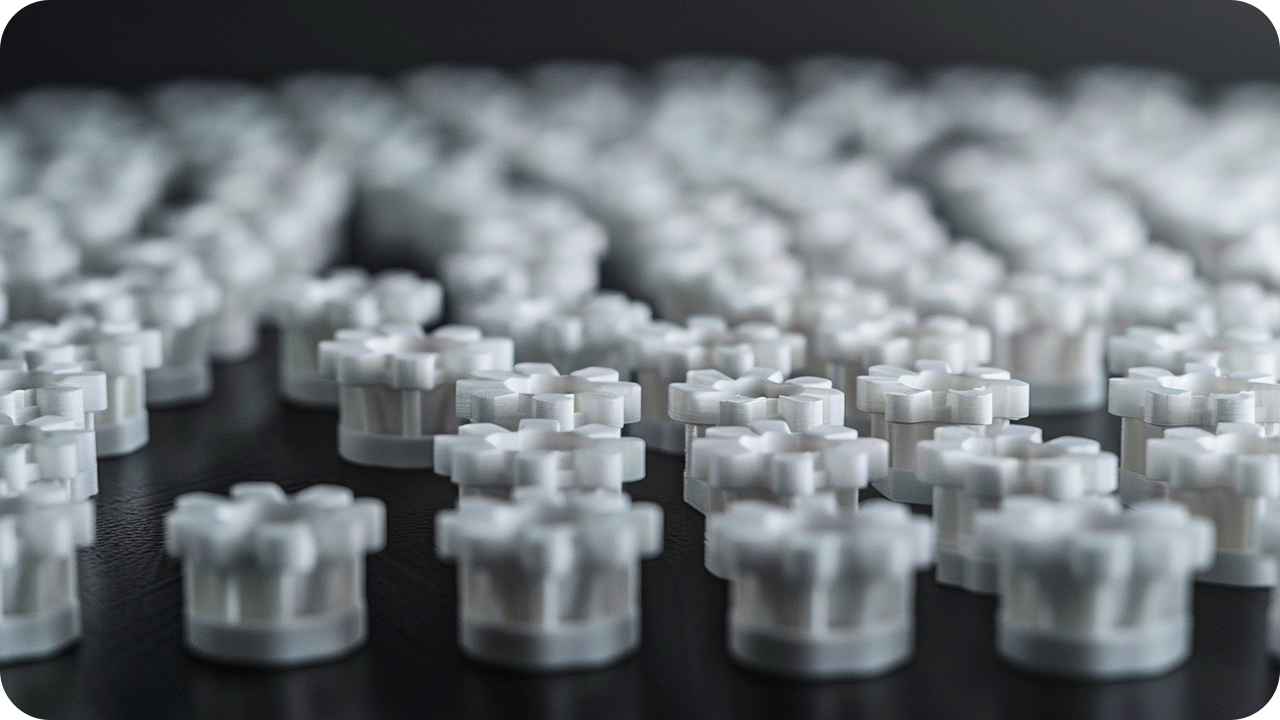
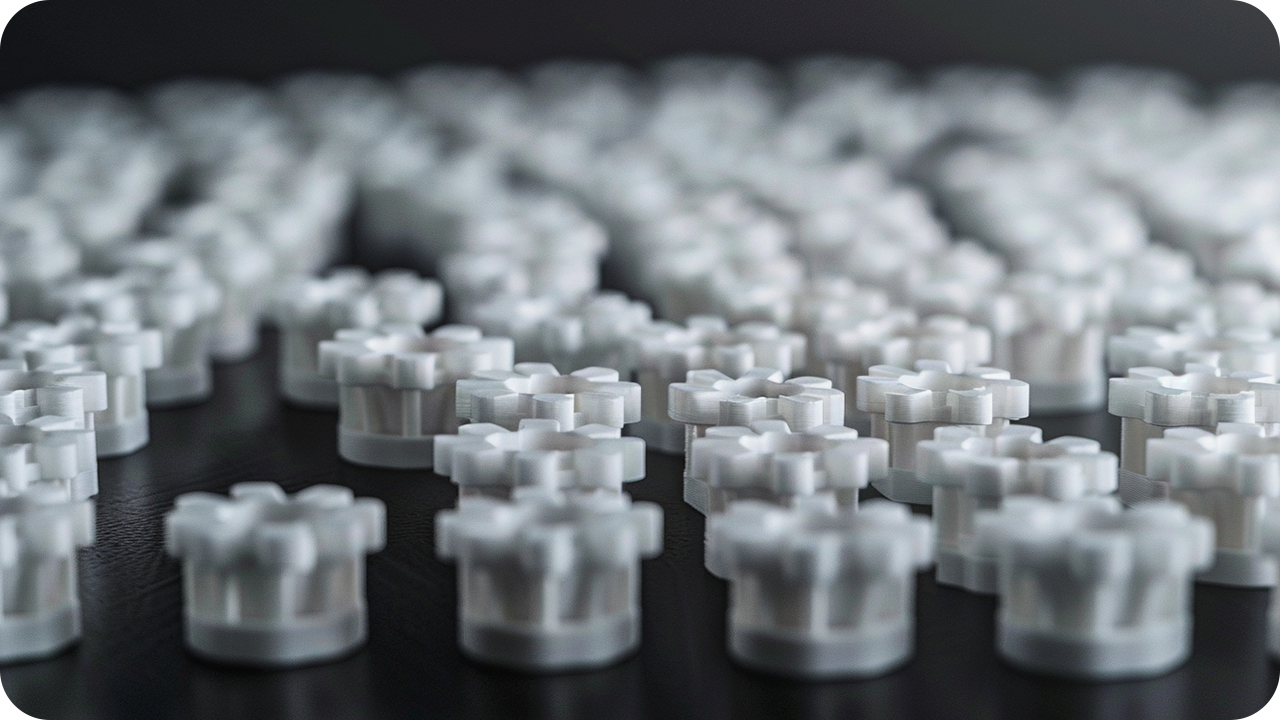
사출 성형은 금형을 만드는 데 초기 비용이 크게 들어서, 그 비용을 회수하려면 어느 정도 많이 찍어내야 합니다. 반면 산업용 3D프린팅은 금형 비용이 없기 때문에 시작 비용 부담이 훨씬 적습니다. 그래서 500개, 1,000개, 3,000개처럼 비교적 적은 물량에서는 금형 제작비를 아끼는 것만으로도 전체 제작 비용이 더 합리적으로 맞춰지는 경우가 많습니다.
둘째, 설계 변경의 유연성
신제품 출시 초기에는 시장 반응에 따라 설계 수정이 발생합니다. 이때 제조 방식에 따라 변경을 반영하는 속도와 부담에는 큰 차이가 생깁니다. 산업용 3D프린팅은 설계 데이터를 기반으로, 수정 사항을 비교적 빠르게 반영할 수 있어 시장 피드백을 즉각적으로 제품에 담아낼 수 있습니다.
셋째, 시장 진입 속도
기존 제조 공법은 설계 검토부터 초기 생산 단계까지 여러 절차를 거치며, 보통 1~2개월의 준비 기간이 필요합니다. 산업용 3D프린팅은 데이터 수령 후 수 시간에서 수 일 내에 첫 생산이 가능하며, 1,000개 생산도 1~2주 내에 완료할 수 있어 시장 선점에 유리합니다.
3D 프린팅 전문 서비스 기업 글룩의 제조 솔루션
글룩은 단순한 출력 대행을 넘어, '양산(Mass Production)'을 전제로 한 SLA 3D프린팅 전문 제조 파트너입니다.
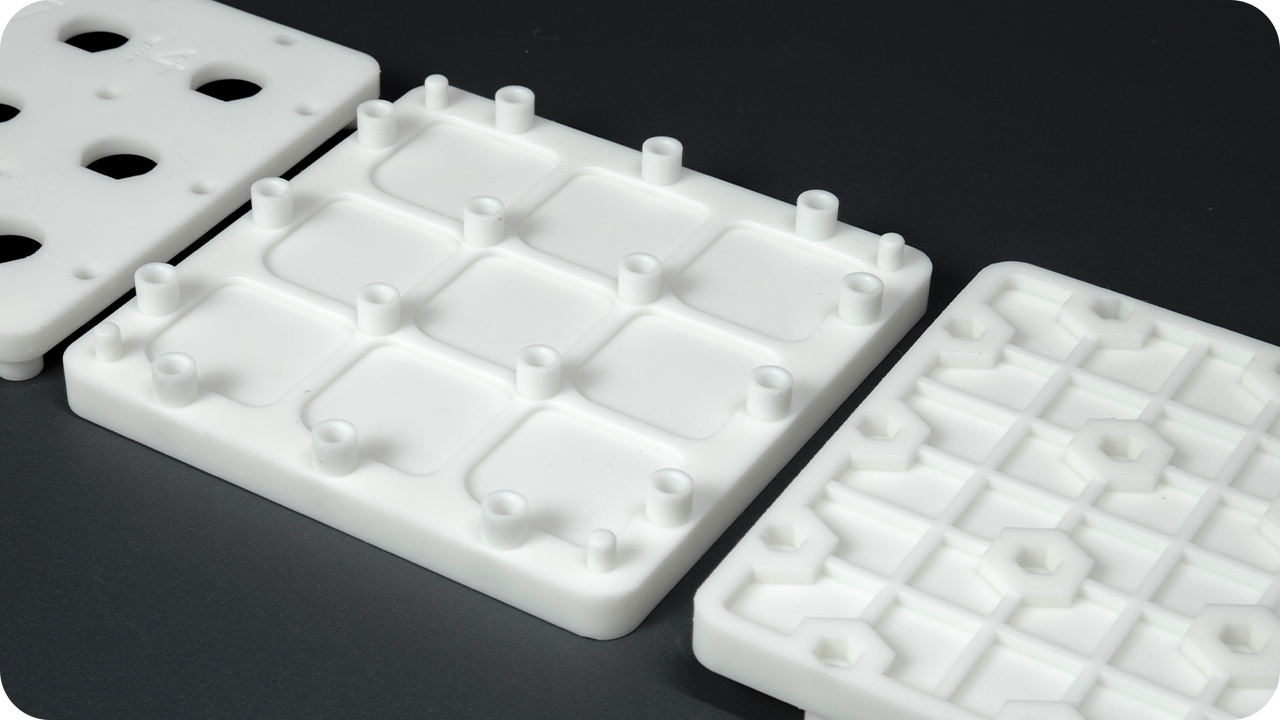
글룩의 산업용 SLA 품질 기준
✔ 표면 조도 : 레이저로 액상 수지를 정밀 경화시키는 SLA 방식은 '적층 결이 거의 보이지 않는' 매끄러운 표면을 구현합니다.
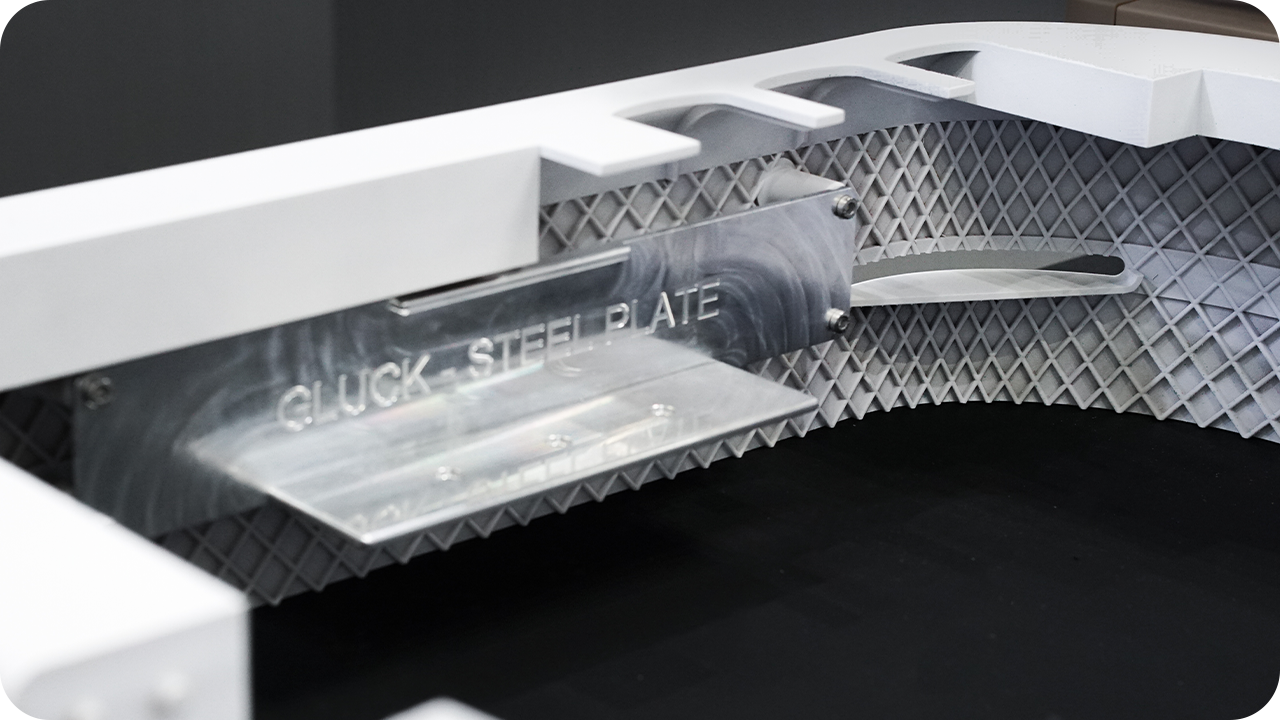
✔ 디자인 복잡성 구현 : 사출 성형으로는 불가능한 복잡한 내부 구조나 언더컷 형상도 정밀하게 구현합니다.
✔ 고정밀 치수 안정성 : 최대 ±50μm(0.05mm) 수준의 정밀도로 출력되어, 정교한 조립 공차가 필요한 부품 제작에 적합합니다.
글룩은 단순한 출력 대행을 넘어, '양산(Mass Production)'을 전제로 한 제조 파트너입니다.
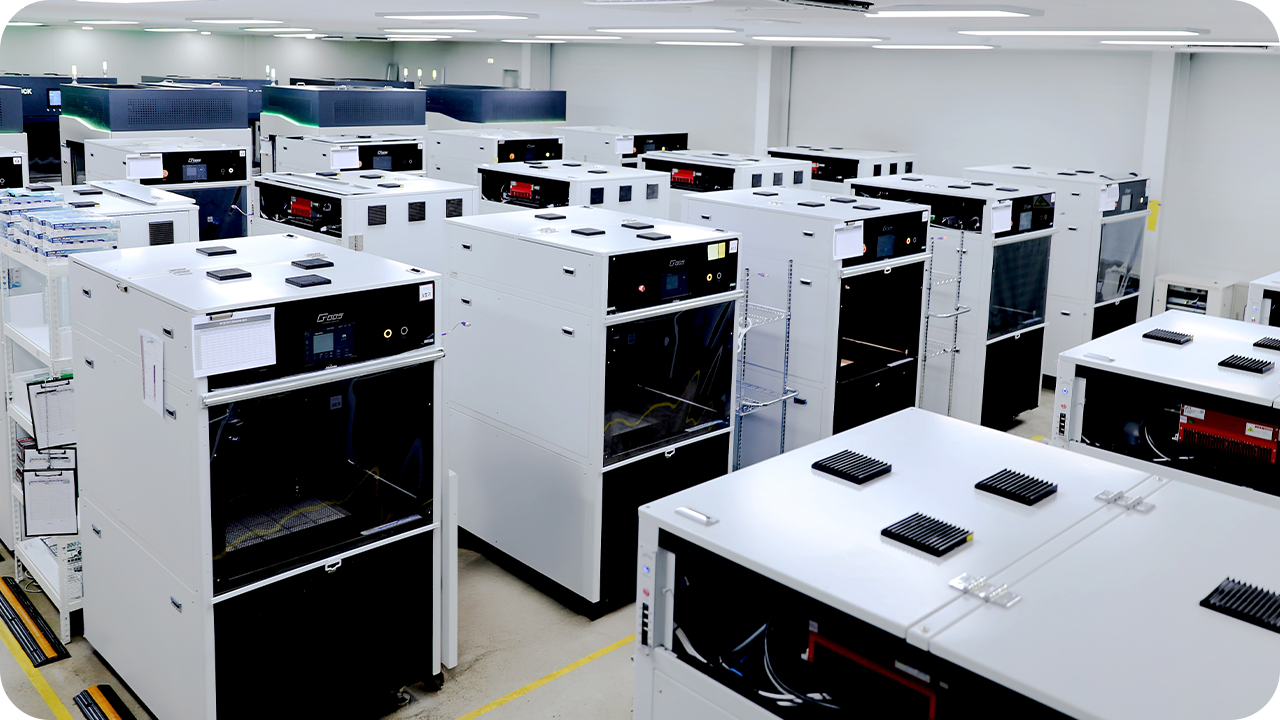
① 국내 최대 규모 3D 프린팅 스마트 팩토리
글룩은 약 40기 이상의 산업용 중·대형 SLA 3D프린터를 보유하고 있으며, 24시간 가동되는 자동화 생산 라인을 구축했습니다. 이를 통해 수천 개의 물량도 납기 지연 없이 안정적으로 공급합니다.
② 비용 절감을 위한 DfAM 컨설팅
3D프린팅 설계에 맞춰 재료 사용량을 줄이고, 불필요한 서포트를 최소화하여 재료 낭비를 줄이고 생산 비용을 절감하는 DfAM 최적화를 지원합니다.
③ 체계적인 품질 관리 시스템
시제품 하나를 만들 때와 양산품 1,000개를 만들 때의 품질 관리 기준은 다릅니다. 글룩은 양산 품질 기준을 적용하여, 균일한 품질의 제품을 납품합니다.
2026년, 제조 비지니스 경쟁력은 '유연한 대응'에 있습니다.
신제품 출시를 준비하는 과정에서 제조 방식에 대한 고민이 생기기 마련이지만, 정해진 하나의 답이 있는 것은 아닙니다.
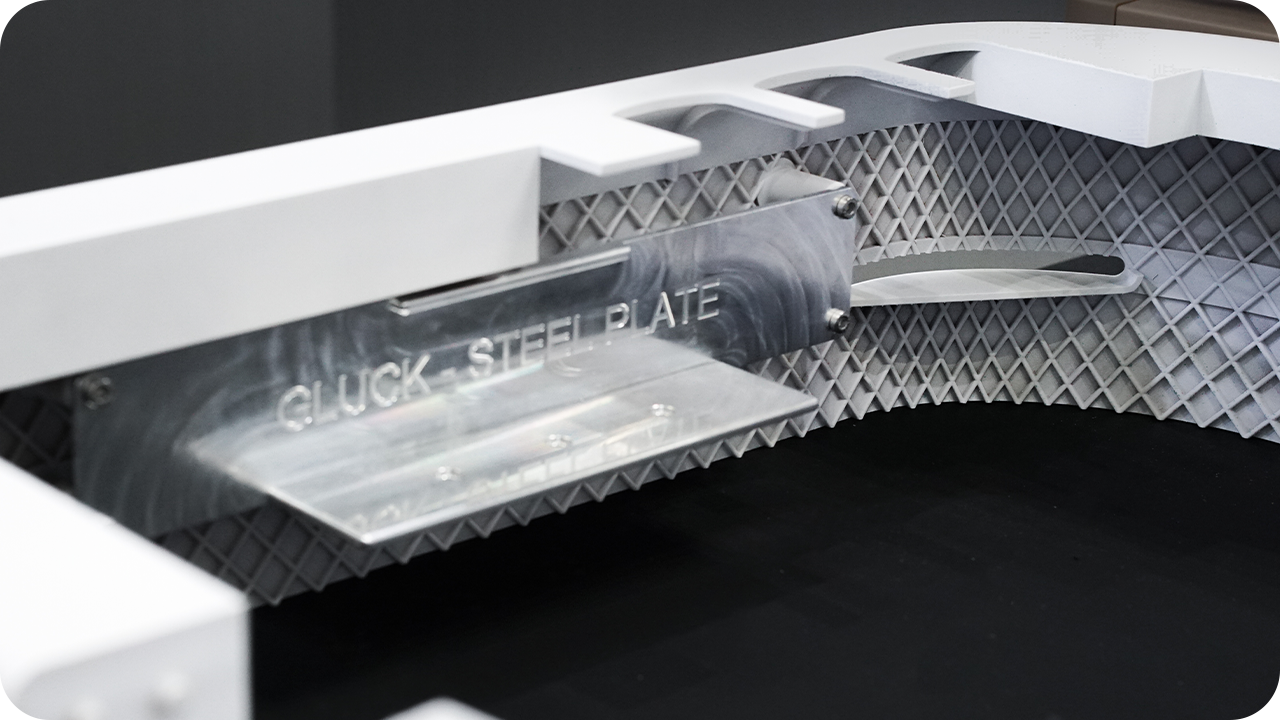
이미 시장성이 검증되어 수만 개 이상의 대량 생산이 확정되었다면, 사출 성형이 가장 효율적인 정답일 것입니다. 하지만 100개에서 5,000개 사이의 초기 물량을 생산해야 하거나, 시장 반응에 따라 설계를 빠르게 개선해야 하는 단계라면, 이 구간에서 산업용 SLA 3D프린팅은 초기 투자 비용을 아끼고 리드타임을 획기적으로 단축할 수 있는 훌륭한 전략적 선택지가 될 수 있습니다.
만약 제조단계의 유연한 대응과 속도가 필요한 시점이라면, 글룩이 귀사의 제조 고민을 덜어드리는 든든한 파트너가 되어드리겠습니다.
지금 바로 전문가와 상의하여 최적의 양산 솔루션을 확인해 보세요!
📩 글룩 홈페이지 & 온라인 견적: https://www.glucklab.com
📂 양산 성공 사례 보기: 글룩 포트폴리오 바로가기
Mass Production of 100 to 5,000 Units Series: Which Manufacturing Method is Advantageous? (Injection Molding vs. CNC vs. 3D Printing Comparison)
The new year of 2026 has dawned. We extend our deepest gratitude to the numerous customers and partners who have trusted and commissioned GLUCK over the past year. Wishing your company even greater growth and good results in 2026, we would like to summarize the common concerns many companies face at the beginning of the year.
At the beginning of the year, many companies, especially R&D teams and startups preparing to launch new products, face the critical task of 'production strategy.' This is because it is the time to decide on 'mass production' to release products into the actual market, beyond the stages of planning ideas and verifying prototypes. The section where manufacturing companies face the most difficulty at this time is the 'initial production volume between 100 and 5,000 units.' It is a range where the initial investment cost is burdensome for mass production, and the unit cost does not make sense for manual production.
In GLUCK's first insight of 2026 today, we present a clear answer through a technical and economic comparative analysis of Injection Molding, CNC Machining, and Industrial 3D Printing regarding the most efficient manufacturing method in this range.
The Trap of 'Optimal Quantity' for Initial Market Verification
A common situation many companies experience when launching new products can be confirmed through a single scenario.
[Example Scenario] A healthcare device manufacturing company has completed a 'new wearable device' after one year of development. Before the full-scale launch, they need about 1,000 units for crowdfunding or B2B market testing.
When requesting a quote for Injection Molding: 🙋🏼 "The unit price is cheap, in the hundreds of won range, but the initial mold production cost is at least several million won. It is a difficult situation as the mold cost is directly transferred to the product cost when producing 1,000 units. Economic feasibility is secured only when producing at least 5,000 to 10,000 units."
When requesting a quote for CNC Machining: 🙋 "Molds are not needed, but the machining time is very long to implement complex 3D curved surfaces. The machining unit cost is set very high, in the tens of thousands of won range, and the physical lead time required to machine 1,000 units is too long, making it difficult to meet the delivery date."
When requesting a quote for Industrial 3D Printing: 🙋🏻 "The initial investment cost is '0 won', but the unit production cost is higher compared to injection molding. You need to carefully examine the break-even point to see if the total cost for producing 1,000 units is cheaper than the mold production cost, and verification is needed on whether the surface quality or physical properties can reach the level of actual mass-produced products."
Ultimately, the working-level manager agonizes between 'High Initial Cost (Mold)', 'High Unit Cost (CNC)', and 'Production Unit Cost and Quality Verification (3D Printing)'. However, according to recent manufacturing industry data, in the range between 100 and 5,000 units, industrial 3D printing is emerging as the most reasonable alternative in terms of Total Cost of Ownership (TCO) and risk management.
Technical & Economic Comparative Analysis of the 3 Major Manufacturing Methods
To help with decision-making, we objectively compare the pros and cons of each manufacturing method.
① Injection Molding
A method of injecting melted material at high pressure into a mold made of metal to stamp out products.
- Cost Structure: High initial investment cost + very low unit production cost.
- Features: Boasts overwhelming efficiency for mass production of over tens of thousands of units. However, since the product must come out of the mold, there are many shape constraints such as 'undercuts', and there is a high risk of having to modify or discard the mold when changing the design.
- Lead Time: Weeks to months, including the mold production period.
- Suitable Production Range: Confirmed mass production of over 10,000 units.

② CNC Machining
A subtractive manufacturing method that creates shapes by cutting away raw material with tools.
- Cost Structure: Intermediate level initial cost + high unit production cost.
- Features: High precision and advantageous for metal processing, but material loss is high, and machining time increases as the shape becomes more complex. Shapes that tools cannot reach, such as undercuts, are impossible to manufacture.
- Lead Time: Unsuitable for mass production due to long machining time per unit.
- Suitable Production Range: High-precision metal parts under 100 units.
③ Industrial 3D Printing
A method of creating shapes by stacking material layer by layer based on 3D modeling data.
- Cost Structure: Initial investment cost '0 won' + constant unit production cost.
- Features: No initial cost occurs as tooling like molds is not needed. Complex internal structures or undercuts can be implemented without constraints, and production costs are constant regardless of shape complexity.
- Lead Time: Fast (hours to days). Immediate production is possible with just data.
- Suitable Production Range: High-mix low-volume production and initial mass production between 100 and 5,000 units.
Why is 3D Printing Efficient in the 100~5,000 Unit Range?
When the production quantity is 5,000 units or less, the reason why the total cost of ownership for industrial 3D printing is more efficient than injection molding can be explained in three stages.
First, Unit Price Structure by Quantity Injection molding incurs significant initial costs to make molds, so you need to produce a certain large quantity to recover that cost. On the other hand, industrial 3D printing has no mold costs, so the initial cost burden is much lower. Therefore, for relatively small volumes like 500, 1,000, or 3,000 units, saving on mold production costs often makes the overall production cost more reasonable.
Second, Flexibility of Design Changes In the early stages of a new product launch, design modifications occur according to market response. At this time, there is a big difference in the speed and burden of reflecting changes depending on the manufacturing method. Industrial 3D printing is based on design data, so modifications can be reflected relatively quickly, allowing market feedback to be immediately incorporated into the product.
Third, Speed of Market Entry Existing manufacturing methods go through several procedures from design review to the initial production stage, usually requiring a preparation period of 1 to 2 months. Industrial 3D printing enables the first production within hours to days after receiving data, and production of 1,000 units can be completed within 1 to 2 weeks, which is advantageous for market preemption.
Manufacturing Solution of GLUCK, a Professional 3D Printing Service Company
GLUCK is an SLA 3D printing professional manufacturing partner premised on 'Mass Production', going beyond simple printing agency services.
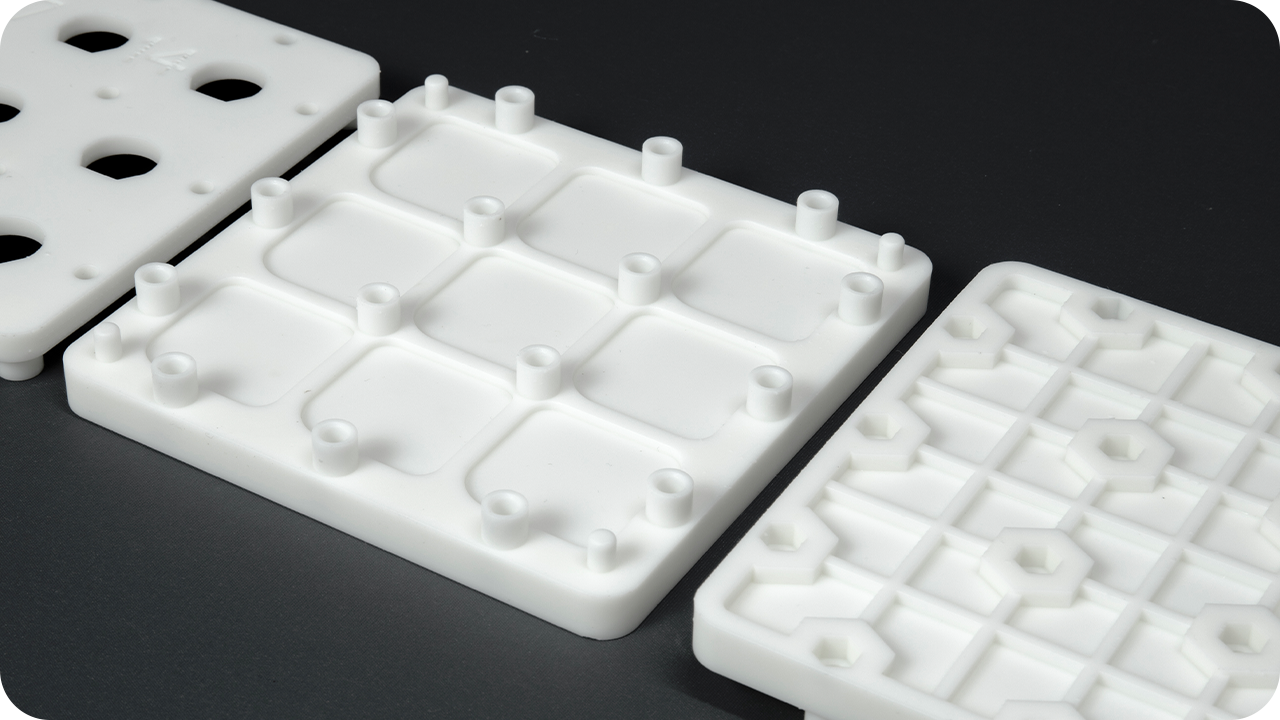
GLUCK's Industrial SLA Quality Standards
- Surface Roughness: The SLA method, which precisely cures liquid resin with a laser, implements a smooth surface where 'layer lines are almost invisible.'
- Implementation of Design Complexity: Precisely implements complex internal structures or undercut shapes that are impossible with injection molding.
- High-Precision Dimensional Stability: Printed with a precision level of up to ±50μm (0.05mm), suitable for manufacturing parts requiring precise assembly tolerances.
GLUCK is a manufacturing partner premised on 'Mass Production', going beyond simple printing agency services.
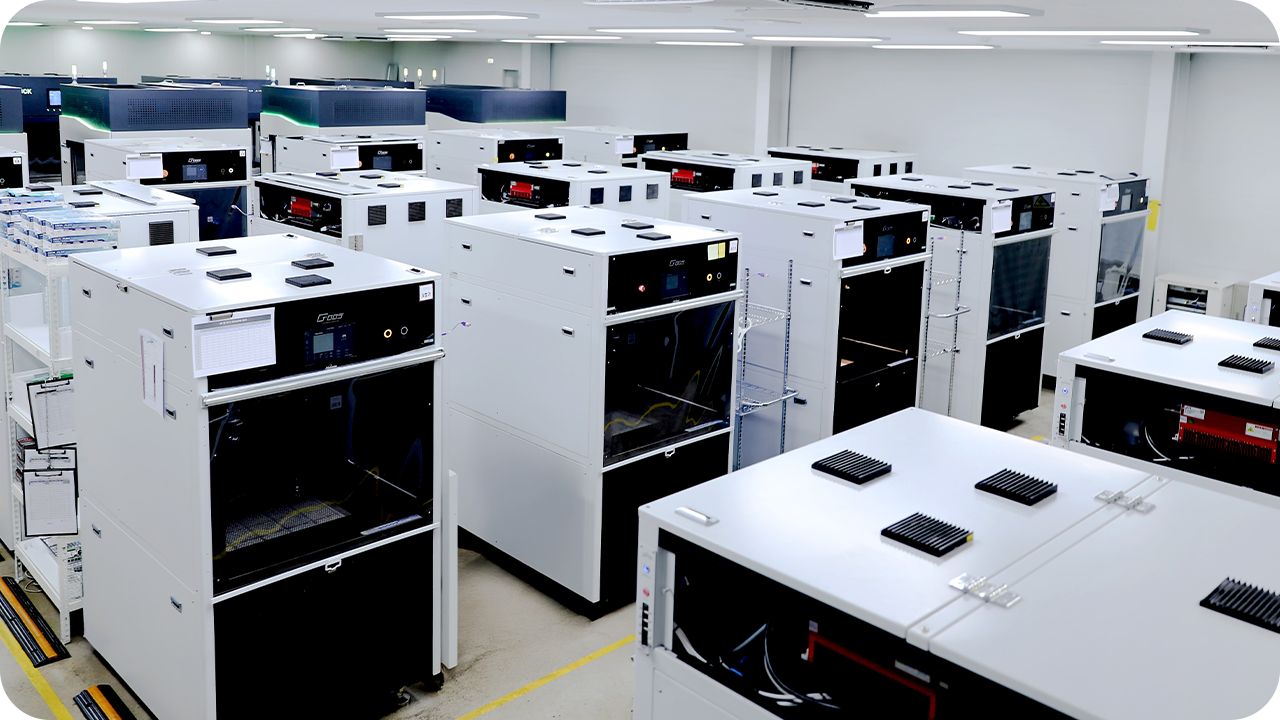
① Largest 3D Printing Smart Factory in Korea GLUCK possesses about 40 or more industrial medium and large-scale SLA 3D printers and has established an automated production line that operates 24 hours a day. Through this, we stably supply thousands of units without delivery delays.
② DfAM Consulting for Cost Reduction We support DfAM optimization that reduces material waste and production costs by reducing material usage according to the 3D printing design and minimizing unnecessary supports.
③ Systematic Quality Control System The quality control standards when making one prototype and when making 1,000 mass-produced products are different. GLUCK applies mass production quality standards to deliver products of uniform quality.
In 2026, Manufacturing Business Competitiveness Lies in 'Flexible Response'.
While concerns about manufacturing methods naturally arise in the process of preparing for a new product launch, there is no single set answer.
If marketability has already been verified and mass production of tens of thousands or more is confirmed, Injection Molding would be the most efficient answer. However, if you need to produce an initial volume between 100 and 5,000 units or are at a stage where design needs to be quickly improved according to market response, Industrial SLA 3D Printing in this range can be an excellent strategic option to save initial investment costs and drastically shorten lead times.
If it is a time when flexible response and speed in the manufacturing stage are needed,
GLUCK will be a reliable partner to ease your manufacturing concerns.
Consult with an expert right now to check the optimal mass production solution!
📩 GLUCK Website & Online Quote: https://www.glucklab.com
📂 View Mass Production Success Cases: Go to GLUCK Portfolio
#글룩 #3D프린팅 #산업용3D프린팅 #SLA3D프린팅 #대량생산 #시제품제작 #맞춤형제조 #온디맨드제조 #스마트팩토리 #브릿지생산 #사출성형 #금형비용 #CNC가공 #제조비교 #스타트업제조 #제조인사이트 #원가절감 #GLUCK #3DPrinting #Industrial3DPrinting #SLA #MassProduction #LowVolumeProduction #RapidPrototyping #MassCustomization #OnDemandManufacturing #SmartFactory #BridgeManufacturing #InjectionMolding #MoldCost #CNCMachining #ManufacturingComparison #StartupManufacturing #ManufacturingInsights #CostReduction
'인사이트 (Insights)' 카테고리의 다른 글
| 사라진 두개골의 절반, 3D프린팅으로 복원하다 (1) | 2025.12.29 |
|---|---|
| AI 3D 모델링, 맞춤 사이트 추천부터 3D프린팅 제작까지! (0) | 2025.12.17 |
| 너무 많은 부품, 어떻게 제작하면 좋을까요? (0) | 2025.12.16 |
| 잘나가는 스타트업은 왜 3D프린팅부터 시작할까? (0) | 2025.12.12 |
| 3D프린팅으로 제품 만들기 전에 알아야 할 모든 것, 품질 기준부터 업체 선택까지! (0) | 2025.12.11 |