
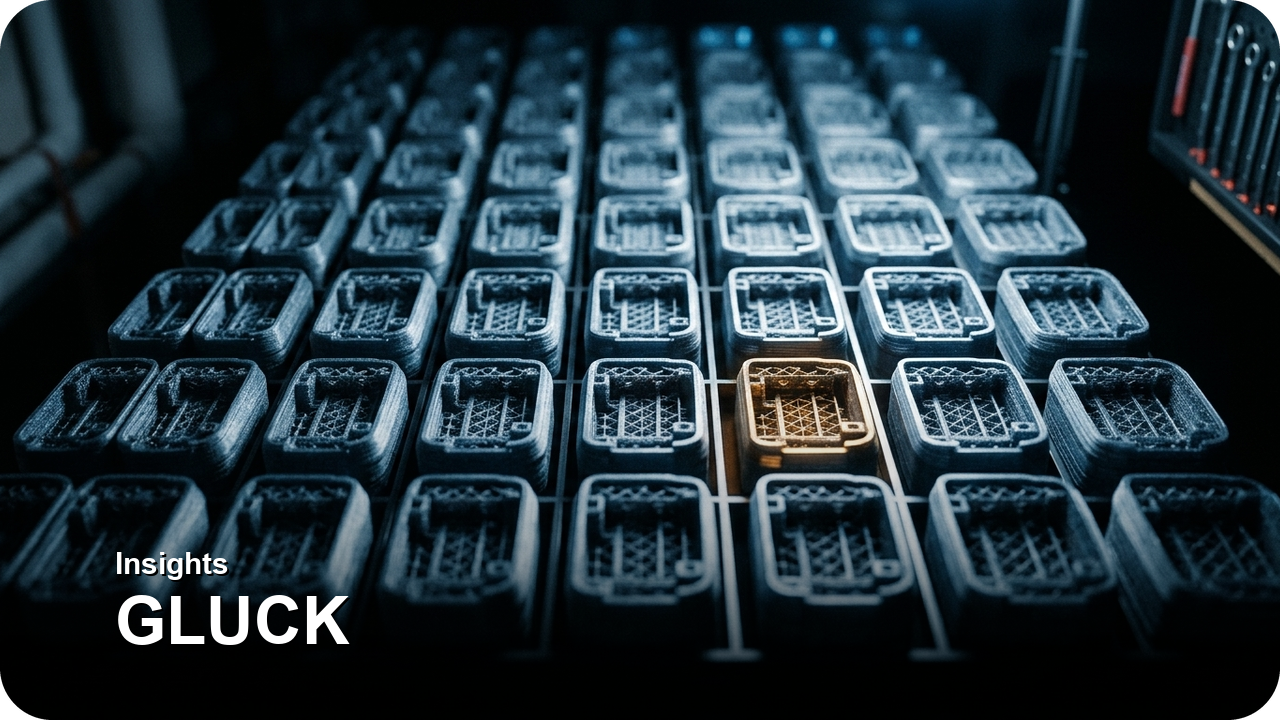
모빌리티 부품 설계에서 무게는 늘 마지막까지 붙잡고 씨름하는 변수입니다. 특히 적재량이 빠듯한 소형 차량일수록 셸(외피 구조물) 하나의 무게가 프로젝트의 성패를 가르곤 합니다. 최근 대형 3D프린팅 기술이 이 무게 싸움에 실질적인 해법을 제시하면서, 커버와 하우징 같은 외피 부품의 설계 방식 자체가 바뀌고 있습니다.
3D프린팅 전문 매체 3D Printing Industry 보도에 따르면, 이탈리아 라이더 프란체스코 푸를라니(Francesco Furlani)는 3륜 소형차 피아지오 Ape TM 703에 대형 3D프린팅으로 만든 캠퍼 바디를 얹고 이탈리아에서 노르웨이 노르카프(North Cape)까지 4,500km 넘는 여정을 완주했습니다. 핵심은 셸의 무게였습니다. 유사한 유리섬유 구조물이 약 200kg인 데 비해, 프린팅 폼 셸은 약 70kg에 불과했습니다. 이 130kg의 차이가 침대·주방·배터리·물과 식량을 실을 여유를 만들었고, 그것이 곧 여행의 가능 여부를 결정했습니다.
그렇다면 3D프린팅 경량 셸은 모빌리티 부품 설계를 어떻게 바꾸는 것일까요? 이 사례를 단순한 캠핑카 이야기가 아니라, 경량 복잡 셸을 소량으로 양산해야 하는 제조사의 관점에서 짚어봅니다.
Nugae와 DCab : 무게를 3분의 1로 줄인 폼 셸
이 프로젝트는 두 이탈리아 기업의 협업으로 완성됐습니다. 소재·제조 스타트업 Nugae가 셸 소재와 엔지니어링을 담당했고, DCab이 그 셸을 실제 주행 가능한 차체로 통합하는 작업을 맡았습니다. 셸은 Nugae가 재활용 폴리프로필렌으로 개발한 열가소성 폼 소재 CoreLight3D로 프린팅됐습니다.

이 소재는 원료 상태에서 약 300kg/m³의 밀도를 갖지만, 얇은 벽과 속이 빈 내부 구조로 프린팅되면 완성 부품의 실효 밀도가 약 100kg/m³ 수준으로 떨어집니다. 벽 두께는 수 밀리미터에 불과하고, 소재는 부품 전체에 고르게 쌓이는 대신 실제 하중이 지나가는 경로를 따라서만 적층됩니다.
문제는 경량 구조물을 다뤄본 사람이라면 익숙한 딜레마입니다. 무게를 덜어내면 밀봉성과 강성도 함께 빠져나가기 쉽습니다. 대부분의 대형 프린팅 경량화 방식은 이 손실을 감수합니다. 하지만 이 프로젝트는 처음부터 그 손실을 피하는 것을 목표로, 소재량을 줄이면서도 방수·단열·내구성을 유지하도록 설계됐습니다. 추가 강성이 필요한 부위는 프린팅한 코어에 유리섬유나 탄소섬유 스킨을 접합해 무게를 거의 늘리지 않고 보강했습니다.
- 하중 경로 중심의 소재 배치: 부품 전체를 채우는 대신 힘이 실리는 경로에만 소재를 쌓아, 강성을 유지하면서 무게를 크게 덜어냈습니다.
- 반제품으로 출력 후 통합: 프린팅된 셸은 완제품이 아니라 라미네이션·접합·마감·도장을 거치는 구조 반제품으로 나오며, 실제 차체로 만드는 통합 작업은 DCab이 별도로 수행했습니다.
이 방식은 소량으로 만들어야 하는 경량 셸·커버 부품 전반에 그대로 적용될 수 있는 설계 사고입니다.
왜 경량 셸을 금형으로 만들기 어려울까요?
프린팅으로 가벼운 셸을 뽑아내는 것만으로 문제가 다 풀리는 것은 아닙니다. 그것을 실제 차체로 기능하게 만드는 통합 작업이 별도로 필요했고, DCab은 Ape TM 703 플랫폼의 기계적 제약에 맞춰 장착 지점·무게 분포·시스템 호환성을 조정했습니다. 여기서 제조 관점의 핵심 질문이 드러납니다. 이런 경량·복잡 셸을 소량으로 양산하려 할 때, 기존 금형 방식은 왜 잘 맞지 않을까요?
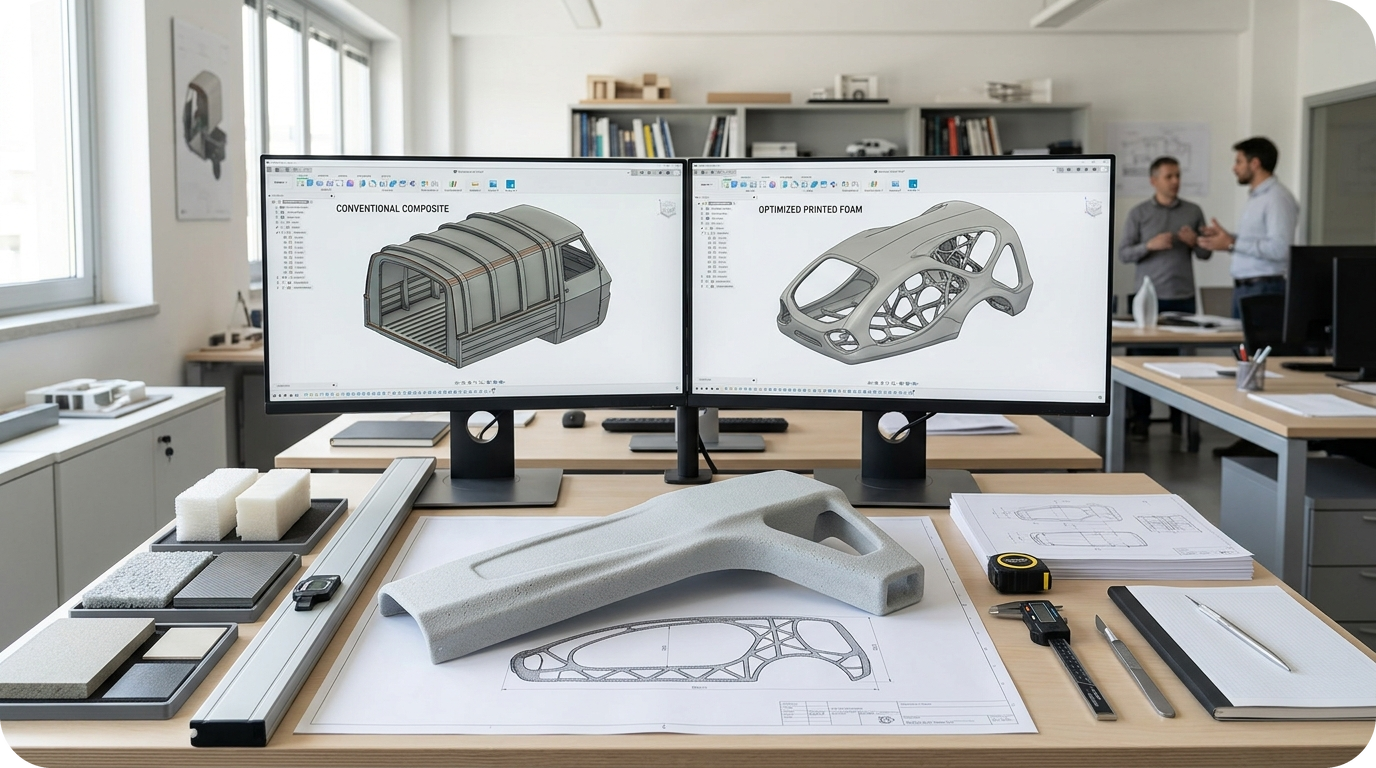
경량 셸을 양산 관점에서 볼 때 금형에는 두 가지 벽이 있습니다.
- 초기 투자와 회수의 벽: 유리섬유 성형이나 사출용 금형은 형상 하나를 확정하는 데 큰 초기 비용이 듭니다. 이 사례처럼 한 대의 차량, 혹은 초도·브릿지 물량 수준의 셸을 만들 때는 금형비를 회수할 물량 자체가 나오지 않습니다.
- 복잡 형상과 설계 반복의 벽: 속이 비고 하중 경로를 따라 두께가 달라지는 구조, 언더컷(금형에서 빠지지 않는 걸림 구조)이 많은 형상은 금형으로 구현하기 어렵거나 분할·조립 공수가 늘어납니다. 설계를 한 번 바꿀 때마다 금형을 다시 손봐야 하는 부담도 큽니다.
그래서 이런 프로젝트에서는 금형 없이 데이터에서 곧바로 셸을 뽑아내는 적층 방식이 현실적인 선택지가 됩니다. 물론 동일한 단순 셸을 초대량으로 찍어내는 상황이라면, 개당 단가에서 여전히 금형 성형이 유리합니다.
산업용 SLA로 경량 커버·하우징을 반복 생산한다면
위 사례는 대형 로봇 압출 방식(UL-LFAM)으로 만든 대형 차체 셸이라는 점에서 GLUCK이 다루는 SLA와는 공정이 다릅니다. 다만 "경량·복잡 형상 외피 부품을 금형 없이 소량 반복 생산한다"는 설계 사고는 산업 현장의 커버·하우징 부품에 그대로 이어집니다. 바로 이 지점에서 산업용 SLA 3D프린팅이 조건부 대안으로 부상합니다.
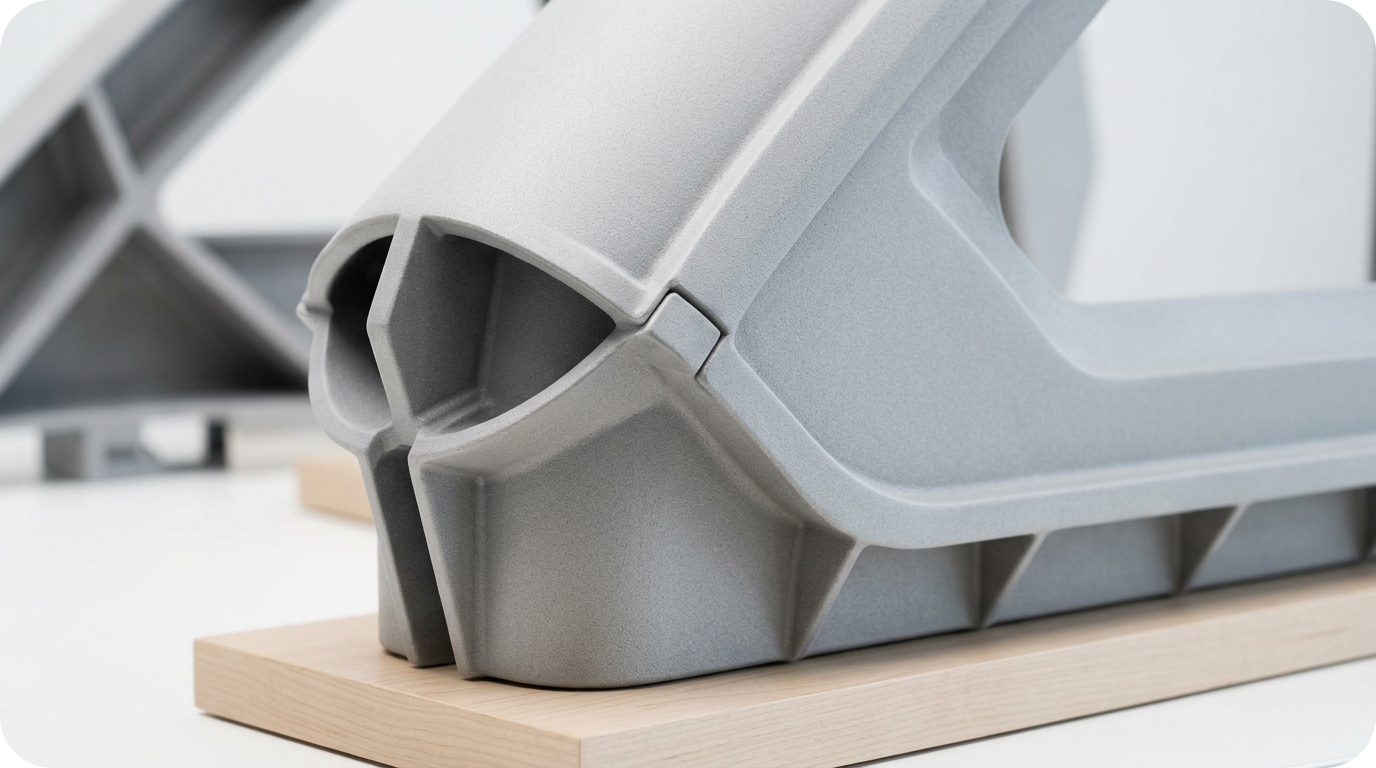
💡 핵심은 '금형 없는 반복생산'입니다. GLUCK은 약 45기의 산업용 SLA 장비를 기반으로, 데이터만 확정되면 금형 제작 기간 없이 곧바로 생산에 들어갑니다. 최대 ±0.05mm 정밀도와 Ra 0.8 수준의 표면을 구현해, 후가공 시 사출품과 구별이 어려운 마감으로 외장 커버·하우징을 최종 부품으로 활용할 수 있습니다.
- 금형 없는 반복생산: 설계 변경이 잦은 개발·초도 양산 구간에서 데이터 수정 후 바로 재출력이 가능합니다.
- 복잡 형상과 부품 통합: 속이 빈 내부 구조나 여러 부품을 하나로 합친 형상을 분할 없이 구현해, 조립 공수와 결합부 편차를 줄입니다.
- 다품종 반복 생산: 로봇 외장 커버 소량 양산, 생산라인 지그·치구·검사구, 의료기기 하우징/커버처럼 형상이 다양한 부품을 반복 생산하는 데 적합합니다.
다만 SLA가 모든 경우의 정답은 아닙니다. 동일 형상을 초대량으로 생산하거나, 단순한 형상을 최저 단가로 찍어야 하거나, 고하중을 견디는 금속 구조 부품이 필요하다면 사출·절삭 등 기존 공법이 여전히 유리합니다. SLA는 소량·다품종·복잡 형상의 경량 셸과 커버·하우징에서 강점을 발휘하는 조건부 선택지입니다.
이번 이탈리아 사례가 보여준 것은 경량화가 단순한 무게 절감이 아니라 프로젝트의 가능 여부 자체를 바꾼다는 점입니다. 130kg의 차이가 여행을 성사시켰듯, 모빌리티와 산업 부품 설계에서 셸 하나의 무게는 성능·비용·양산성을 동시에 좌우합니다.
3D프린팅은 이제 그 무게 싸움에서 설계 자유도와 소량 양산성을 동시에 확보하려는 제조사에게 현실적인 선택지로 자리 잡고 있습니다. 조건이 맞을 때, 금형 없이 경량 복잡 셸을 반복 생산하는 방식은 검토해볼 만한 대안입니다.
GLUCK은 반복 생산이 가능한 산업용 SLA 3D프린팅 인프라를 기반으로
모빌리티 커버·하우징 개발과 양산 전환 과정에 필요한 3D프린팅 제조 솔루션을 지원하고 있습니다.
지금 글룩을 확인해보세요!
📩 글룩 홈페이지 & 온라인 견적: https://www.glucklab.com
📂 글룩 포트폴리오: 글룩 포트폴리오 확인하기
References
[1] 3D Printing Industry, "70kg vs 200kg: How a Printed Foam Shell Made an Ape Camper Road-Trip Possible," 3dprintingindustry.com. Link: https://3dprintingindustry.com/news/70kg-vs-200kg-how-a-printed-foam-shell-made-an-ape-camper-road-trip-possible-254196/
English Version
From 200kg to 70kg: The Lightweight Shell Design Behind a 3-Wheeled Italian Camper's Journey to Nordkapp
In mobility part design, weight is a variable engineers wrestle with until the very end. On payload-constrained small vehicles in particular, the weight of a single shell (exterior structure) often decides a project's success. As large-format 3D printing offers a practical answer to this weight battle, the very way exterior parts like covers and housings are designed is changing.
According to 3D Printing Industry, Italian rider Francesco Furlani completed a journey of over 4,500km from Italy to North Cape (Nordkapp) in Norway, driving a three-wheeled Piaggio Ape TM 703 fitted with a camper body built through large-format 3D printing. The key was the weight of the shell. Compared with about 200kg for a similar fiberglass structure, the printed foam shell weighed only around 70kg. That 130kg difference made room for a bed, kitchen, batteries, water, and food — and that determined whether the trip was possible at all.
So, how is a 3D-printed lightweight shell changing the design of mobility parts? We examine this case not merely as a camper story, but from the perspective of a manufacturer that must produce lightweight, complex shells in low volumes.
Nugae and DCab: A Foam Shell That Cut Weight to a Third
The project was made possible by two Italian companies. Material and manufacturing startup Nugae developed the shell material and provided engineering support, while DCab handled turning that shell into a functioning vehicle body. The shell was printed with CoreLight3D, a thermoplastic foam Nugae developed from recycled polypropylene.
In raw form the material has a density of about 300kg/m³, but once printed into thin walls and hollow internal geometries, the finished part's effective density drops to around 100kg/m³. Walls are only a few millimeters thick, and material is deposited only along the paths that actually carry structural load, rather than uniformly across the part.
The challenge is a dilemma familiar to anyone working with lightweight structures. Stripping out mass tends to strip out sealing and stiffness along with it. Most large-format printing weight-reduction methods accept that trade-off. But this project was designed from the start to avoid it, preserving weatherproofing, insulation, and durability despite reduced material volume. Where extra rigidity was needed, the printed core was bonded with fiberglass or carbon-fiber skins, adding stiffness without significant weight.
- Load-path-based material placement: Instead of filling the whole part, material was deposited only along paths carrying load, maintaining stiffness while cutting weight substantially.
- Output as a semi-finished part, then integration: The printed shell comes out not as a finished component but as a structural semi-finished piece for lamination, bonding, finishing, and paint. The work of making it a real vehicle body was performed separately by DCab.
This is a design mindset that applies directly to lightweight shells and covers that must be produced in low volumes.
Why Is It Difficult to Make Lightweight Shells with Molds?
Printing a lightweight shell doesn't solve everything. Making it function as an actual vehicle body required a separate integration effort, and DCab adapted the geometry to the Ape TM 703 platform's mechanical constraints — mounting points, weight distribution, and system compatibility. Here the core manufacturing question emerges: when producing such lightweight, complex shells in low volumes, why do conventional molds fall short?
From a production standpoint, molds face two walls for lightweight shells.
- The wall of upfront investment and recovery: Fiberglass or injection molds require large upfront costs just to finalize one shape. For a single vehicle, or initial/bridge volumes like this case, the quantity to recover the tooling cost simply isn't there.
- The wall of complex shapes and design iteration: Hollow shapes with thickness varying along load paths, or shapes with many undercuts (features that can't release from a mold), are hard to mold or increase splitting and assembly work. Every design change also burdens the mold with rework.
That is why additive methods that pull a shell straight from data, with no mold, become a realistic option in such projects. Of course, if you are churning out identical simple shells in very large volumes, mold forming still wins on per-unit cost.
Repeatable Production of Lightweight Covers and Housings with Industrial SLA
The case above used large-format robotic extrusion (UL-LFAM) for a large vehicle shell, a different process from the SLA that GLUCK handles. Still, the design mindset of "producing lightweight, complex exterior parts repeatedly without molds" carries directly into industrial covers and housings. This is precisely where industrial SLA 3D printing emerges as a conditional alternative.
💡 The key is "repeatable production without molds." Based on around 45 industrial SLA machines, GLUCK begins production immediately once data is finalized, with no mold-making period. It achieves up to ±0.05mm precision and Ra 0.8 surface, delivering a finish hard to distinguish from injection-molded parts, so exterior covers and housings can serve as end-use parts.
- Mold-free repeatable production: In development and initial production with frequent design changes, you can reprint immediately after editing data.
- Complex shapes and part consolidation: Hollow internal structures or several parts merged into one shape can be realized without splitting, reducing assembly work and joint deviation.
- High-mix repeat production: It suits repeatable production of varied shapes such as low-volume robot exterior covers, production-line jigs and inspection fixtures, and medical device housings and covers.
That said, SLA is not the answer in every case. If you produce an identical shape in very high volumes, need the lowest per-unit cost for a simple shape, or require metal structural parts that bear high loads, conventional methods like injection or machining remain more advantageous. SLA is a conditional option that excels for low-volume, high-mix, complex lightweight shells and covers/housings.
What this Italian case showed is that lightweighting is not merely weight reduction but can change whether a project is possible at all. Just as 130kg made the trip happen, in mobility and industrial part design the weight of a single shell simultaneously governs performance, cost, and manufacturability.
3D printing is now establishing itself as a realistic option for manufacturers seeking both design freedom and low-volume production capacity in this weight battle. When conditions align, producing lightweight complex shells repeatedly without molds is an alternative worth considering.
GLUCK supports the 3D printing manufacturing solutions needed for the development and mass-production transition of mobility covers and housings, based on an industrial SLA 3D printing infrastructure capable of repeatable production.
Check out GLUCK now!
📩 GLUCK Homepage & Online Quote: https://www.glucklab.com
📂 GLUCK Portfolio: View GLUCK Portfolio
References
[1] 3D Printing Industry, "70kg vs 200kg: How a Printed Foam Shell Made an Ape Camper Road-Trip Possible," 3dprintingindustry.com. Link: https://3dprintingindustry.com/news/70kg-vs-200kg-how-a-printed-foam-shell-made-an-ape-camper-road-trip-possible-254196/
#글룩 #GLUCK #3D프린팅 #산업용3D프린팅 #SLA3D프린팅 #경량화 #모빌리티부품 #커버하우징 #반복생산 #DfAM #금형없는양산 #3DPrinting #SLA3DPrinting #AdditiveManufacturing #Lightweighting #MobilityParts #Housing #MassCustomization
'인사이트 (Insights)' 카테고리의 다른 글
| 만지는 순간 완성되는 전시 : 아이들이 만든 3D프린팅 로봇 동물원이 브랜드 오브제에 남긴 힌트 (0) | 2026.09.08 |
|---|---|
| 발 하나하나가 다르다 : 맞춤 보조기 스타트업이 2,250만 달러를 받은 진짜 이유 (0) | 2026.09.08 |
| 프린터 39만 대의 시대, 중국이 완성한 'AM 스택' 다음에 온 진짜 승부처 (1) | 2026.09.02 |
| AM 업계 매출 지도가 바뀌었다 : 3D프린팅 제조 파트너를 고를 때 봐야 할 진짜 기준 (0) | 2026.09.01 |
| 시속 320km 고속열차 앞부분을 금형 없이 만든 철도 회사 (0) | 2026.08.31 |