
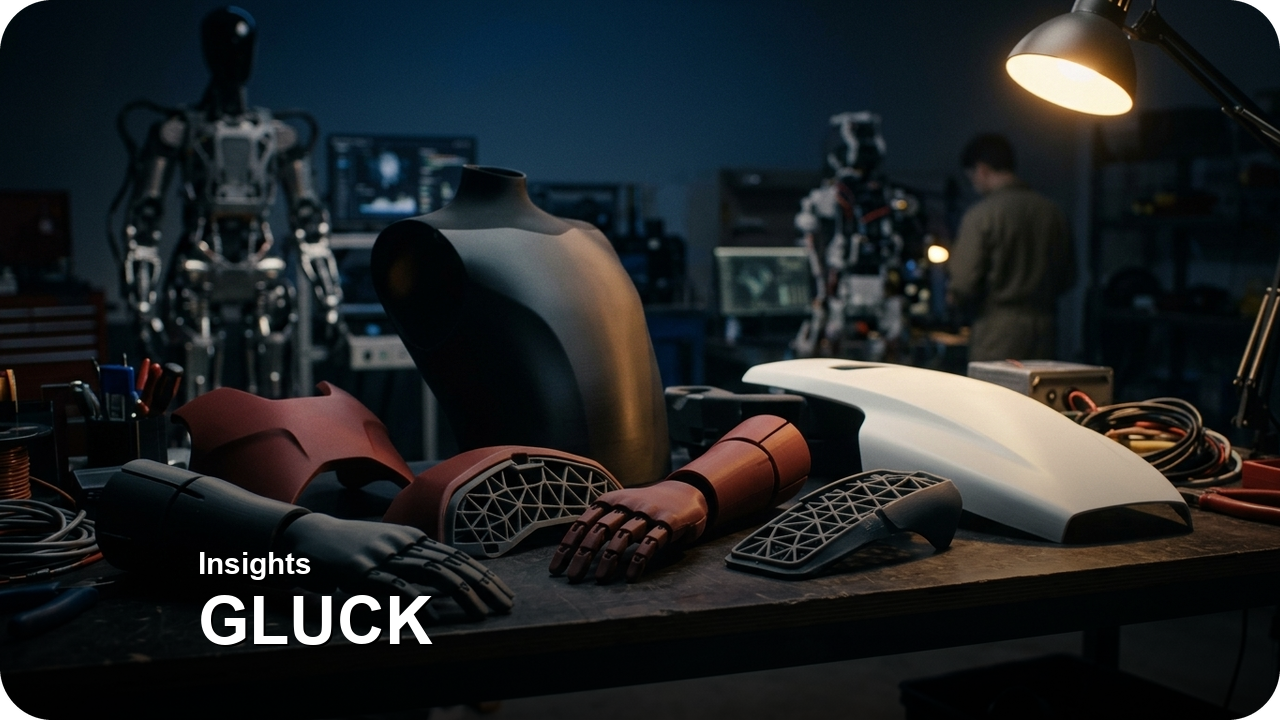
최근 휴머노이드 로봇 뉴스를 보면 대부분의 화제가 'AI 두뇌'에 쏠려 있습니다. 어떤 모델이 더 똑똑하게 걷고 물건을 집는지, 어떤 회사가 얼마나 큰 컴퓨팅 자원을 확보했는지가 헤드라인을 채웁니다. 로봇이 사람처럼 판단하고 움직이는 시대가 성큼 다가온 만큼, 그 지능을 뒷받침하는 인프라에 관심이 쏠리는 것은 자연스러운 일입니다.
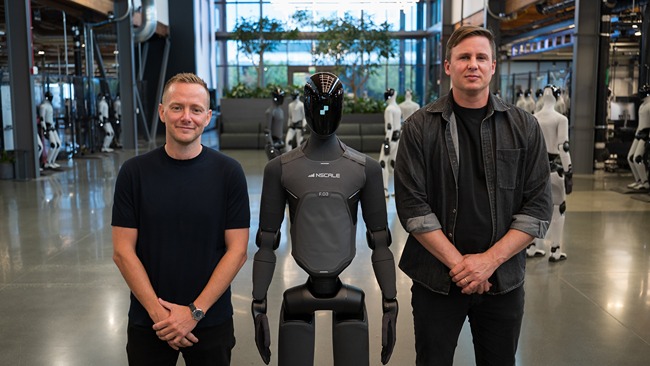
휴머노이드 로봇 기업 Figure는 AI 컴퓨팅 인프라 기업 Nscale과 파트너십을 맺고 로봇의 AI 연산을 대규모로 확장한다고 밝혔습니다. 휴머노이드가 실제 산업 현장에 투입되려면 방대한 학습·추론 연산이 필요하고, 이를 감당할 컴퓨팅 파트너를 확보하는 것이 곧 경쟁력이라는 판단입니다.
그런데 이 화제의 이면에는 잘 언급되지 않는 질문이 하나 있습니다. AI 두뇌가 아무리 똑똑해져도, 그 두뇌와 부품을 담는 로봇의 '외피', 즉 하우징과 커버는 누가 어떻게 만드느냐는 문제입니다. 휴머노이드 로봇 부품과 하우징은 실제로 어떻게 유연하게 양산될까요? 오늘은 AI 컴퓨팅 화제에 가려진 로봇 하드웨어 양산 문제를, 제조 관점에서 짚어보겠습니다.
Figure : AI는 소프트웨어로 확장되지만, 외피는 물리적으로 만들어야 한다
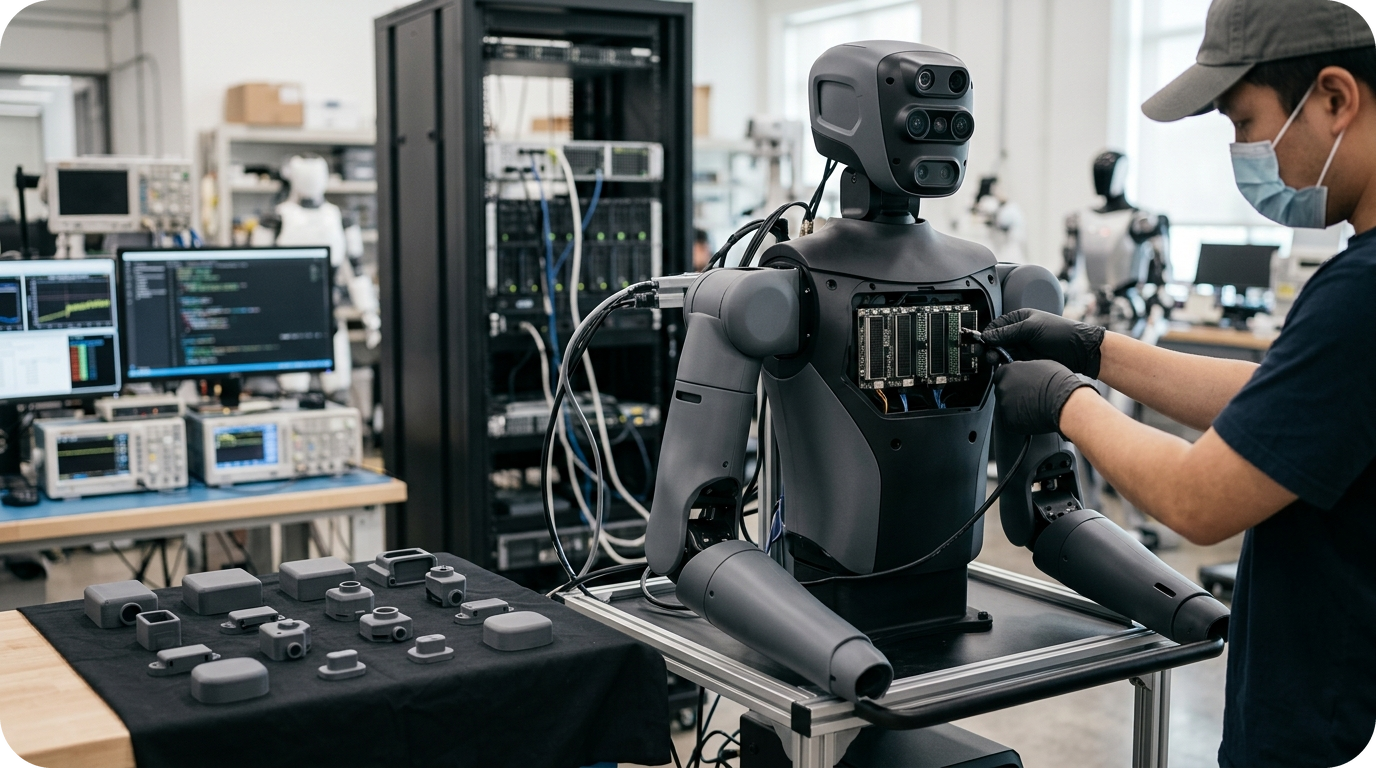
Figure와 Nscale의 파트너십은 로봇의 지능을 클라우드와 대규모 GPU로 확장하는 전략입니다. 소프트웨어와 연산 자원은 데이터센터를 늘리는 방식으로 비교적 유연하게 확장할 수 있습니다. 하지만 로봇의 팔, 다리, 몸통을 감싸는 외장 커버와 하우징은 사정이 다릅니다. 이것들은 반드시 물리적으로 성형되어야 하고, 로봇이 늘어나는 만큼 실제 부품도 하나하나 만들어져야 합니다.
문제는 휴머노이드 로봇의 외장 부품이 초기 양산 단계에서 매우 자주 바뀐다는 점입니다. 관절 가동 범위를 조정하거나 센서 위치를 옮기면 커버 형상도 함께 바뀝니다. 여기서 기존 방식의 두 가지 벽이 드러납니다.
- 금형비와 설계 변경 비용: 사출 방식으로 외장 커버를 만들려면 부품 하나마다 금형이 필요하고, 금형 하나에 수천만 원에서 억 단위 비용이 듭니다. 설계가 바뀌면 금형을 수정하거나 다시 제작해야 하는데, 이 비용과 시간이 개발 속도를 붙잡습니다.
- 소량·다품종이라는 딜레마: 램프업 초기의 휴머노이드는 한 형상을 수십만 개씩 찍는 단계가 아닙니다. 여러 버전의 커버를 수십~수천 개 단위로, 그것도 자주 바꿔가며 만들어야 합니다. 이 조건은 대량 동일품에 최적화된 금형 방식과 정확히 어긋납니다.
즉 AI 두뇌는 컴퓨팅을 늘려 확장하지만, 로봇의 외피는 소량·다품종 부품을 반복해서 만들어야 하는 물리적 제조 문제로 남습니다. 바로 이 지점이 휴머노이드 양산 램프업에서 자주 병목이 되는 구간입니다.
로봇 외장 부품 : 왜 '반복 생산'이 핵심 과제가 되는가
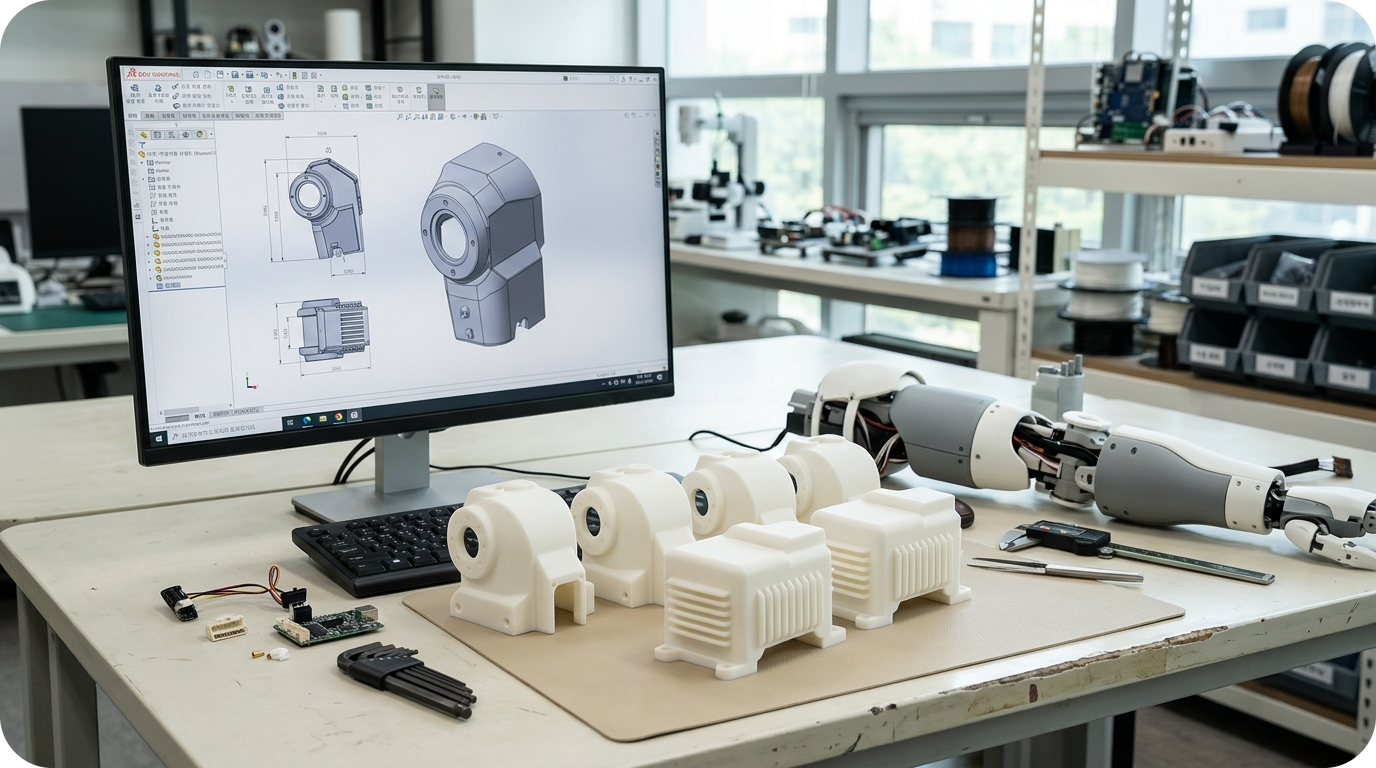
휴머노이드 로봇 한 대에는 머리 커버, 어깨·팔 하우징, 관절 브라켓, 센서 마운트 등 수십 개의 외장 부품이 들어갑니다. 이 부품들은 저마다 형상이 다르고, 개발이 진행되는 동안 지속적으로 수정됩니다. 여기서 제조 담당자가 마주하는 현실적인 고민은 명확합니다. 적은 수량을, 여러 형상으로, 자주 바꿔가며, 그러면서도 품질은 균일하게 만들어야 한다는 것입니다.
기존 방식으로 이 조건을 맞추려면 어려움이 큽니다. 금형은 초기 비용과 리드타임이 크고, CNC 절삭은 복잡한 내부 구조나 유기적 곡면 형상에서 가공 제약과 단가 부담이 생깁니다. 특히 외장 커버처럼 얇고 곡면이 많은 부품은 절삭으로 구현하기 까다롭고 재료 낭비도 큽니다.
이 때문에 로봇 하드웨어 개발에서는 '금형 없이, 형상 자유도를 유지하면서, 반복 생산이 가능한' 제조 방식에 대한 수요가 커지고 있습니다. 설계를 바꾸면 바로 다음 생산에 반영되고, 여러 버전을 동시에 만들 수 있으며, 최종 부품 수준의 표면 품질을 확보할 수 있어야 합니다. 이 조건을 충족하는 방식이 로봇 외장 부품 양산의 실질적인 해법이 됩니다.
산업용 SLA 3D프린팅과 GLUCK : 로봇 외피의 유연 양산
앞서 짚은 제조 문제 — 소량·다품종, 잦은 설계 변경, 복잡한 곡면 형상, 최종 부품 수준의 표면 품질 — 는 실제 산업 현장에서 산업용 SLA 3D프린팅을 통해 유력한 대안으로 다뤄지고 있습니다. SLA는 금형 없이 디지털 설계 데이터만으로 생산에 들어가기 때문에, 형상이 바뀌어도 금형 수정 없이 곧바로 다음 생산에 반영할 수 있습니다.
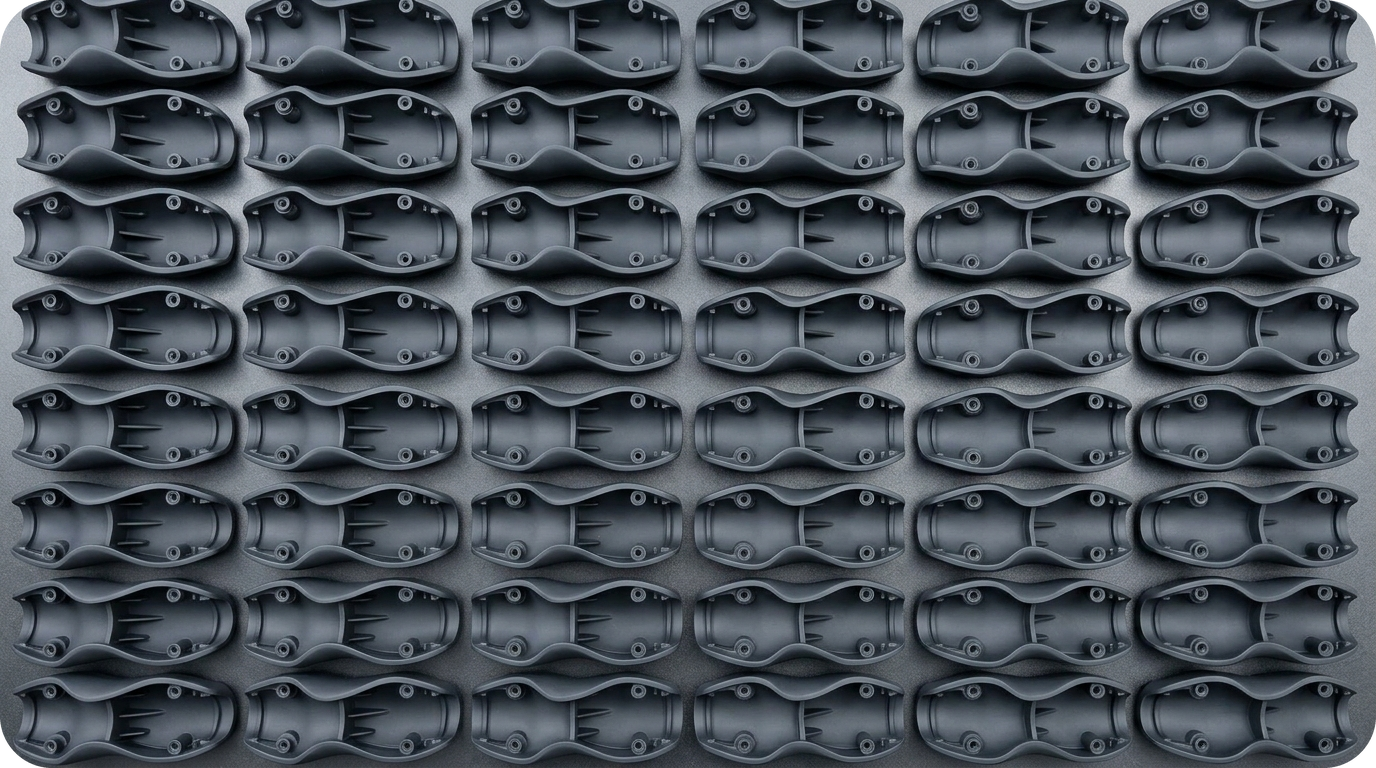
GLUCK은 약 45기의 산업용 SLA 장비를 365일 24시간 운용하며, 로봇 외장 커버 소량 양산을 실제로 수행하고 있습니다. 이 구간에서 SLA가 유리한 이유는 다음과 같습니다.
- 금형 없는 반복생산: 설계 데이터만 있으면 바로 생산에 들어가고, 여러 버전의 커버를 동시에 반복 양산할 수 있습니다. 램프업 과정에서 형상이 자주 바뀌는 휴머노이드 외장에 적합합니다.
- 최종 부품 수준의 표면과 정밀도: GLUCK 기준 최대 ±0.05mm 정밀도와 Ra 0.8 표면을 구현하며, 후가공 시 사출품과 구별이 어려운 마감이 가능합니다. 외장 하우징·커버를 별도 공정 없이 최종 부품으로 쓸 수 있습니다.
- 복잡 형상과 부품 통합: 얇은 곡면, 내부 격자 구조, 여러 부품을 하나로 합친 일체형 설계까지 구현해 조립 공수를 줄일 수 있습니다.
다만 SLA가 모든 경우의 정답은 아닙니다. 동일한 형상의 외장 부품을 수만~수십만 개 이상 찍어야 하는 초대량 단계, 혹은 고하중을 받는 금속 구조 부품이라면 사출이나 기존 금속 가공이 더 유리합니다. GLUCK이 다루는 영역은 폴리머 기반의 외장 하우징·커버·브라켓처럼, 다품종을 반복 양산하는 구간입니다. 로봇 외장 커버 외에도 생산라인 지그·치구·검사구, 의료기기 하우징/커버 같은 부품이 같은 원리로 반복 생산됩니다.
결국 휴머노이드 로봇의 경쟁력은 AI 두뇌만으로 완성되지 않습니다. 그 두뇌와 부품을 담아내는 외피를, 개발 속도를 따라잡으며 유연하게 양산할 수 있느냐가 또 하나의 숨은 관문입니다. 형상이 자주 바뀌고 수량이 많지 않은 이 구간에서, 금형 없이 반복 생산하는 산업용 SLA는 휴머노이드 하드웨어를 현실적으로 만들어내려는 제조사에게 유력한 선택지입니다. 물론 초대량 동일품 단계에 접어들면 기존 공법과의 조합을 함께 검토하는 것이 합리적입니다.
GLUCK은 반복 생산이 가능한 산업용 SLA 3D프린팅 인프라를 기반으로
로봇 하드웨어 개발과 양산 전환 과정에 필요한 3D프린팅 제조 솔루션을 지원하고 있습니다.
지금 글룩을 확인해보세요!
📩 글룩 홈페이지 & 온라인 견적: https://glucklab.com/
🧮 실시간 견적: https://glucklab.com/estimate/estimate_entry.html
📂 글룩 포트폴리오: 글룩 포트폴리오 확인하기
References
[1] Engineering.com, "Nscale and Figure partner on humanoid robot AI computing," Engineering.com. Link: https://www.engineering.com/nscale-and-figure-partner-on-humanoid-robot-ai-computing/
While Figure Pours Money Into AI Computing, Who Makes the Robot's "Outer Shell"?
Most humanoid robot news these days centers on the "AI brain." Which model walks and grasps more intelligently, which company has secured the largest computing resources—these fill the headlines. As robots increasingly judge and move like humans, it's natural that attention flows to the infrastructure behind that intelligence.
According to Engineering.com, humanoid robot company Figure has partnered with AI computing infrastructure firm Nscale to scale up the robot's AI computation. For a humanoid to be deployed on real industrial floors, vast training and inference computation is required, and securing a computing partner to handle it has become a source of competitiveness.
Yet behind this buzz lies a rarely mentioned question. No matter how smart the AI brain becomes, who makes—and how—the robot's "outer shell," the housings and covers that contain that brain and its parts? How are humanoid robot parts and housings actually mass-produced with flexibility? Today, we examine the robot hardware production challenge hidden behind the AI computing buzz, from a manufacturing perspective.
Figure: AI Scales Through Software, but the Shell Must Be Physically Made
The Figure–Nscale partnership is a strategy to expand the robot's intelligence through the cloud and large-scale GPUs. Software and compute resources can be scaled relatively flexibly by adding data centers. But the exterior covers and housings that wrap the robot's arms, legs, and torso are different. They must be physically formed, and as robots multiply, actual parts must be made one by one.
The problem is that humanoid robot exterior parts change very frequently in the early production stage. Adjusting a joint's range of motion or relocating a sensor changes the cover geometry too. Here, two walls of traditional methods emerge.
- Tooling costs and design change costs: Producing exterior covers by injection molding requires a mold for each part, and a single mold can cost tens of thousands to hundreds of thousands of dollars. When designs change, molds must be modified or remade, and this cost and time slow development.
- The small-batch, high-mix dilemma: Early-ramp-up humanoids aren't at the stage of stamping out hundreds of thousands of a single shape. Multiple cover versions must be made in batches of tens to thousands, and frequently changed. This condition runs exactly counter to mold-based methods optimized for large volumes of identical parts.
In other words, the AI brain scales by adding computing, but the robot's shell remains a physical manufacturing challenge of repeatedly producing small-batch, high-mix parts. This is precisely the segment that often becomes a bottleneck in humanoid production ramp-up.
Robot Exterior Parts: Why "Repeatable Production" Becomes the Core Challenge
A single humanoid robot contains dozens of exterior parts—head covers, shoulder and arm housings, joint brackets, sensor mounts, and more. Each has a different geometry and is continuously revised as development progresses. The practical challenge facing the manufacturing lead is clear: make small quantities, in many shapes, changed frequently, yet with uniform quality.
Meeting these conditions with traditional methods is difficult. Molds carry high upfront cost and lead time, while CNC machining faces geometric constraints and cost burdens for complex internal structures or organic curved shapes. Thin, curve-heavy parts like exterior covers are especially tricky to machine and generate significant material waste.
This is why robot hardware development shows growing demand for a manufacturing method that is "mold-free, preserves geometric freedom, and enables repeatable production." Design changes must flow straight into the next production run, multiple versions must be made simultaneously, and end-use-level surface quality must be secured. A method meeting these conditions becomes the practical solution for mass-producing robot exterior parts.
Industrial SLA 3D Printing and GLUCK: Flexible Production of the Robot's Shell
The manufacturing problems noted above—small-batch and high-mix, frequent design changes, complex curved geometry, and end-use-level surface quality—are addressed in real industrial settings as a strong alternative through industrial SLA 3D printing. Since SLA enters production from digital design data alone without molds, geometry changes can flow directly into the next run without mold modification.
GLUCK operates around 45 industrial SLA machines 365 days a year, 24 hours a day, and actually carries out small-batch production of robot exterior covers. The reasons SLA is advantageous in this segment are as follows.
- Mold-free repeatable production: With design data alone, production begins immediately, and multiple cover versions can be repeatedly produced at once. It suits humanoid exteriors whose geometry changes frequently during ramp-up.
- End-use-level surface and precision: GLUCK achieves up to ±0.05mm precision and an Ra 0.8 surface, with post-processed finishes hard to distinguish from injection-molded parts. Exterior housings and covers can be used as end-use parts without separate processing.
- Complex geometry and part consolidation: Thin curved surfaces, internal lattice structures, and integrated one-piece designs combining multiple parts can be realized, reducing assembly labor.
That said, SLA is not the answer in every case. If exterior parts of identical geometry must be produced in tens of thousands or more—the ultra-high-volume stage—or for high-load metal structural parts, injection molding or conventional metal machining is more advantageous. GLUCK's domain is polymer-based exterior housings, covers, and brackets—the segment of repeatedly producing high-mix parts. Beyond robot exterior covers, parts such as production-line jigs/fixtures/inspection tools and medical device housings/covers are repeatedly produced by the same principle.
Ultimately, a humanoid robot's competitiveness is not completed by the AI brain alone. Whether the shell containing that brain and its parts can be flexibly mass-produced at the pace of development is another hidden gateway. In this segment—where geometry changes often and volumes are modest—mold-free, repeatable industrial SLA is a strong option for manufacturers seeking to realistically produce humanoid hardware. Of course, once the ultra-high-volume identical-part stage arrives, it is reasonable to also consider a combination with conventional methods.
Based on an industrial SLA 3D printing infrastructure capable of repeatable production,
GLUCK supports the 3D printing manufacturing solutions needed for robot hardware development and the transition to mass production.
Check out GLUCK now!
📩 GLUCK Website & Online Quote: https://glucklab.com/
🧮 Real-time Quote: https://glucklab.com/estimate/estimate_entry.html
📂 GLUCK Portfolio: View GLUCK Portfolio
References
[1] Engineering.com, "Nscale and Figure partner on humanoid robot AI computing," Engineering.com. Link: https://www.engineering.com/nscale-and-figure-partner-on-humanoid-robot-ai-computing/
#글룩 #GLUCK #3D프린팅 #산업용3D프린팅 #SLA3D프린팅 #휴머노이드로봇 #로봇하우징 #로봇외장커버 #금형없는양산 #다품종양산 #GLUCK3DPrinting #SLA3DPrinting #AdditiveManufacturing #HumanoidRobot #RobotHousing #FlexibleSeriesProduction #MassCustomization #DfAM
'인사이트 (Insights)' 카테고리의 다른 글
| ICON은 하나의 건설 시스템으로 전혀 다른 집을 찍어낸다 : '같은 공정, 다른 결과물'의 원리 (0) | 2026.09.11 |
|---|---|
| 수술실의 진짜 비용 : 의료 3D프린팅이 '시제품'을 넘어 양산으로 가야 하는 이유 (0) | 2026.09.08 |
| 만지는 순간 완성되는 전시 : 아이들이 만든 3D프린팅 로봇 동물원이 브랜드 오브제에 남긴 힌트 (0) | 2026.09.08 |
| 발 하나하나가 다르다 : 맞춤 보조기 스타트업이 2,250만 달러를 받은 진짜 이유 (0) | 2026.09.08 |
| 200kg 셸을 70kg으로 : 3륜 이탈리아 캠퍼가 노르카프까지 간 경량화 설계의 비밀 (0) | 2026.09.02 |