
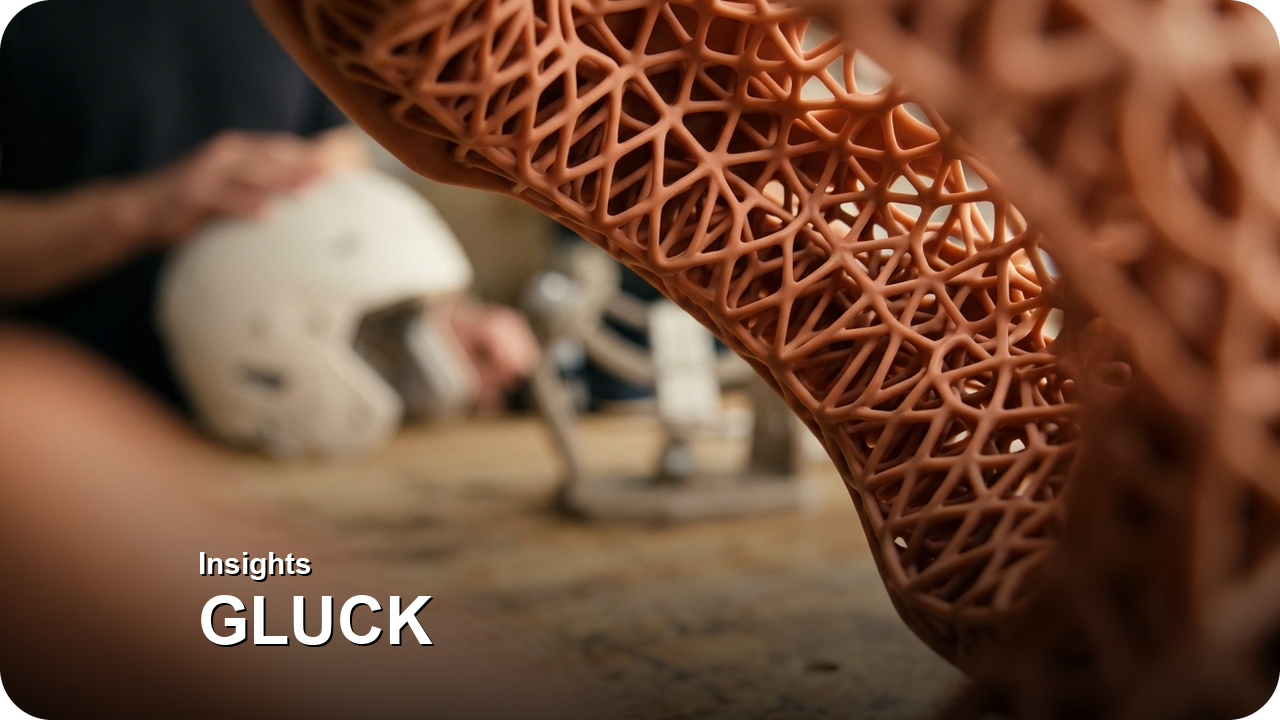
미국에서 가장 인기 있는 스포츠인 미식축구는 매년 반년 가까이 사람들의 일상을 지배합니다. 그런데 최근 이 종목을 둘러싼 화제는 경기력보다 안전에 쏠려 있습니다. 뇌진탕과 CTE(만성 외상성 뇌병증)에 대한 인식이 높아지면서, 선수의 머리를 어떻게 더 잘 보호할 것인가가 산업적 과제로 떠올랐기 때문입니다.
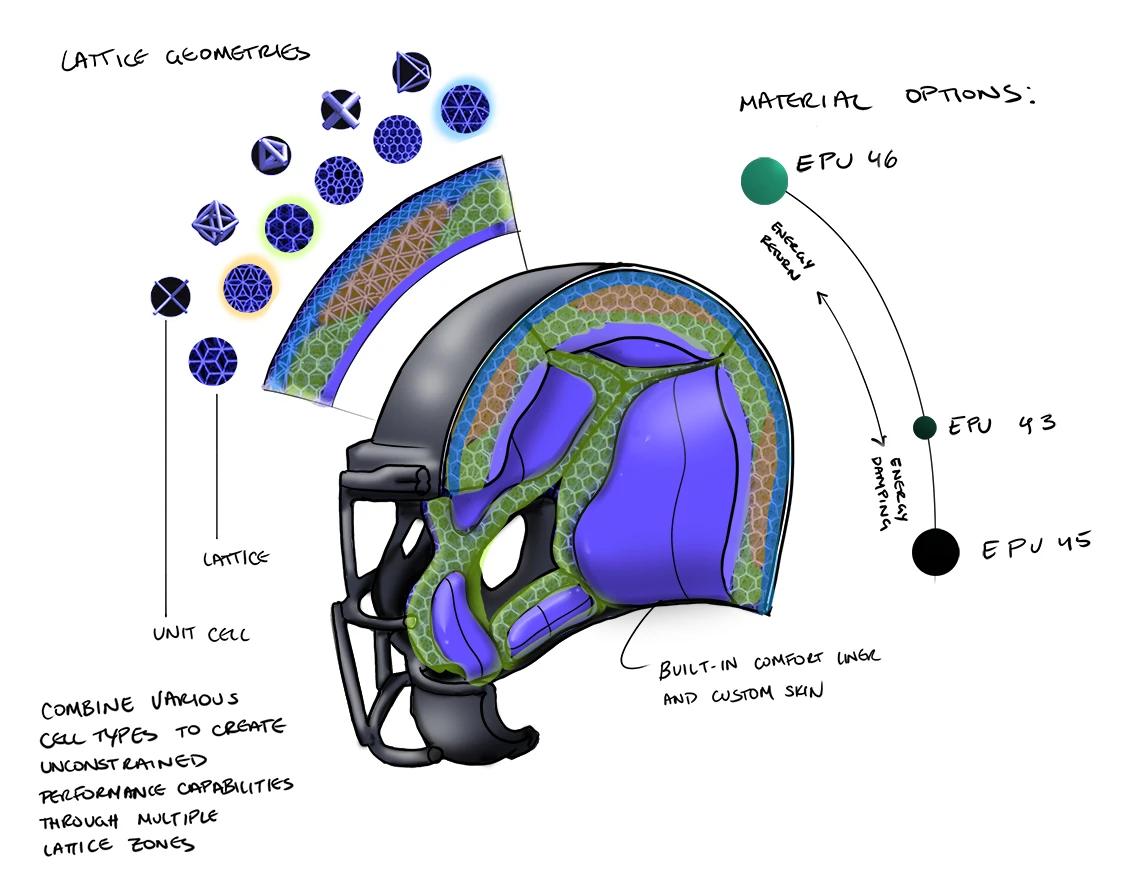
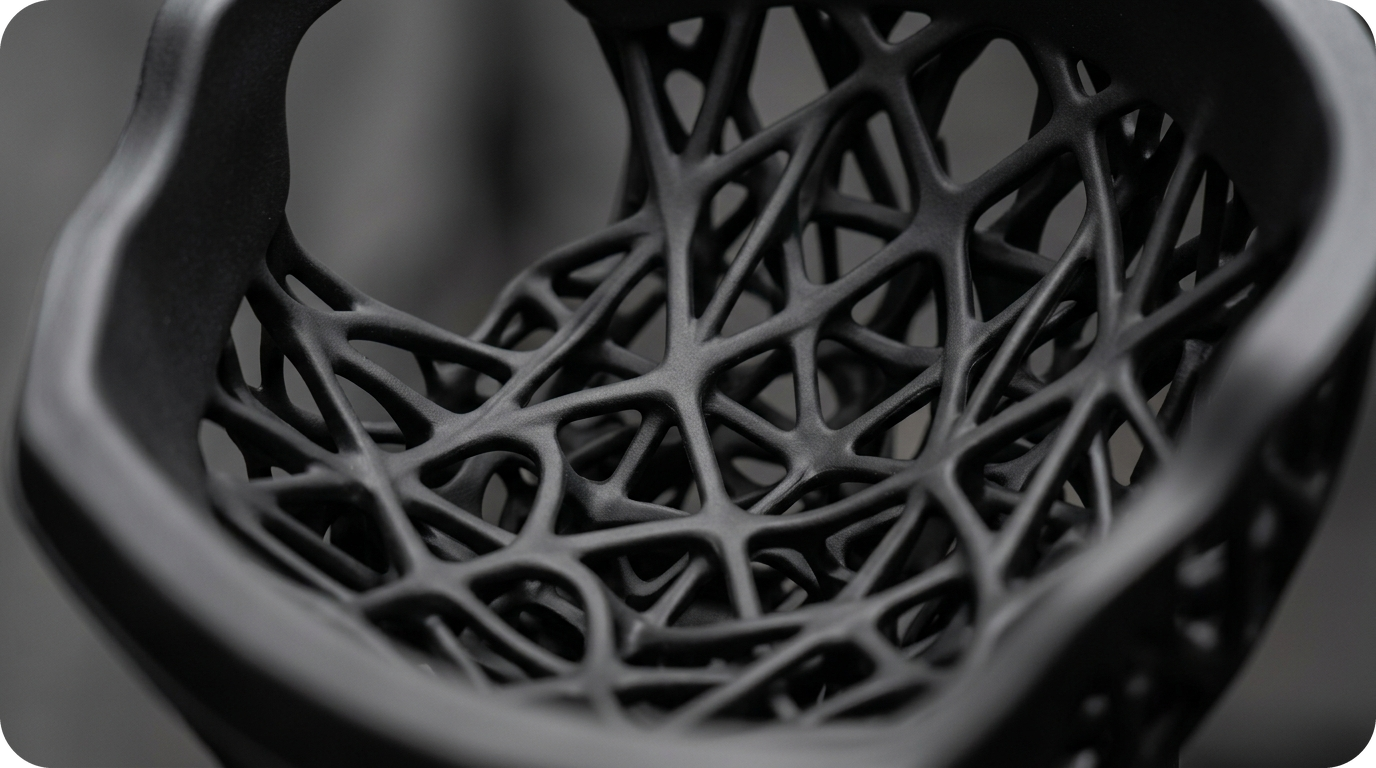
그 해법의 중심에 3D프린팅이 있습니다. 일반 미식축구 헬멧은 충격 시 약 50% 압축되는 데 그치지만, 3D프린팅 격자(래티스) 구조로 설계된 라이너를 넣은 헬멧은 80~90%까지 압축되며 충격을 흡수합니다. NFL은 현재 선수의 97%가 개인 맞춤 헬멧을 쓴다고 밝혔고, 버지니아텍 헬멧 랩의 연구에서는 모델에 따라 뇌진탕 위험을 15~34% 낮출 수 있는 것으로 나타났습니다.
여기서 자연스럽게 떠오르는 질문이 있습니다. 선수마다 머리 형태가 다른데, 이런 개인 맞춤 부품을 어떻게 양산 규모로 만들어낼까요? 이 글에서는 개인 데이터 기반 맞춤 부품을 대량으로 일관되게 생산하는 문제를 제조 관점에서 짚어보겠습니다.
선수의 머리에 맞춰 형태가 바뀌는 헬멧 라이너
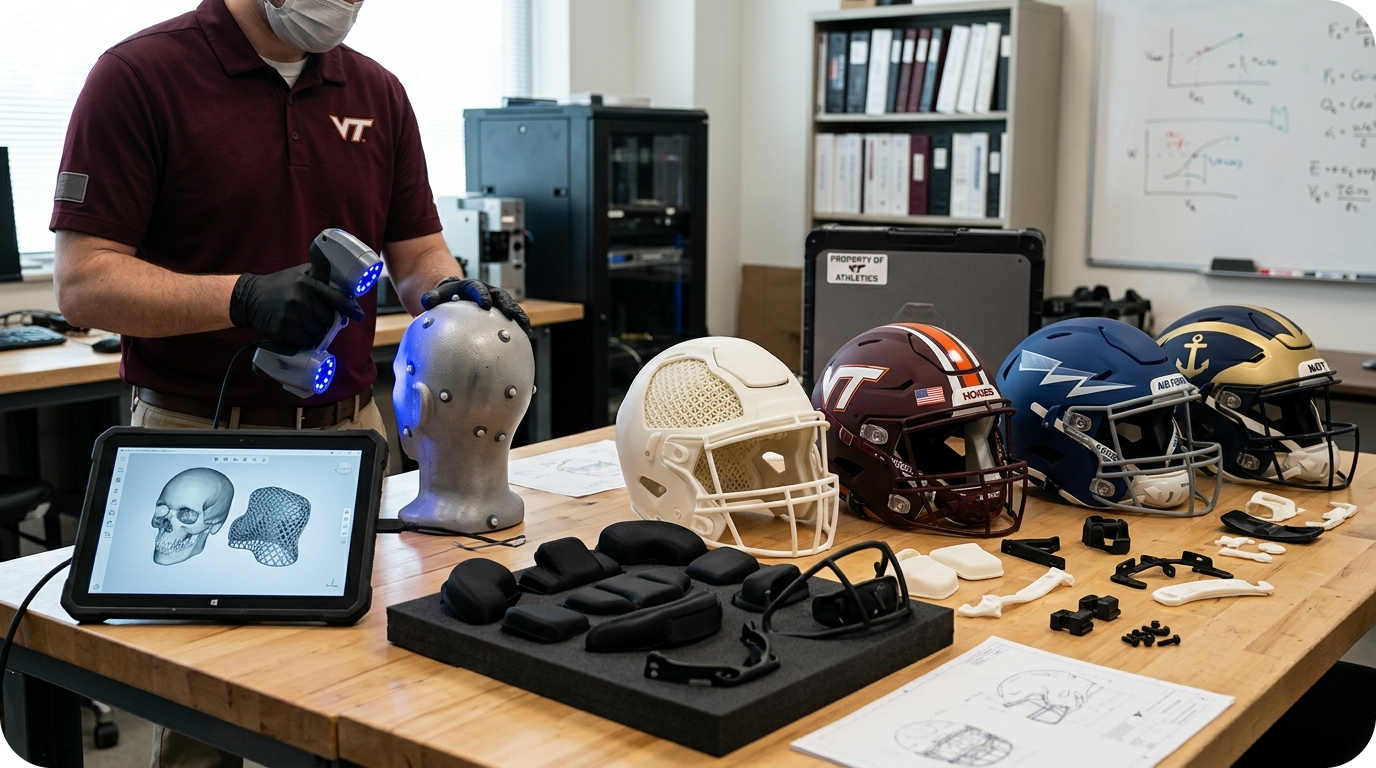
미식축구 헬멧의 진짜 혁신은 겉이 아니라 안쪽, 즉 머리와 맞닿는 라이너에 있습니다. 격자 구조로 설계된 라이너는 충격을 받으면 부위별로 다르게 눌리면서 에너지를 분산시킵니다. 문제는 이 격자가 선수 개개인의 머리 형태와 충격 패턴에 맞춰 설계될 때 가장 효과적이라는 점입니다.
기존 방식으로 이런 구조를 만들려면 어떻게 해야 할까요. 사출 성형은 형상마다 금형이 필요합니다. 선수마다 머리가 다르다면, 이론상 사람 수만큼 금형을 새로 파야 한다는 뜻입니다. 여기에 두 가지 제조 문제가 겹칩니다.
- 금형 비용과 형상 종속성: 개인화된 형상 하나마다 수천만 원대 금형이 필요하다면, 맞춤 양산은 경제적으로 성립하지 않습니다.
- 미세 격자 구조의 구현 한계: 내부에 겹겹이 얽힌 3차원 격자는 금형에서 빼낼 수 없는 언더컷(금형에서 빠지지 않는 안쪽 형상)투성이라, 절삭이나 사출로는 애초에 만들 수 없습니다.
적층제조는 이 두 문제를 동시에 풉니다. 디지털 파일만 바꾸면 되므로 형상이 제각각이어도 금형을 다시 만들 필요가 없고, 내부 격자 같은 복잡 형상도 그대로 찍어냅니다. 개인 데이터를 형상으로 번역해 그대로 생산하는 이 방식이야말로 Mass Customization(대량 맞춤 생산)의 전형입니다.
헬멧을 넘어 확장되는 맞춤 보호장비
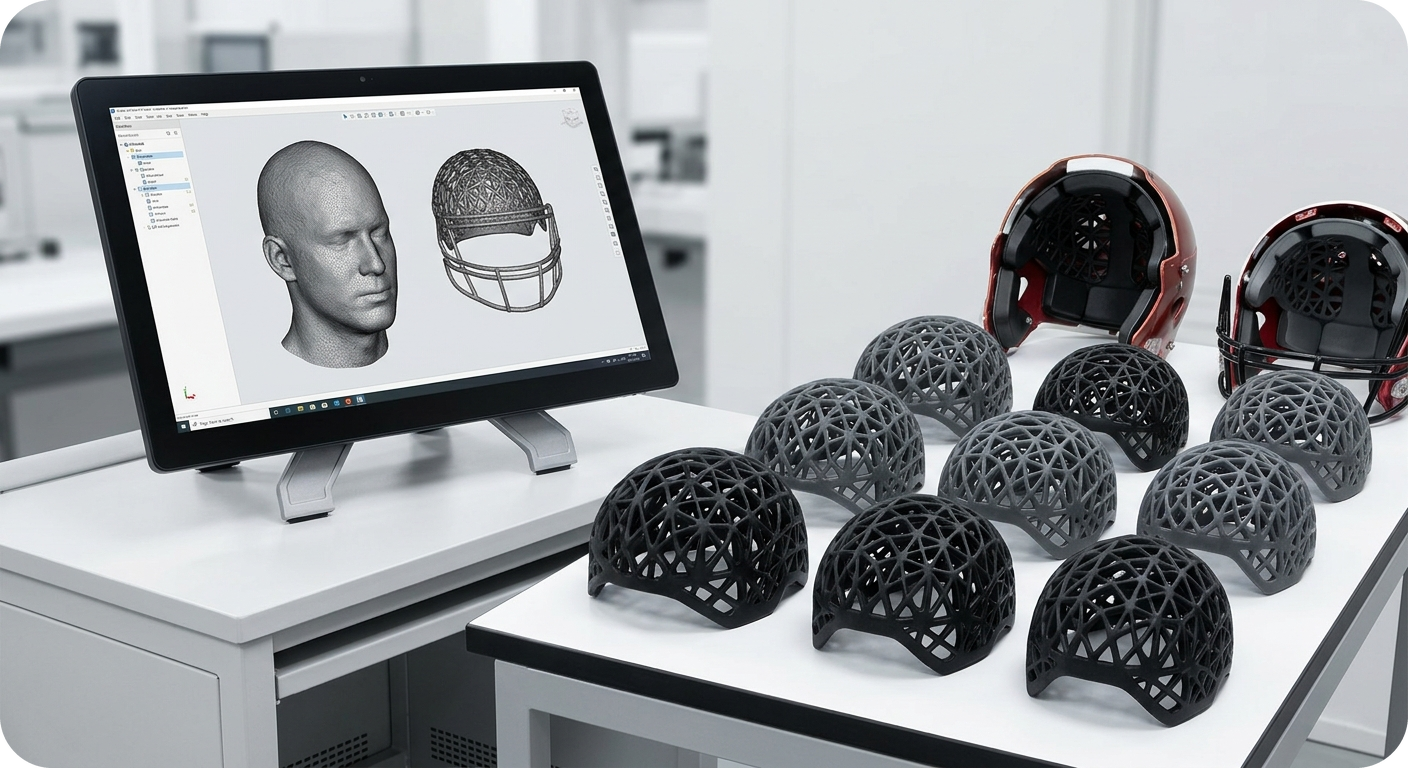
초기 헬멧 라이너에서의 성공은 다른 보호장비로도 번지고 있습니다. 뇌진탕이 한 번의 큰 충격이라면, CTE는 반복되는 작은 충격이 쌓여 생깁니다. 그래서 연구는 헬멧 하나에 머물지 않습니다.
스탠퍼드 연구진과 협업한 Certor Sports(VICIS 등 헬멧 브랜드를 보유하며 Carbon의 고객사이기도 합니다)는 적층제조로 충격 강도를 최대 35%까지 줄일 수 있는 턱끈 'SoftShox'를 개발했습니다. 개인 맞춤 3D프린팅 마우스가드도 나왔고, 허벅지 패드·어깨 패드까지 3D프린팅으로 제작되고 있습니다. NFL은 다음 초점으로 마스크를 지목하며 혁신 챌린지를 열었습니다.
이 흐름의 공통점은 명확합니다. 하나의 완제품이 아니라, 사람마다 다른 여러 종류의 부품을 각각 최적 형상으로 만들어야 한다는 것입니다. 버지니아텍 헬멧 랩의 스티브 로슨은 지난 14년간의 변화가 그 이전 40년보다 크다고 말했는데, 여기서 40년이란 1939년부터 1976년까지 디자인이 바뀌지 않았던 시대를 포함합니다. 바이오코어의 제프 크랜들은 "2015년의 최고 헬멧이 이제는 경기장에 나올 수도 없다"고 표현했습니다.
💡 다품종·개인화 부품을 세대를 거듭하며 빠르게 개선하는 이 구조는, 형상마다 금형을 다시 파야 하는 전통 제조로는 따라가기 어렵습니다.
로슨이 "헬멧에서 우리가 하는 일은 자동차 안전 기술의 판박이"라고 말한 것도 같은 맥락입니다. 개별 충격을 격자 단위까지 데이터로 관찰하고, 그 데이터로 다음 형상을 다시 설계하는 순환. 이 순환의 속도를 결정하는 것이 바로 제조 방식입니다.
개인 데이터를 형상으로 바꾸는 양산, 산업용 SLA의 자리
이런 개인화 양산의 가능성은 실제 산업 현장에서는 산업용 SLA 3D프린팅을 통해 더욱 정밀하게 구현될 수 있습니다. SLA는 매끄러운 표면 품질과 복잡한 내부 형상 구현에 강해, 머리 형태에 맞춘 라이너나 곡면 커버처럼 형상이 제각각인 부품을 금형 없이 반복 생산하는 데 적합합니다.
특히 개인마다 형태가 다른 부품을 다룰 때 그 강점이 뚜렷합니다. 디지털 파일만 교체하면 되므로 형상이 바뀌어도 추가 금형비가 들지 않고, 세대별 피드백을 반영한 설계 변경도 즉시 재생산으로 이어집니다. 언더컷이 많은 격자 구조나 유기적 곡면도 그대로 구현됩니다.
다만 SLA가 모든 경우의 정답은 아닙니다. 모든 선수가 똑같이 쓰는 단일 형상 부품을 수만 개 이상 찍어낸다면, 금형을 한 번 만들어 동일품을 대량 생산하는 사출이 개당 단가에서 더 유리합니다. 고하중을 견뎌야 하는 금속 구조 부품이라면 금속 공정이 맞습니다. SLA는 형상이 개인마다 다르거나 다품종이면서, 복잡 형상과 표면 품질이 중요한 구간에서 현실적인 대안이 됩니다.
GLUCK은 산업용 SLA 3D프린터 45기를 365일 24시간 운용하며 연간 23만 개 이상의 부품을 생산하는 산업용 SLA 3D프린팅 기반 양산 제조 서비스 기업입니다. 300mm 기준 최대 ±0.05mm 정밀도와 Ra 0.8 수준의 표면조도를 구현하고, 후가공 시 사출품과 구별이 어려운 마감이 가능합니다. 개인 데이터 기반 맞춤 형상을 금형 없이 반복 양산해야 하는 프로젝트라면, SLA는 검토할 만한 선택지입니다.
미식축구 헬멧이 보여준 것은 단순히 스포츠 장비의 발전이 아닙니다. 사람마다 다른 형태를 데이터로 받아 그대로 대량 생산하는 일이 현실이 되었다는 것입니다. 이 원리는 의료기기 하우징, 로봇 외장 커버, 웨어러블 부품 등 개인화가 중요한 여러 분야로 확장될 수 있습니다.
물론 개인화 양산이 모든 제품에 필요한 것은 아니며, 수량·형상·소재 조건에 따라 최적의 공정은 달라집니다. 다만 개인마다 다른 형태를 일관된 품질로 반복 생산해야 하는 과제 앞에서, 금형 없는 적층제조는 점점 더 현실적인 선택지가 되고 있습니다.
GLUCK은 반복 생산이 가능한 산업용 SLA 3D프린팅 인프라를 기반으로
개인 맞춤형 부품 개발과 양산 전환 과정에 필요한 3D프린팅 제조 솔루션을 지원하고 있습니다.
지금 글룩을 확인해보세요!
📩 글룩 홈페이지 & 온라인 견적: https://www.glucklab.com
📂 글룩 포트폴리오: 글룩 포트폴리오 확인하기
References
[1] 3DPrint.com, "3D Printed Football Helmets Are Amazing Business. They're Also So Much More," 3DPrint.com. Link: https://3dprint.com/332441/3d-printed-football-helmets-are-amazing-business-theyre-also-so-much-more/
English Version
How 97% of NFL Players Wear Custom Helmets: Mass-Producing a Different Shape for Every Head
American football, the most popular sport in the US, dominates daily life for nearly half of every year. Yet recently, the conversation around it has shifted from performance toward safety. As awareness of concussions and CTE (chronic traumatic encephalopathy) grows, how to better protect players' heads has become an industrial challenge.
3D printing sits at the center of the solution. Regular football helmets compress only about 50% on impact, but helmets with liners designed using 3D-printed lattices compress between 80 and 90%, absorbing more energy. The NFL says 97% of players now use custom-fit helmets, and research from the Virginia Tech Helmet Lab shows that, depending on the model, concussion risk can be reduced by 15 to 34%.
This naturally raises a question. Each player's head shape is different—so how are these personalized parts made at mass-production scale? In this article, we examine the challenge of producing personalized, data-driven parts consistently and in volume from a manufacturing perspective.
Helmet Liners That Change Shape to Fit Each Player's Head
The real innovation in football helmets lies not on the outside but inside—the liner that meets the head. Liners designed with lattice structures compress differently across regions on impact, dispersing energy. The catch is that these lattices work best when designed for each individual's head shape and impact pattern.
How would you make such a structure the traditional way? Injection molding requires a mold for every shape. If every player's head differs, that means, in theory, cutting a new mold for as many people as there are. Two manufacturing problems compound here.
- Mold cost and shape dependency: If each personalized geometry requires a mold costing tens of thousands of dollars, custom mass production simply isn't economically viable.
- Limits in producing fine lattice structures: The interwoven 3D lattices inside are full of undercuts (inner shapes that can't be released from a mold), so they can't be made by machining or injection molding in the first place.
Additive manufacturing solves both at once. Since only the digital file changes, there's no need to remake molds even when every shape differs, and complex geometries like internal lattices print as-is. Translating personal data directly into producible geometry is the very definition of Mass Customization.
Protective Gear Expanding Beyond Helmets
Early success with helmet liners is spreading to other protective gear. If a concussion is a single major impact, CTE builds up from repeated minor ones. So research doesn't stop at the helmet.
Certor Sports (which owns helmet brands including VICIS and is also a customer of Carbon), working with Stanford researchers, developed a chinstrap called SoftShox using additive manufacturing that may reduce impact intensity by up to 35%. Custom 3D-printed mouth guards have appeared, and thigh pads and shoulder pads are being 3D-printed as well. The NFL has pointed to masks as its next focus, launching an innovation challenge.
The common thread is clear: it's not one finished product, but many different kinds of parts, each optimized in shape for a different person. Steve Rowson of the Virginia Tech Helmet Lab said the past 14 years have seen more change than the previous 40—and that 40 includes an era when designs didn't change from 1939 to 1976. Jeff Crandall of Biocore put it this way: "What was a top helmet in 2015 is now not even allowed on the field."
💡 A structure that rapidly improves multi-variant, personalized parts generation by generation is hard for traditional manufacturing—which must recut a mold for every shape—to keep up with.
Rowson's remark that "what we're doing with helmets is a straight analogy out of automotive safety" comes from the same place. A cycle of observing individual impacts down to the lattice level, then redesigning the next shape from that data. What determines the speed of this cycle is the manufacturing method itself.
Turning Personal Data Into Producible Shapes: Where Industrial SLA Fits
This potential for personalized production can be realized even more precisely in real industrial settings through industrial SLA 3D printing. SLA excels at smooth surface quality and complex internal geometry, making it well suited to repeatedly producing parts with individually varying shapes—such as head-fitted liners or curved covers—without molds.
Its strengths stand out especially when handling parts that differ per individual. Since only the digital file needs swapping, changed shapes incur no additional mold cost, and design changes reflecting generational feedback flow straight into re-production. Undercut-heavy lattice structures and organic curves print as-is.
That said, SLA is not the answer in every case. If you're producing tens of thousands or more of a single shared shape, injection molding—making one mold once and mass-producing identical items—is more cost-effective per unit. For metal structural parts that must bear high loads, metal processes are the right fit. SLA becomes a realistic alternative in the segment where shapes differ per individual or vary widely, and complex geometry and surface quality matter.
GLUCK is an industrial SLA 3D printing-based volume production company, operating 45 industrial SLA 3D printers around the clock (365 days, 24 hours) and producing over 230,000 parts annually. It achieves up to ±0.05mm precision (at 300mm) and Ra 0.8-level surface roughness, with finishing hard to distinguish from injection-molded parts. For projects requiring repeated volume production of personalized, data-driven shapes without molds, SLA is a choice worth considering.
What football helmets demonstrate isn't merely progress in sporting equipment. It's that taking different shapes for different people as data and mass-producing them as-is has become reality. This principle can extend to many fields where personalization matters—medical device housings, robot exterior covers, wearable components, and more.
Of course, not every product needs personalized production, and the optimal process varies by quantity, geometry, and material conditions. Still, faced with the challenge of consistently producing different shapes for different people in volume, mold-free additive manufacturing is becoming an increasingly realistic choice.
GLUCK supports the 3D printing manufacturing solutions needed throughout the development and volume-production transition of personalized parts, built on an industrial SLA 3D printing infrastructure capable of repeatable production.
Check out GLUCK now!
📩 GLUCK Website & Online Quote: https://www.glucklab.com
📂 GLUCK Portfolio: View GLUCK Portfolio
References
[1] 3DPrint.com, "3D Printed Football Helmets Are Amazing Business. They're Also So Much More," 3DPrint.com. Link: https://3dprint.com/332441/3d-printed-football-helmets-are-amazing-business-theyre-also-so-much-more/
#글룩 #GLUCK #3D프린팅 #산업용3D프린팅 #SLA3D프린팅 #맞춤양산 #대량맞춤생산 #NFL헬멧 #스포츠장비 #개인화양산 #DfAM #3DPrinting #SLA3DPrinting #AdditiveManufacturing #MassCustomization #FootballHelmet #SportsSafety #FlexibleSeriesProduction
원문 기사 이미지 출처
'인사이트 (Insights)' 카테고리의 다른 글
| 미 해군이 42,000명에게 지급하는 '귀 스캔 맞춤 청력보호구', 개별 형상을 양산으로 바꾸는 방법 (0) | 2026.09.21 |
|---|---|
| 협동로봇이 IMTS에서 새 세대로 진화하자, 로봇 외장 제조에 생긴 변화 (0) | 2026.09.21 |
| 셀레 이탈리아 : 엉덩이 압력을 스캔해 만든 '1인 1안장' 양산의 비밀 (0) | 2026.09.17 |
| 난초 한 송이를 위한 AI 로봇, 감성 오브제가 된 로봇의 외장은 어떻게 만들까 (0) | 2026.09.15 |
| 접착제 없이 조립되는 스니커즈 : 3D프린팅 밑창과 전통 갖신의 결합 (0) | 2026.09.14 |