
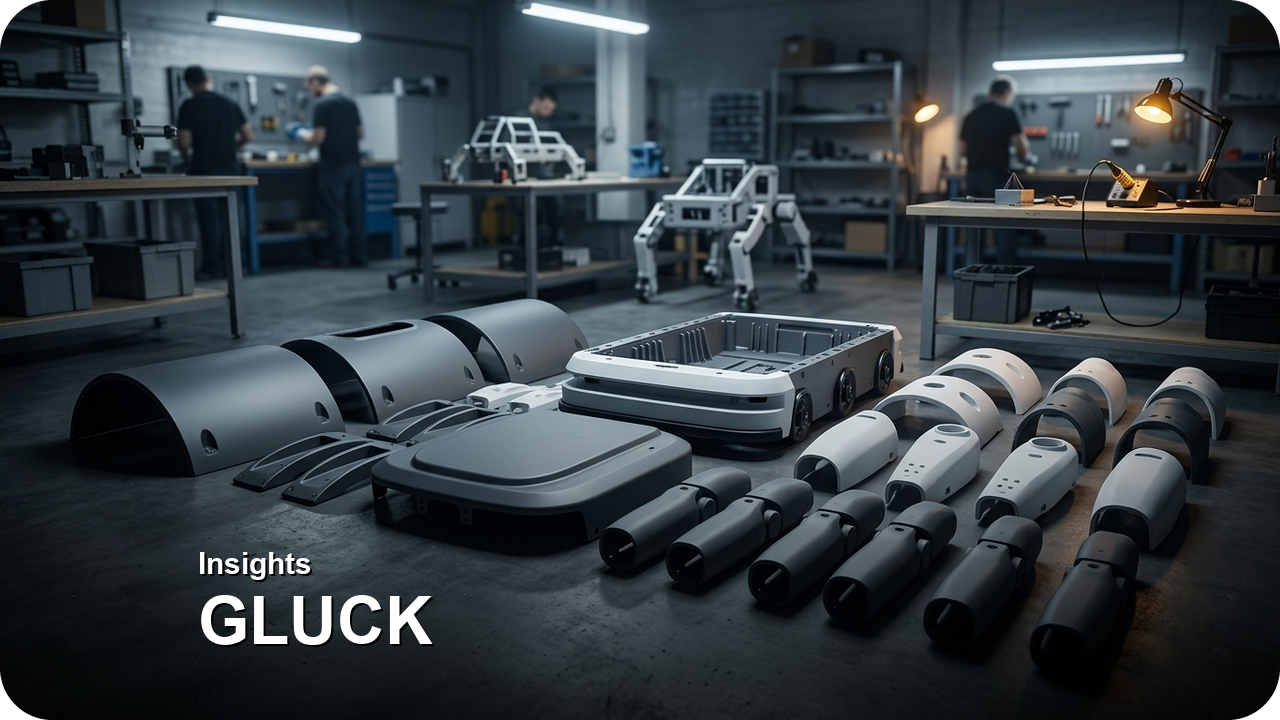
로봇 산업은 지금 빠르게 커지고 있습니다. 북미 로봇 주문액은 2026년 2분기 6억 2,200만 달러로, 전년 동기 대비 금액 기준 21.3% 늘었습니다. 로봇이 늘어난다는 건 곧 물리적인 부품이 더 많이, 더 자주 필요해진다는 뜻입니다. 그런데 로봇 개발 현장이 부품을 발주하는 방식에는 다른 하드웨어 분야와 뚜렷하게 다른 특징이 하나 있습니다.
미국의 한 커스텀 제조 기업이 수백 건의 주문, 3만 개가 넘는 3D프린팅 부품을 분석한 결과, 전체 부품의 31.5%가 긴급(rush) 일정으로 생산됐습니다. 특히 로봇 고객만 보면 이 비율이 36.7%로 뛰었습니다. 반면 일반 하드웨어 고객은 7.2%에 그쳤습니다. 로봇 팀이 다른 고객보다 약 5배 더 자주 부품을 긴급으로 찍는다는 이야기입니다. 왜 로봇 개발 현장은 이렇게 부품을 급하게 발주하고, 이 압박을 감당하는 제조 방식은 무엇일까요?
이 수치는 단순한 통계가 아니라 로봇 개발의 구조를 그대로 보여줍니다. 로봇처럼 기구·전자·소프트웨어가 얽힌 제품은 물리적 부품을 손에 쥐어야 다음 설계로 넘어갈 수 있습니다. 이 글에서는 '긴급 발주 비율'이라는 숫자가 왜 나오는지, 그리고 그 병목을 제조 관점에서 어떻게 풀 수 있는지 짚어보겠습니다.
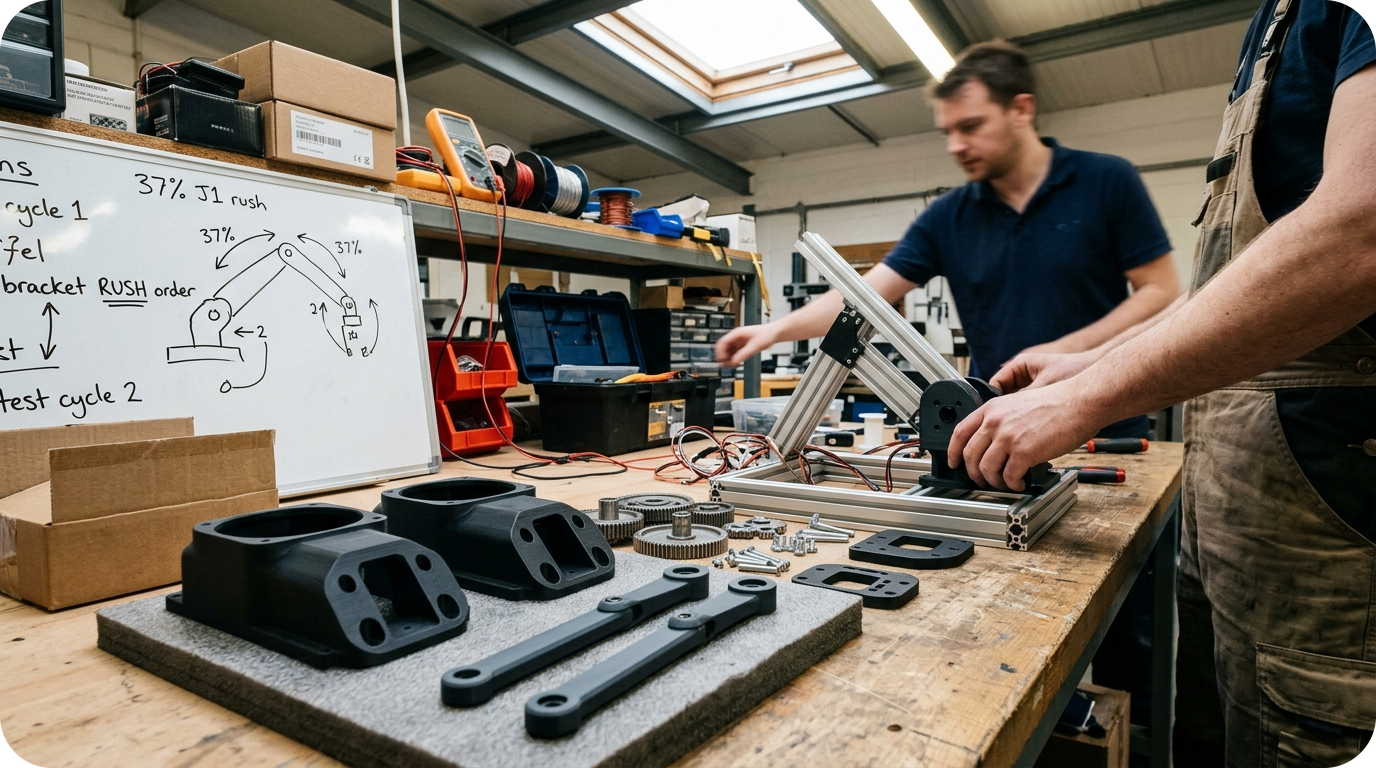
로봇 부품 36.7%가 '긴급'인 이유
로봇 개발에서 리드타임은 단순한 구매 지표가 아닙니다. 부품이 며칠 만에 손에 들어오느냐가, 팀이 다음 물리적 검증 단계로 얼마나 빨리 넘어가느냐를 결정합니다. 브라켓 하나, 하우징 하나를 기다리는 며칠이 곧 엔지니어링 일정 전체를 뒤로 미는 구조입니다.
기존 방식으로 이런 부품을 만들려면 두 가지 벽에 부딪힙니다. 첫째는 금형의 벽입니다. 사출 방식은 형상마다 금형을 새로 파야 하고, 그 제작 기간만 수 주에서 수 개월이 걸립니다. 설계가 확정되지 않은 개발 단계에서는 금형을 팔 수조차 없습니다. 둘째는 설계변경의 벽입니다. 로봇 개발은 하루에도 여러 번 부품을 수정하는데, 금형이나 절삭 지그 기반 공정은 한 번 세팅하면 형상을 바꿀 때마다 비용과 시간이 다시 쌓입니다.
- 리드타임이 곧 개발 속도: 부품 도착이 늦어지면 다음 반복 테스트가 통째로 밀립니다. 그래서 로봇 팀은 비용을 더 내더라도 긴급 발주를 택합니다.
- 잦은 형상 변경: 개발 사이클이 짧을수록 같은 부품의 개정판이 계속 나옵니다. 형상이 고정되지 않은 상태로 소량씩 반복 생산해야 합니다.
핵심은 로봇 부품 제조의 병목이 '만들 수 있느냐'가 아니라 '얼마나 빨리, 얼마나 자주 바꿔서 만들 수 있느냐'에 있다는 점입니다. 이 조건에서는 금형을 전제로 한 전통 공정이 오히려 발목을 잡습니다.
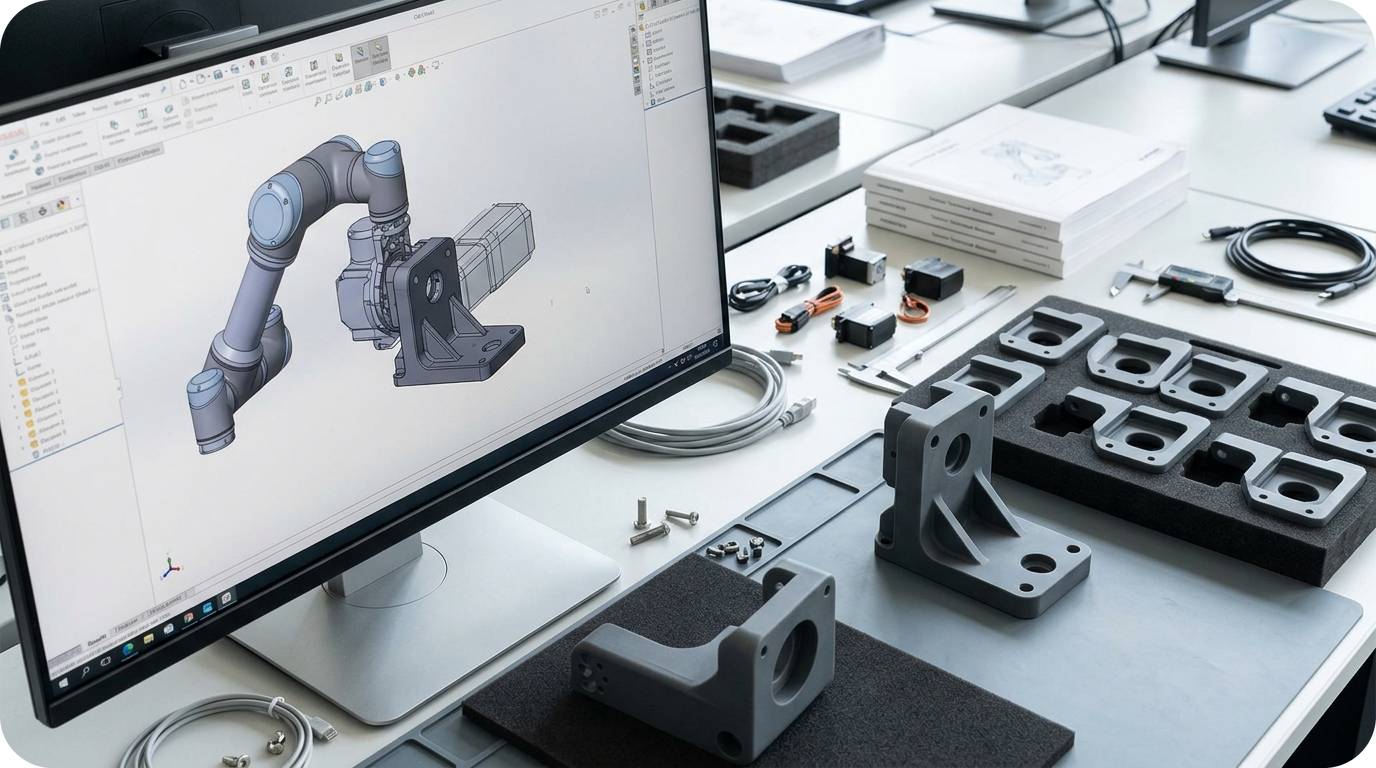
긴급 수요는 대량 주문에서도 사라지지 않는다
흔히 '긴급'은 시제품 몇 개 찍을 때만 발생하는 일이라고 생각하기 쉽습니다. 그런데 분석 데이터는 다른 그림을 보여줍니다. 100개를 넘는 주문이 전체 분석 물량의 89.0%를 차지했고, 이 대량 구간에서도 32.5%가 긴급 일정으로 생산됐습니다. 100개 이하 주문의 긴급 비율(23.8%)보다 오히려 높았습니다.
이는 3D프린팅이 '빠른 시제품'이라는 전통적 역할을 넘어서고 있다는 신호입니다. 한 시장 전망에서는 2028년까지 폴리머 적층제조 활용의 44%가 최종부품(end-use parts)이 될 것으로 봅니다. 로봇 팀은 개발 초기의 소량 검증에서 멈추지 않고, 수백 개 단위의 실제 생산에서도 짧은 리드타임을 요구합니다. 즉 긴급 대응 능력은 시제품만의 문제가 아니라 초도 검증에서 중·대량 반복 양산으로 이어지는 구간 전체의 문제입니다.
여기에 소재 유연성 요구까지 겹칩니다. 분석에서 전체 주문의 49%는 PETG·PLA·ABS 같은 표준 소재를 벗어난 소재를 하나 이상 포함했고, 101~500개 구간에서는 어떤 단일 소재도 물량의 27.1%를 넘지 않았습니다. 대량 주문이라고 해서 형상과 소재가 하나로 통일되지 않는다는 뜻입니다. 다만 흥미로운 점은, 19개의 반복되는 생산 조합이 전체 부품의 97.4%를 차지했다는 사실입니다. 형상은 주문마다 바뀌어도, 그 밑에 깔린 생산 방식의 상당 부분은 익숙하게 반복됩니다. 바로 이 지점이 자동화와 표준화로 속도를 끌어올릴 여지를 만듭니다.

산업용 SLA 3D프린팅이 이 병목에 답하는 방식
이런 요구는 실제 산업 현장에서는 산업용 SLA 3D프린팅을 통해 정밀하게 구현될 수 있습니다. 핵심은 '똑같은 것을 많이'가 아니라 '저마다 조금씩 다르게, 그러나 안정적으로 반복해서' 만드는 데 있습니다.
SLA 방식은 금형 없이 3D 데이터만으로 생산에 들어갑니다. 형상당 금형비가 발생하지 않으니 설계가 바뀔 때마다 데이터만 교체하면 되고, 승인된 주문이 곧바로 물리적 생산으로 이어집니다. 로봇 개발이 요구하는 짧은 리드타임과 잦은 설계변경 대응이 여기서 만납니다. 또한 표면 품질이 매끄러워(GLUCK 기준 300mm에서 최대 ±0.05mm, 표면조도 Ra 0.8) 외장 하우징이나 커버류를 후가공 시 사출품과 구별이 어려운 마감으로 마무리할 수 있습니다.
- 금형 없는 반복생산: 형상이 자주 바뀌는 로봇 부품을 데이터 교체만으로 재생산해, 초도 검증에서 중·대량 반복 양산까지 하나의 흐름으로 잇습니다.
- 다품종 유연 양산: 서로 다른 형상과 소재의 부품을 함께 돌리는 Flexible Series Production 구조가, 100개 초과 구간의 긴급·다품종 요구에 맞습니다.
다만 SLA가 모든 경우의 정답은 아닙니다. 동일 형상을 수만~수십만 개 찍는 초대량 동일 부품은 여전히 사출이 단가에서 유리하고, 고하중을 받는 금속 구조 부품은 SLA 폴리머의 영역이 아닙니다. GLUCK은 폴리머 하우징·커버·지그 영역에 특화된 산업용 SLA 파운드리라는 점을 분명히 해둡니다. 판단 기준은 절대 수량이 아니라 형상 다양성과 변경 빈도입니다. 형상이 자주 바뀌고 다품종을 반복 생산해야 한다면, SLA는 유력한 선택지가 됩니다.
GLUCK은 산업용 SLA 3D프린터 45기를 365일 24시간 운용하며 연간 23만 개 이상의 부품을 생산해 왔습니다. 로봇 외장 커버 소량 양산, 생산라인 지그·치구·검사구처럼 형상이 자주 바뀌고 소량·다품종으로 반복되는 부품에서, 승인된 주문과 실제 생산 사이의 시간을 줄이는 것이 이 인프라의 역할입니다.
로봇 개발이 만든 '긴급 발주 36.7%'라는 숫자는, 결국 제조가 개발 속도를 따라가야 한다는 요구의 다른 표현입니다. 앞으로 로봇 산업의 경쟁력은 얼마나 빨리 많이 찍느냐가 아니라, 승인된 설계를 얼마나 빨리 물리적 부품으로 바꾸고 그다음 개정판까지 안정적으로 이어가느냐에 달려 있습니다. 금형 없이 데이터만으로 반복 생산하는 온디맨드 방식은, 이 흐름을 감당하려는 로봇 제조사에게 현실적인 선택지입니다.
GLUCK은 반복 생산이 가능한 산업용 SLA 3D프린팅 인프라를 기반으로
로봇 부품 개발과 양산 전환 과정에 필요한 3D프린팅 제조 솔루션을 지원하고 있습니다.
지금 글룩을 확인해보세요!
📩 글룩 홈페이지 & 온라인 견적: https://www.glucklab.com
📂 글룩 포트폴리오: 글룩 포트폴리오 확인하기
References
[1] ManufacturingTomorrow, "Robotics Rush: 37% of 3D-printed parts for robotics customers are produced on rush," ManufacturingTomorrow. Link: http://www.ManufacturingTomorrow.com/news/2026/09/21/robotics-rush-37-of-3d-printed-parts-for-robotics-customers-are-produced-on-rush-/28244
English Version
1 in 3 Robot Parts Is Made on 'Rush' : The Manufacturing Bottleneck Behind Robotics Development
The robotics industry is growing fast. North American robot orders reached $622 million in Q2 2026, up 21.3% year over year in value. More robots means physical parts are needed more often and in greater numbers. Yet there is one distinct trait in how robotics teams order parts, unlike other hardware fields.
A US custom manufacturing company analyzed more than 30,000 3D-printed parts across hundreds of orders and found that 31.5% of all parts were produced on a rush schedule. For robotics customers specifically, that figure rose to 36.7%, while ordinary hardware customers stood at just 7.2%. In other words, robotics teams order rush parts about five times more often than other customers. Why do robotics teams order so urgently, and what kind of manufacturing can absorb that pressure?
This number is not just a statistic—it reflects the structure of robotics development. Products like robots, where mechanics, electronics, and software intertwine, require physical parts in hand before moving to the next design. This article examines why the "rush ratio" arises and how that bottleneck can be resolved from a manufacturing perspective.
Why 36.7% of Robot Parts Are 'Rush'
In robotics development, lead time is not merely a purchasing metric. How fast a part arrives determines how quickly a team moves to the next physical validation. The few days spent waiting for a single bracket or housing push back the entire engineering schedule.
Traditional methods hit two walls. The first is the mold wall. Injection molding requires a new mold per shape, taking weeks to months to build—and you cannot even cut a mold when the design is not finalized. The second is the design-change wall. Robotics development revises parts several times a day, but mold- or jig-based processes accumulate cost and time each time a shape changes.
- Lead time equals development speed: A late part delays the entire next iteration test, so robotics teams choose rush production even at higher cost.
- Frequent shape changes: Shorter cycles mean more revisions of the same part, requiring small-batch repeat production while shapes remain unfixed.
The point is that the bottleneck in robot part manufacturing is not "can we make it" but "how fast and how often can we change and make it." Under these conditions, mold-based conventional processes become the obstacle.
Urgent Demand Doesn't Disappear in Larger Batches
It is easy to assume "rush" only happens when printing a few prototypes. But the data shows otherwise. Orders above 100 parts accounted for 89.0% of the analyzed volume, and even in this larger range, 32.5% were produced on a rush schedule—higher than the 23.8% for orders of 100 or fewer.
This signals that 3D printing is moving beyond its traditional role of "fast prototyping." One market outlook expects end-use parts to make up 44% of polymer additive manufacturing applications by 2028. Robotics teams don't stop at early small-batch validation; they demand short lead times even in production runs of hundreds. Rush capability, then, is a problem spanning the entire path from initial validation to mid-to-high-volume repeat production.
Material flexibility compounds this. In the analysis, 49% of all orders included at least one material outside standard PETG, PLA, or ABS, and in the 101–500 range no single material exceeded 27.1% of volume. Large orders are not unified into one shape and material. Notably, however, 19 recurring production combinations accounted for 97.4% of all parts. Shapes change from order to order, but much of the underlying production stays familiar. This is exactly where automation and standardization can raise speed.
How Industrial SLA 3D Printing Answers This Bottleneck
Such requirements can be precisely realized in industry through industrial SLA 3D printing. The key is not "many of the same" but "each slightly different, yet stably repeated."
SLA goes into production from 3D data alone, without molds. With no per-shape tooling cost, you only swap the data when a design changes, and an approved order proceeds straight to physical production. The short lead times and frequent design changes robotics demands meet here. The smooth surface quality (up to ±0.05mm at 300mm and Ra 0.8 by GLUCK's standard) also lets exterior housings and covers be finished so they are hard to distinguish from injection-molded parts after post-processing.
- Mold-free repeat production: Frequently changing robot parts are re-produced by swapping data alone, connecting initial validation through mid-to-high-volume repeat production in one flow.
- Flexible multi-variety production: A Flexible Series Production structure running parts of different shapes and materials together fits the rush and multi-variety demand of the above-100 range.
That said, SLA is not the answer for every case. Very high volumes of identical shapes—tens to hundreds of thousands—still favor injection molding on unit cost, and high-load metal structural parts are not SLA polymer's domain. GLUCK makes clear it is an industrial SLA foundry specialized in polymer housings, covers, and jigs. The criterion is not absolute quantity but shape variety and change frequency. If shapes change often and multi-variety must be repeat-produced, SLA becomes a strong option.
GLUCK operates 45 industrial SLA 3D printers around the clock, 365 days a year, producing over 230,000 parts annually. In parts that change shape often and repeat in small-batch, multi-variety form—such as small-batch robot exterior covers and production-line jigs, fixtures, and inspection tools—this infrastructure's role is to shorten the time between an approved order and actual production.
The "36.7% rush" figure born of robotics development is another way of saying manufacturing must keep pace with development speed. The competitiveness of the robotics industry will hinge not on how fast you can print many identical parts, but on how quickly you turn approved designs into physical parts and stably carry that through to the next revision. Mold-free, data-driven on-demand production is a realistic option for robotics manufacturers trying to keep up with this flow.
Based on industrial SLA 3D printing infrastructure capable of repeatable production, GLUCK supports the 3D printing manufacturing solutions needed throughout robot part development and the transition to mass production.
Check out GLUCK now!
📩 GLUCK Website & Online Quote: https://www.glucklab.com
📂 GLUCK Portfolio: View GLUCK Portfolio
References
[1] ManufacturingTomorrow, "Robotics Rush: 37% of 3D-printed parts for robotics customers are produced on rush," ManufacturingTomorrow. Link: http://www.ManufacturingTomorrow.com/news/2026/09/21/robotics-rush-37-of-3d-printed-parts-for-robotics-customers-are-produced-on-rush-/28244
#글룩 #GLUCK #3D프린팅 #산업용3D프린팅 #SLA3D프린팅 #로봇부품 #온디맨드양산 #리드타임 #금형없는양산 #다품종양산 #로보틱스 #3DPrinting #SLA3DPrinting #AdditiveManufacturing #Robotics #OnDemandManufacturing #RushProduction #FlexibleSeriesProduction
'인사이트 (Insights)' 카테고리의 다른 글
| NFL 선수 97%가 쓰는 맞춤 헬멧, 머리마다 다른 형태를 대량으로 찍어내는 법 (0) | 2026.09.22 |
|---|---|
| 미 해군이 42,000명에게 지급하는 '귀 스캔 맞춤 청력보호구', 개별 형상을 양산으로 바꾸는 방법 (0) | 2026.09.21 |
| 협동로봇이 IMTS에서 새 세대로 진화하자, 로봇 외장 제조에 생긴 변화 (0) | 2026.09.21 |
| 셀레 이탈리아 : 엉덩이 압력을 스캔해 만든 '1인 1안장' 양산의 비밀 (0) | 2026.09.17 |
| 난초 한 송이를 위한 AI 로봇, 감성 오브제가 된 로봇의 외장은 어떻게 만들까 (0) | 2026.09.15 |