
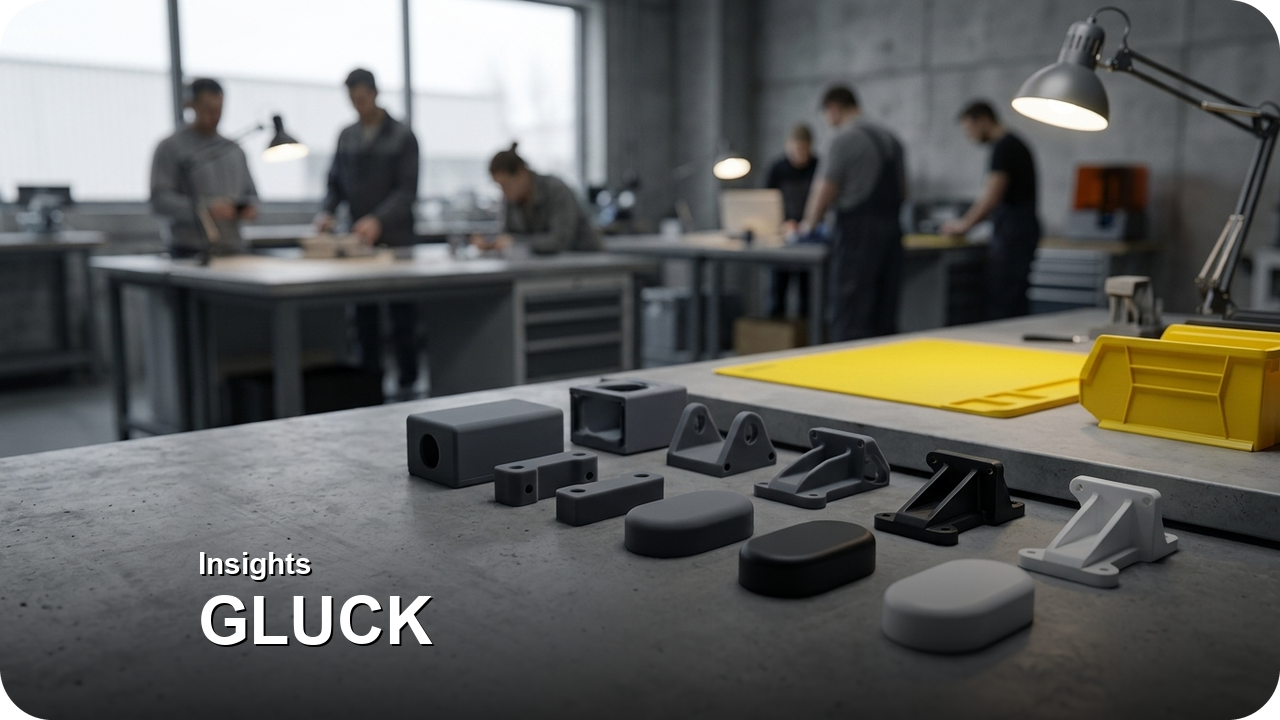
요즘 3D프린팅 소식을 보면 '레진이 점점 싸진다'는 흐름이 뚜렷합니다. 한때 수천만 원대였던 산업용 수준의 광경화 방식(SLA) 장비 가격이 꾸준히 내려오더니, 이제는 수백 달러대 보급형 제품까지 등장했습니다. 레진 프린팅이 더 이상 전문 스튜디오만의 기술이 아니라는 신호입니다.
최근 폼랩스(Formlabs)가 자사 역대 최저가 SLA 프린터를 공개했습니다. 699달러라는 가격표는 "이제 누구나 책상 위에서 매끄러운 레진 부품을 뽑을 수 있다"는 메시지를 던집니다. 디자이너, 창업가, 소규모 제작 팀 입장에서는 분명 반가운 소식입니다. 레진 특유의 정밀한 디테일과 깔끔한 표면을, 과거보다 훨씬 낮은 진입 장벽으로 경험할 수 있게 됐기 때문입니다.
흥미로운 건 가격이 내려갔다는 사실 자체가 아니라, '데스크톱에서 찍을 수 있는 것'과 '양산으로 공급할 수 있는 것'이 여전히 다른 문제로 남아 있다는 점입니다. 데스크톱 SLA 한 대가 생겼다고 해서 곧바로 같은 부품을 수천 개씩 균일하게 공급할 수 있는 건 아닙니다. 그렇다면 저가 데스크톱 SLA로는 왜 중·대량 양산을 감당하기 어려울까요? 이 글에서는 보급형 레진 프린터의 확산을 양산 관점에서 짚어봅니다.
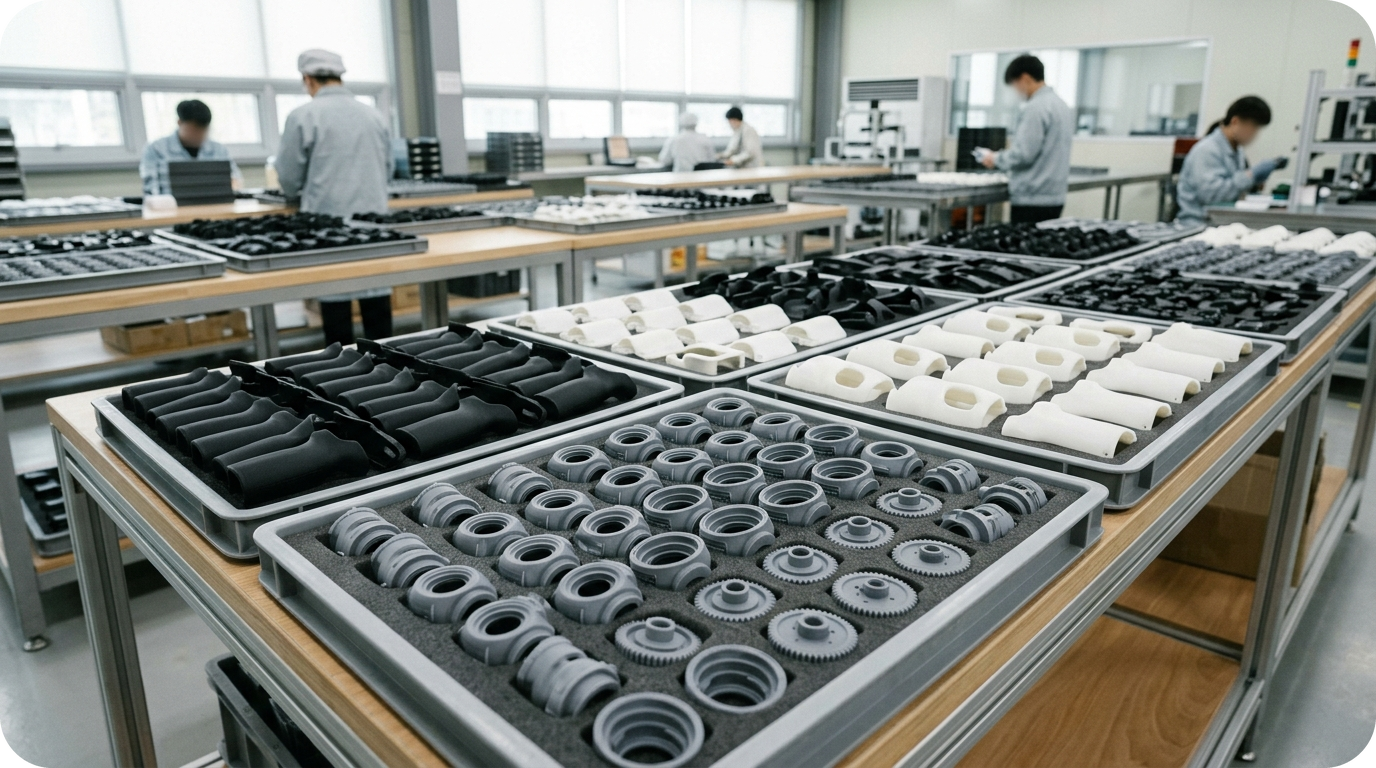
폼랩스의 699달러 SLA, 레진의 진입 장벽을 낮추다
폼랩스가 선보인 신제품은 회사가 지금까지 내놓은 SLA 프린터 중 가장 저렴한 모델입니다. 데스크톱에 올려놓고 쓸 수 있는 크기에, 레진 특유의 섬세한 조형과 매끈한 표면을 그대로 살린 것이 특징입니다. 개인 메이커부터 소규모 디자인 스튜디오까지, 초기 비용 부담 없이 레진 프린팅을 시작할 수 있는 선택지가 하나 더 늘어난 셈입니다.
이런 보급형 장비의 강점은 명확합니다. 아이디어를 빠르게 손에 쥐어볼 수 있다는 점입니다. 설계안을 하룻밤 사이에 출력해 손으로 만져보고, 다음 날 수정해서 다시 뽑는 식의 빠른 설계 검증에는 데스크톱 SLA가 더없이 좋은 도구입니다. 시제품 몇 개, 혹은 소량의 커스텀 부품을 만드는 일이라면 충분히 제 역할을 합니다.
다만 여기서 한 가지 구분이 필요합니다. '한두 개를 잘 뽑는 것'과 '같은 부품을 수천 개 똑같이 공급하는 것'은 전혀 다른 과제입니다. 장비 가격이 낮아진다고 해서 양산의 문턱까지 함께 낮아지는 것은 아니기 때문입니다.
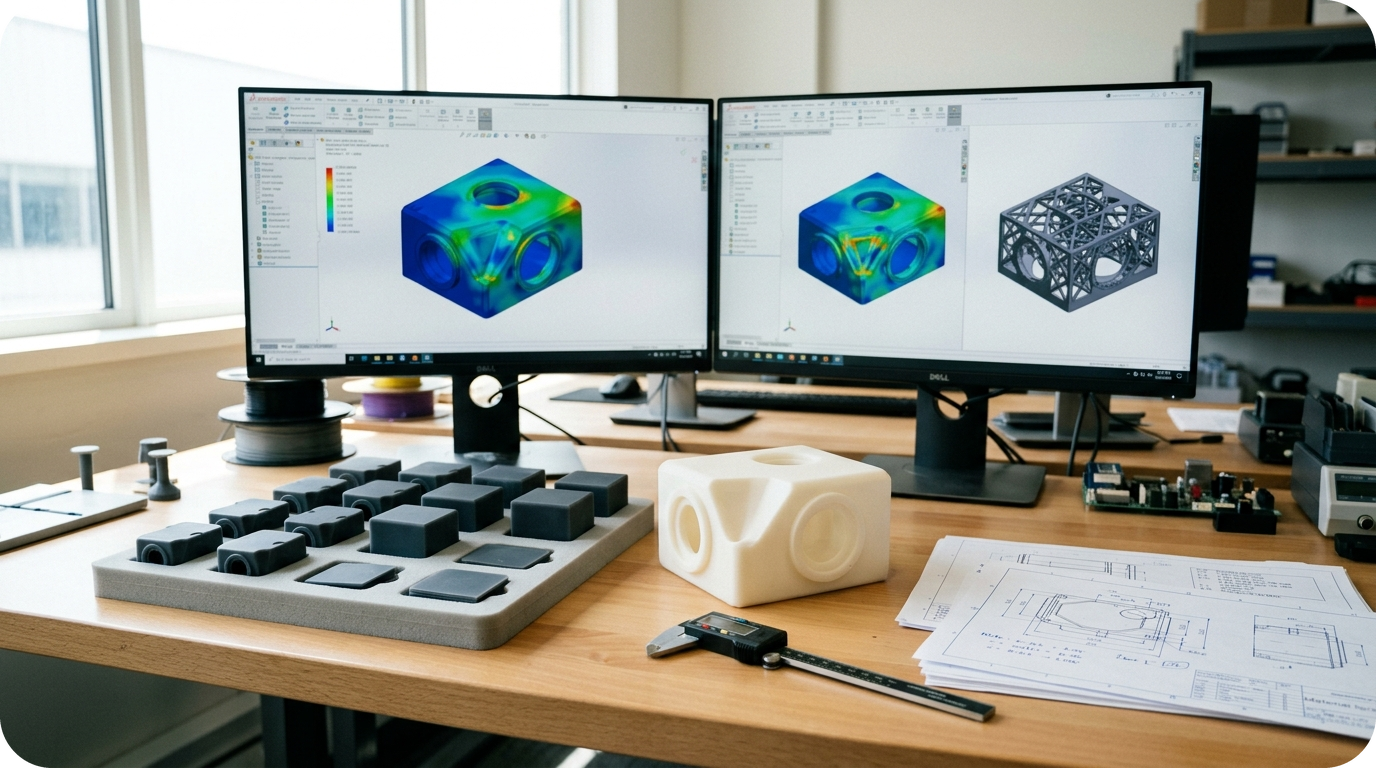
데스크톱 SLA가 '양산'에서 만나는 벽
보급형 SLA가 양산 현장으로 넘어오려 할 때 가장 먼저 부딪히는 문제는 수량과 시간입니다. 데스크톱 한 대로 같은 부품 수천 개를 뽑으려면 며칠, 길게는 몇 주가 걸립니다. 그 사이 장비가 멈추거나 출력이 실패하면 일정 전체가 흔들립니다. 수량이 늘어날수록 한 대의 처리 능력만으로는 양산 수요를 맞추기 어려워집니다.
두 번째 벽은 반복 정밀도와 표면의 균일성입니다. 양산에서 중요한 것은 '한 개가 잘 나오는가'가 아니라 '천 번째도 첫 번째와 같은가'입니다. 장비마다, 출력 배치마다 치수나 표면 상태가 조금씩 달라지면, 조립이 필요한 부품에서는 곧바로 불량으로 이어집니다. 여러 대를 돌릴 때 장비 간 편차를 일정하게 관리하는 것은 보급형 체계가 다루기 어려운 영역입니다.
세 번째는 후가공입니다. 레진 출력물은 세척, 후경화, 서포트 제거, 표면 처리 같은 공정을 거쳐야 비로소 최종 부품이 됩니다. 소량이라면 사람이 하나씩 처리할 수 있지만, 수천 개 단위에서는 이 후공정을 일정한 품질로 반복하는 체계가 없으면 품질이 들쭉날쭉해집니다.
- 처리 능력의 한계: 데스크톱 한 대의 조형 크기와 출력 속도로는 양산 물량을 소화하는 데 물리적 시간이 과도하게 듭니다.
- 배치 간 편차: 여러 번 나눠 찍을수록 치수·표면이 미세하게 달라져, 균일성이 생명인 조립 부품에서 리스크가 커집니다.
- 후가공의 산업화: 세척·후경화·마감을 일정 품질로 반복하려면 수작업이 아니라 표준화된 공정이 필요합니다.
결국 데스크톱 SLA는 '빠른 검증'에는 탁월하지만, '균일한 반복 공급'이라는 양산의 본질 앞에서는 다른 설계의 체계를 요구합니다. 이는 장비 하나의 성능 문제가 아니라, 생산 인프라 전체의 문제입니다.
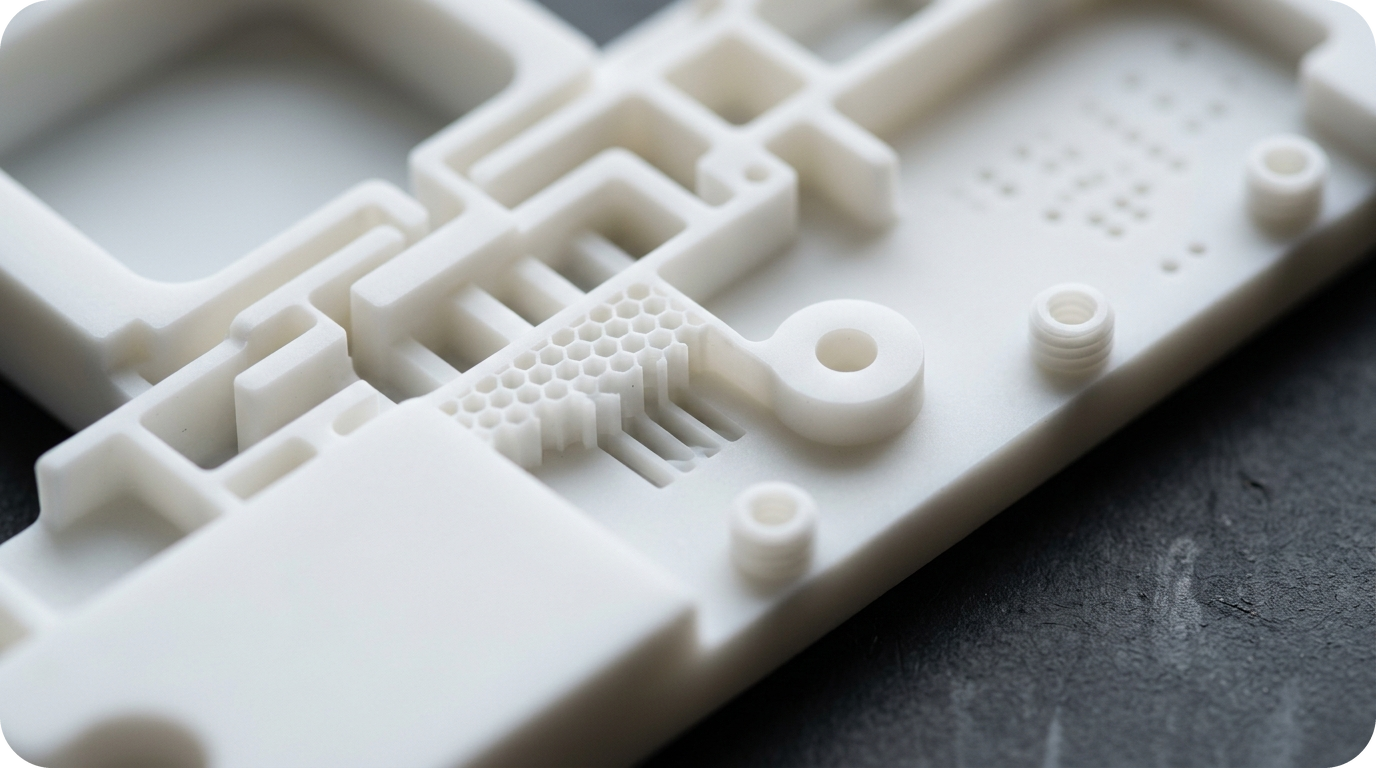
산업 양산 SLA는 '한 대'가 아니라 '체계'의 문제
앞에서 짚은 수량·반복 정밀도·후가공의 벽은, 산업 현장에서는 산업용 SLA 3D프린팅 체계를 통해 풀립니다. 핵심은 더 좋은 장비 한 대가 아니라, 다수의 장비를 안정적으로 묶어 균일한 품질로 반복 생산하는 운용 구조입니다. 글룩은 바로 이 구간을 담당합니다.
글룩은 45기의 산업용 SLA 3D프린터를 365일 24시간 운용해, 연간 23만 개 이상의 부품을 생산합니다. 한 대로 며칠이 걸리던 수량을 여러 장비로 나눠 안정적으로 소화하는 구조여서, 데스크톱 체계가 넘기 어려운 '수량과 시간'의 벽을 다른 차원에서 풀어냅니다. 글룩의 산업용 SLA는 300mm 기준 최대 ±0.05mm의 정밀도와 Ra 0.8 수준의 표면조도를 구현하며, 후가공 시 사출품과 구별이 어려운 마감까지 확보합니다. 조립이 필요한 로봇 외장 커버, 생산라인 지그·치구·검사구, 의료기기 하우징 같은 부품을 균일하게 공급할 수 있는 이유입니다.
또한 금형이 없으므로 설계 파일만 수정하면 추가 비용 없이 다음 생산에 반영됩니다. 설계가 자주 바뀌는 초기 양산이나 다품종을 동시에 다뤄야 하는 프로젝트에서, 이 유연성은 금형 방식이 따라오기 어려운 강점입니다.
다만 SLA가 모든 수량 구간의 정답인 것은 아닙니다. 형상이 단순하고 설계 변경이 없는 부품을 수십만 개 이상 동일하게 찍어야 한다면, 개당 단가 측면에서는 여전히 사출이 유리합니다. 고하중·고온 환경을 견뎌야 하는 금속 부품이라면 금속 가공이 맞는 선택입니다. SLA 양산은 금형이 부담스러운 수백~수만 개 구간, 형상이 복잡하거나 설계가 자주 바뀌는 다품종 양산에서 가장 현실적인 선택지가 됩니다.
저가 데스크톱 SLO로는 왜 중·대량 양산을 감당하기 어려운가 — 처음의 질문으로 돌아가 보면 답은 분명합니다. 데스크톱 한 대의 성능이 부족해서가 아니라, 같은 부품을 수천 개 균일하게 공급하는 일은 장비 성능이 아니라 운용 체계의 문제이기 때문입니다. 레진을 '찍어보는' 일은 699달러로 누구나 시작할 수 있게 됐지만, 그것을 '양산으로 공급하는' 일은 다수 장비를 안정적으로 돌리고 후가공까지 표준화하는 산업용 인프라의 몫으로 남아 있습니다. 보급형 레진 프린터의 확산은, 역설적으로 데스크톱과 산업 양산 SLA 사이의 간극을 더 선명하게 보여주는 신호인 셈입니다.
GLUCK은 반복 생산이 가능한 산업용 SLA 3D프린팅 인프라를 기반으로
제품 개발과 양산 전환 과정에 필요한 3D프린팅 제조 솔루션을 지원하고 있습니다.
지금 글룩을 확인해보세요!
📩 글룩 홈페이지 & 온라인 견적: https://www.glucklab.com
📂 글룩 포트폴리오: 글룩 포트폴리오 확인하기
References
[1] TCT Magazine, "Formlabs launches its most affordable SLA 3D printer ever," TCT Magazine. Link: https://www.tctmagazine.com/formlabs-launches-its-most-affordable-sla-3d-printer-ever/
English Version
The $699 SLA Printer Era: Resin Has Gone Mainstream, but Why Is "Mass Production" Still a Different Problem?
In recent 3D printing news, one trend is clear: resin is getting cheaper. Light-curing (SLA) equipment that once cost tens of thousands of dollars has steadily come down in price, and now even sub-thousand-dollar entry models have appeared. It's a signal that resin printing is no longer the domain of specialized studios alone.
Formlabs recently unveiled its most affordable SLA printer ever. The $699 price tag sends a message: "Now anyone can produce smooth resin parts on their desk." For designers, founders, and small production teams, this is genuinely welcome news. They can experience resin's precise detail and clean surfaces at a far lower barrier to entry than before.
What's interesting isn't the price drop itself, but the fact that "what you can print on a desktop" and "what you can supply as mass production" remain different problems. Having one desktop SLA machine doesn't mean you can immediately supply thousands of uniform parts. So why can't low-cost desktop SLA handle mid-to-high-volume production? This article examines the spread of entry-level resin printers from a production perspective.
Formlabs' $699 SLA Lowers the Barrier to Resin
Formlabs' new product is the most affordable SLA printer the company has released to date. It fits on a desk and preserves resin's signature fine detail and smooth surfaces. For everyone from individual makers to small design studios, it adds one more option for starting resin printing without an upfront cost burden.
The strength of such entry-level machines is clear: they let you get ideas into your hands quickly. For rapid design validation—printing a design overnight, handling it, revising it the next day, and printing again—desktop SLA is an excellent tool. For making a few prototypes or a small batch of custom parts, it does the job well.
But one distinction is needed here. "Printing one or two well" and "supplying thousands of identical parts" are entirely different tasks. A lower machine price does not lower the threshold of mass production along with it.
The Wall Desktop SLA Hits in "Mass Production"
The first problem entry-level SLA encounters when crossing into production is quantity and time. Printing thousands of identical parts on a single desktop machine takes days, sometimes weeks. If the machine stops or a print fails in that window, the entire schedule wavers. As quantities grow, a single machine's throughput can't keep up with production demand.
The second wall is repeatability and surface uniformity. What matters in production isn't whether one part comes out well, but whether the thousandth is identical to the first. When dimensions or surface conditions drift slightly between machines or print batches, parts requiring assembly immediately turn into defects. Keeping machine-to-machine variation consistent when running many units is beyond what an entry-level system can manage.
The third is post-processing. Resin prints only become finished parts after washing, post-curing, support removal, and surface treatment. In small volumes a person can handle each one, but at thousands of units, without a system to repeat this post-process at consistent quality, the output becomes uneven.
- Throughput limits: A single desktop machine's build size and print speed demand excessive physical time to absorb production volumes.
- Batch-to-batch variation: The more a run is split, the more dimensions and surfaces drift subtly, raising risk in assembly parts where uniformity is essential.
- Industrializing post-processing: Repeating washing, post-curing, and finishing at consistent quality requires standardized processes, not manual labor.
Ultimately, desktop SLA excels at "rapid validation" but requires a differently designed system when faced with the essence of mass production: "uniform, repeatable supply." This is not a single machine's performance issue but a matter of the entire production infrastructure.
Industrial Mass-Production SLA Is a Matter of "System," Not "One Machine"
The walls of quantity, repeatability, and post-processing noted above are solved in industry through industrial SLA 3D printing systems. The key isn't one better machine, but an operating structure that reliably links many machines to produce repeatedly at uniform quality. This is exactly the segment GLUCK handles.
GLUCK operates 45 industrial SLA 3D printers around the clock, producing over 230,000 parts annually. By splitting across many machines what would take days on one, it solves the "quantity and time" wall that desktop systems struggle to clear, on a different level. GLUCK's industrial SLA achieves up to ±0.05mm precision over 300mm and surface roughness around Ra 0.8, with a finish nearly indistinguishable from injection-molded parts after post-processing. That's why it can uniformly supply parts like robot exterior covers, production-line jigs and inspection fixtures, and medical device housings that require assembly.
Furthermore, with no mold, simply editing the design file applies changes to the next run at no extra cost. In early production where designs change often, or projects handling many variants at once, this flexibility is a strength that molding struggles to match.
That said, SLA is not the answer for every volume range. If you need to print simple-shaped parts with no design changes identically in the hundreds of thousands or more, injection molding still wins on per-unit cost. For metal parts that must withstand high loads or temperatures, metal machining is the right choice. SLA production becomes the most realistic option in the hundreds-to-tens-of-thousands range where tooling is burdensome, or for complex, frequently revised multi-variant production.
Why can't low-cost desktop SLA handle mid-to-high-volume production? Returning to the opening question, the answer is clear. It's not that a single desktop machine lacks performance—it's that supplying thousands of uniform parts is a matter of operating systems, not machine performance. Anyone can now start "trying out" resin for $699, but "supplying it as mass production" remains the job of industrial infrastructure that runs many machines reliably and standardizes post-processing. The spread of entry-level resin printers, paradoxically, is a signal that makes the gap between desktop and industrial mass-production SLA all the more visible.
GLUCK supports the 3D printing manufacturing solutions needed for product development and the transition to mass production,
built on industrial SLA 3D printing infrastructure capable of repeatable production.
Check out GLUCK today!
📩 GLUCK website & online quote: https://www.glucklab.com
📂 GLUCK portfolio: View the GLUCK portfolio
References
[1] TCT Magazine, "Formlabs launches its most affordable SLA 3D printer ever," TCT Magazine. Link: https://www.tctmagazine.com/formlabs-launches-its-most-affordable-sla-3d-printer-ever/
#글룩 #GLUCK #3D프린팅 #산업용3D프린팅 #SLA3D프린팅 #레진프린팅 #데스크톱SLA #폼랩스 #대량생산 #양산 #DfAM #온디맨드제조 #3DPrinting #SLA3DPrinting #DesktopSLA #Formlabs #AdditiveManufacturing #MassProduction #FlexibleSeriesProduction
'인사이트 (Insights)' 카테고리의 다른 글
| 사진 한 장으로 완성되는 화병, Fahz 2.0이 보여준 '1인 1제품' 자동 양산 (0) | 2026.10.14 |
|---|---|
| 로봇 고객 매출이 1년 만에 2배로 : 로봇 부품 조달의 변화 (0) | 2026.10.02 |
| anrealage 색변환 드레스 : 2,000개 '비늘'을 금형 없이 반복 성형하는 법 (0) | 2026.10.01 |
| 프린터를 안 사고도 부품을 찍는다 : AM 서비스 시장이 25억 달러에 다가선 이유 (0) | 2026.09.30 |
| 저가 드론이 방위 제조에 던진 질문 : '얼마나 빠르게, 얼마나 유연하게' 만드느냐 (0) | 2026.09.28 |