
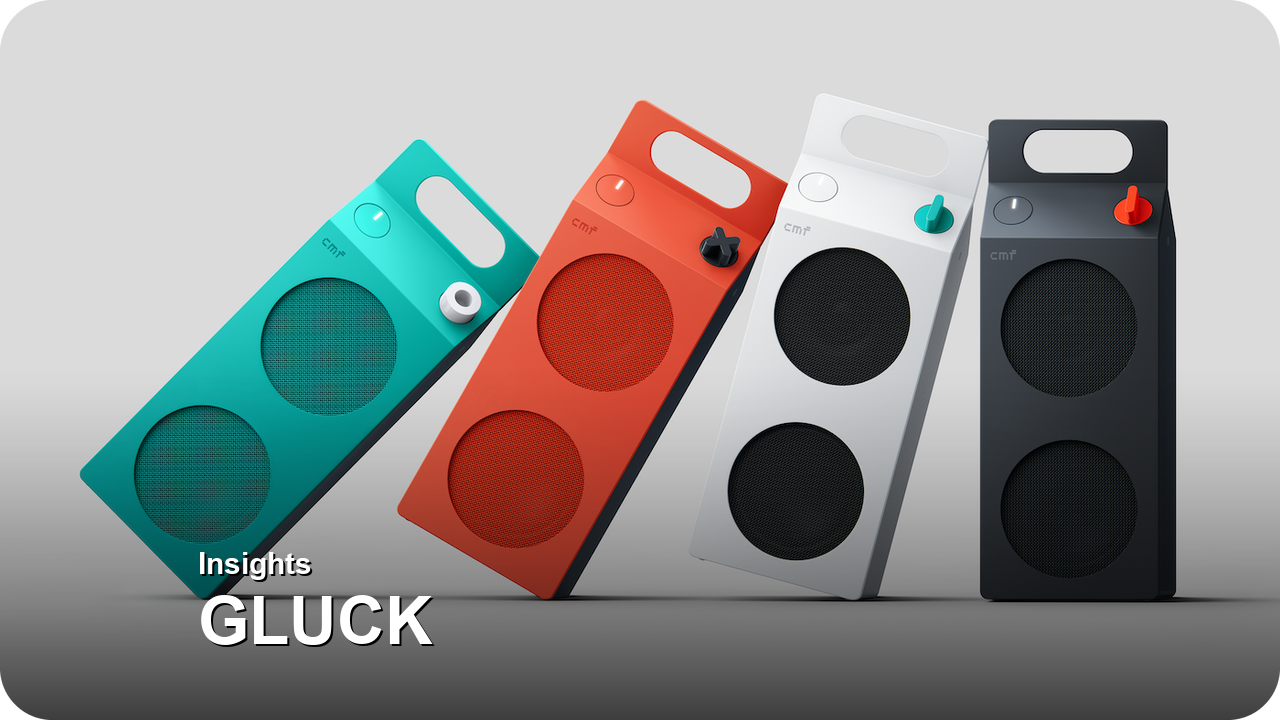
가전과 오디오 제품을 보면 최근 '완성품을 그대로 쓰는 물건'에서 '사용자가 손대는 물건'으로 성격이 바뀌고 있습니다. 케이스를 갈아끼우고, 색을 바꾸고, 액세서리를 붙이는 커스텀 문화가 스마트폰을 넘어 생활 가전으로 번지는 흐름입니다.
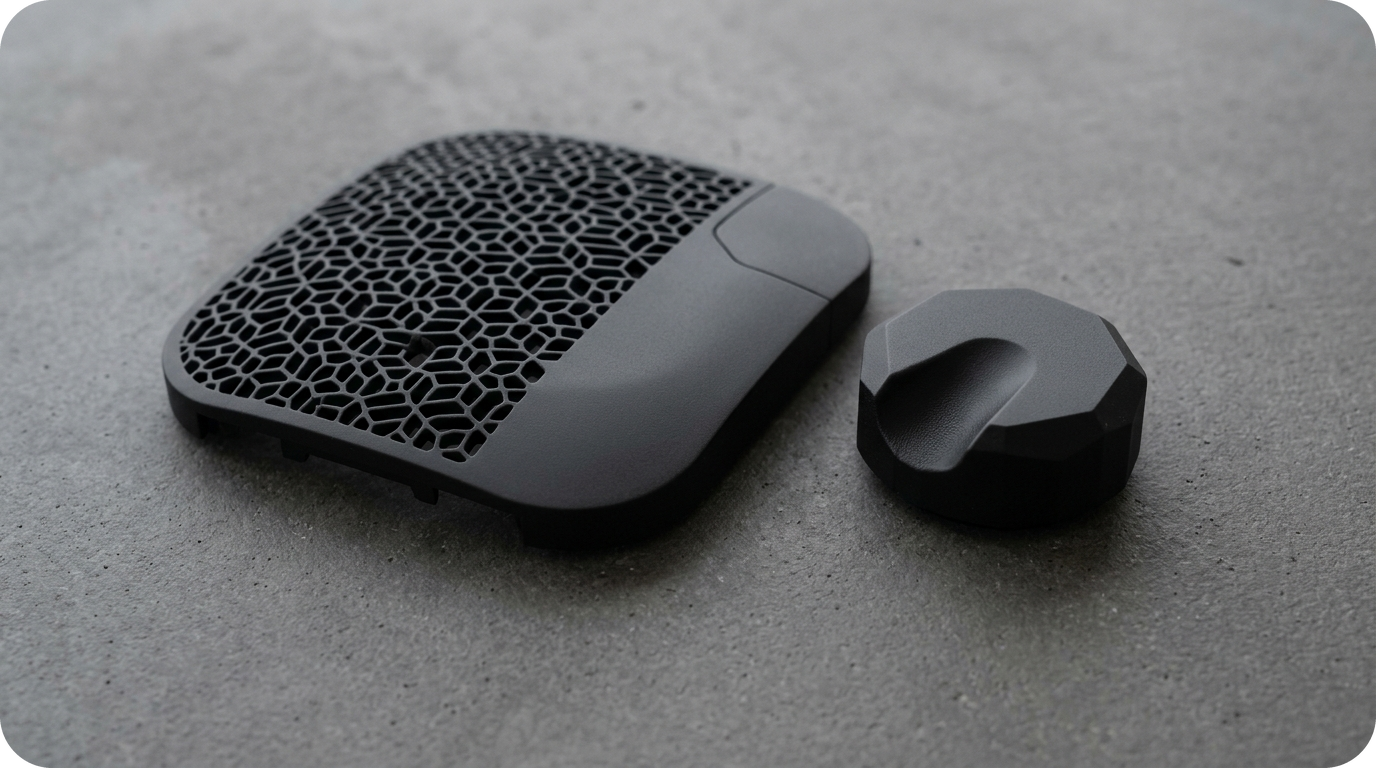
Nothing의 서브 브랜드 CMF가 내놓은 첫 포터블 스피커 CMF Speaker S와 Speaker M이 그 흐름을 잘 보여줍니다. 두 모델 모두 전면 패널과 볼륨 노브를 분리할 수 있고, 회사는 커뮤니티 사이트에 교체용 파트를 직접 3D프린팅할 수 있는 가이드를 공개했습니다. 기본 제공되는 네 가지 색상을 넘어, 사용자가 원하는 색과 형태로 노브와 패널을 뽑아 바꿀 수 있는 구조입니다.
흥미로운 건 이 접근이 단순한 '취미용 3D프린팅 권장'에 머물지 않는다는 점입니다. 브랜드가 외장 파트를 교체 가능한 부품으로 설계하고 공식 리소스로 뒷받침한다는 건, 외장 그 자체가 하나의 액세서리 상품군이 될 수 있다는 뜻입니다. 그렇다면 브랜드 가전의 교체형 외장 파트를 금형 없이 소량으로 반복생산하려면 어떻게 해야 할까요? 이 글에서는 Nothing의 사례를 제조 관점에서 짚어봅니다.
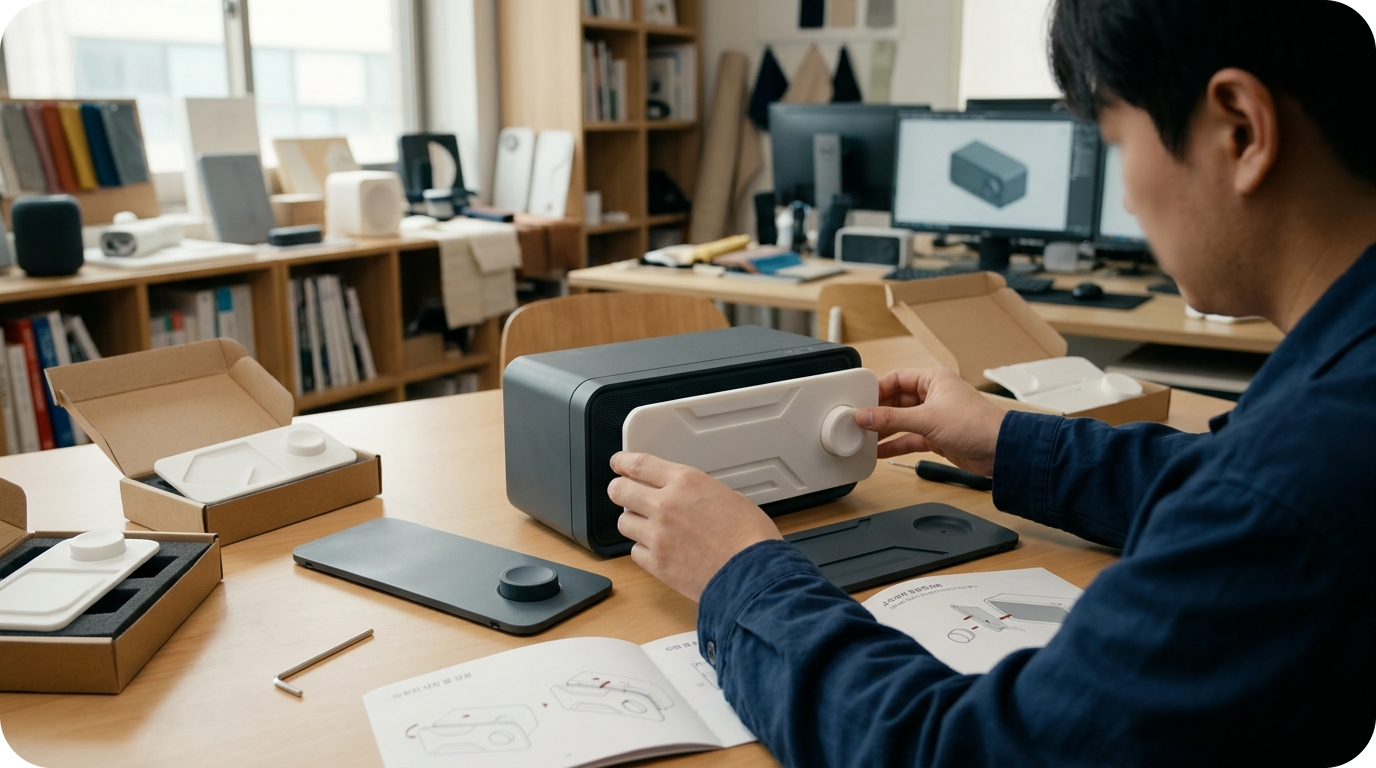
Nothing CMF 스피커 : 외장을 '구매 후 바꾸는 것'으로 설계하다
CMF Speaker S는 £49/$59/€59, Speaker M은 £99/$109/€99에 판매되며 두 모델 모두 다크 그레이·화이트·터쿼이즈·오렌지 네 가지 색상으로 출시됐습니다. 각 스피커 뒷면의 언락 스위치를 누르면 전면 패널과 볼륨 노브가 분리되고, 사용자는 이 파트를 다른 사용자와 교환하거나 공개된 가이드를 따라 직접 프린팅할 수 있습니다.
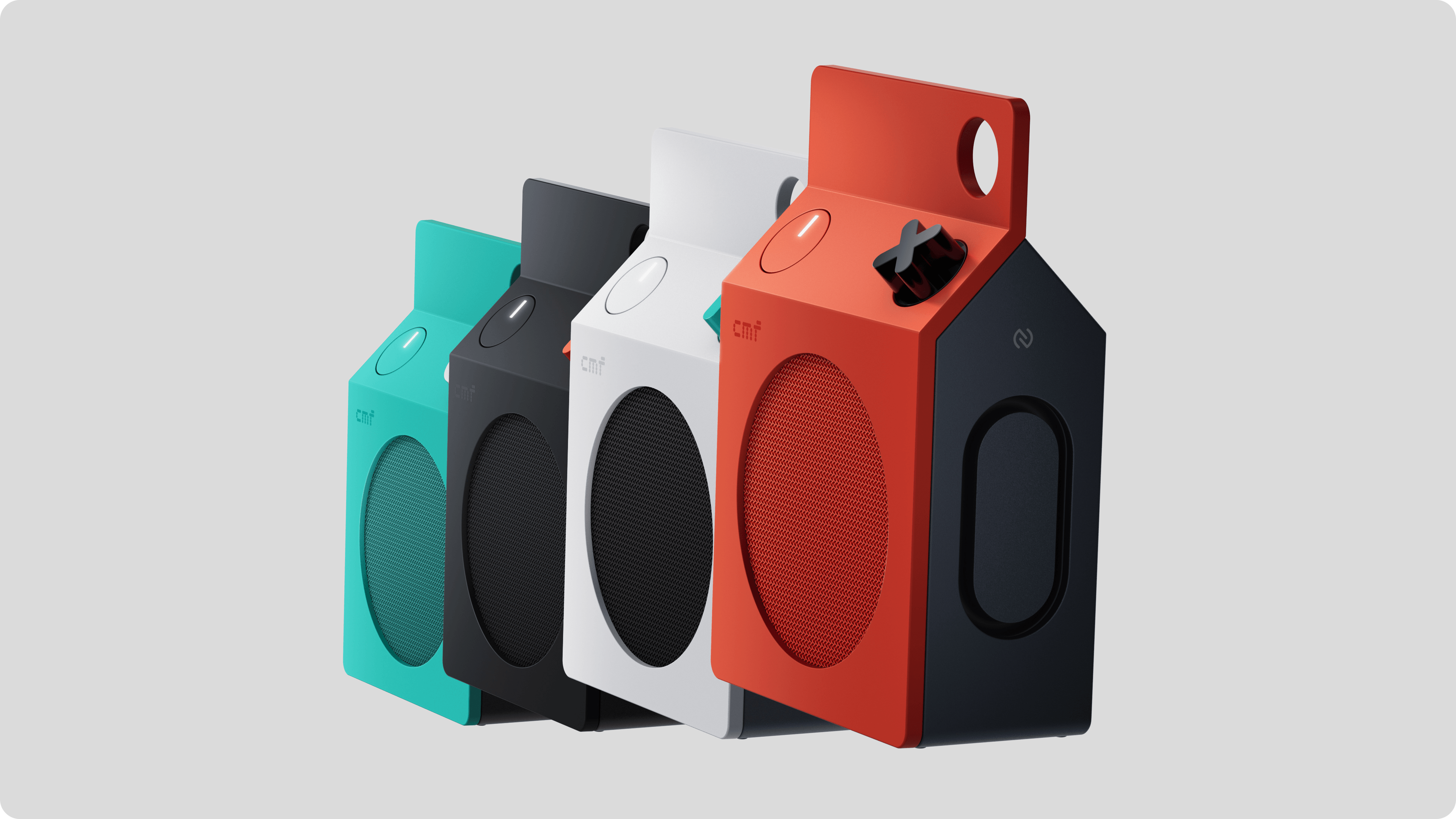
제조 관점에서 보면 이 구조는 꽤 도전적인 숙제를 안고 있습니다. 공장이 네 가지 색상만 찍어 출하하더라도, 사용자가 원하는 색상·형상의 조합은 사실상 무한에 가깝습니다. 브랜드가 이 수요를 공식 액세서리로 받아 안으려면, 색과 형상이 제각각인 외장 파트를 소량으로 반복 생산해야 합니다.
문제는 전통적인 방식으로 이걸 풀기가 어렵다는 점입니다. 외장 패널 하나를 사출로 양산하려면 색상·형상마다 별도의 금형이 필요하고, 금형비는 수천만 원에서 억 단위까지 올라갑니다. 게다가 액세서리성 파트는 어떤 색이 얼마나 팔릴지 예측하기 어려워, 금형을 파두고 재고를 쌓는 순간 곧바로 리스크가 됩니다.
- 불확실한 수요: 한정판·커스텀 외장 파트는 색상별·형상별 수요를 예측하기 어려워, 금형 투자와 대량 재고 모두 위험 부담이 큽니다.
- 다색상·다형상 요구: 기본 네 색을 넘어서는 조합을 받으려면 품목 수가 급격히 늘어나, 품목마다 금형을 파는 방식은 비용이 감당되지 않습니다.
이런 상황에서는 '먼저 찍어두고 파는' 모델이 아니라, '주문이 생기면 그만큼만 만드는' 생산 방식이 훨씬 합리적입니다.
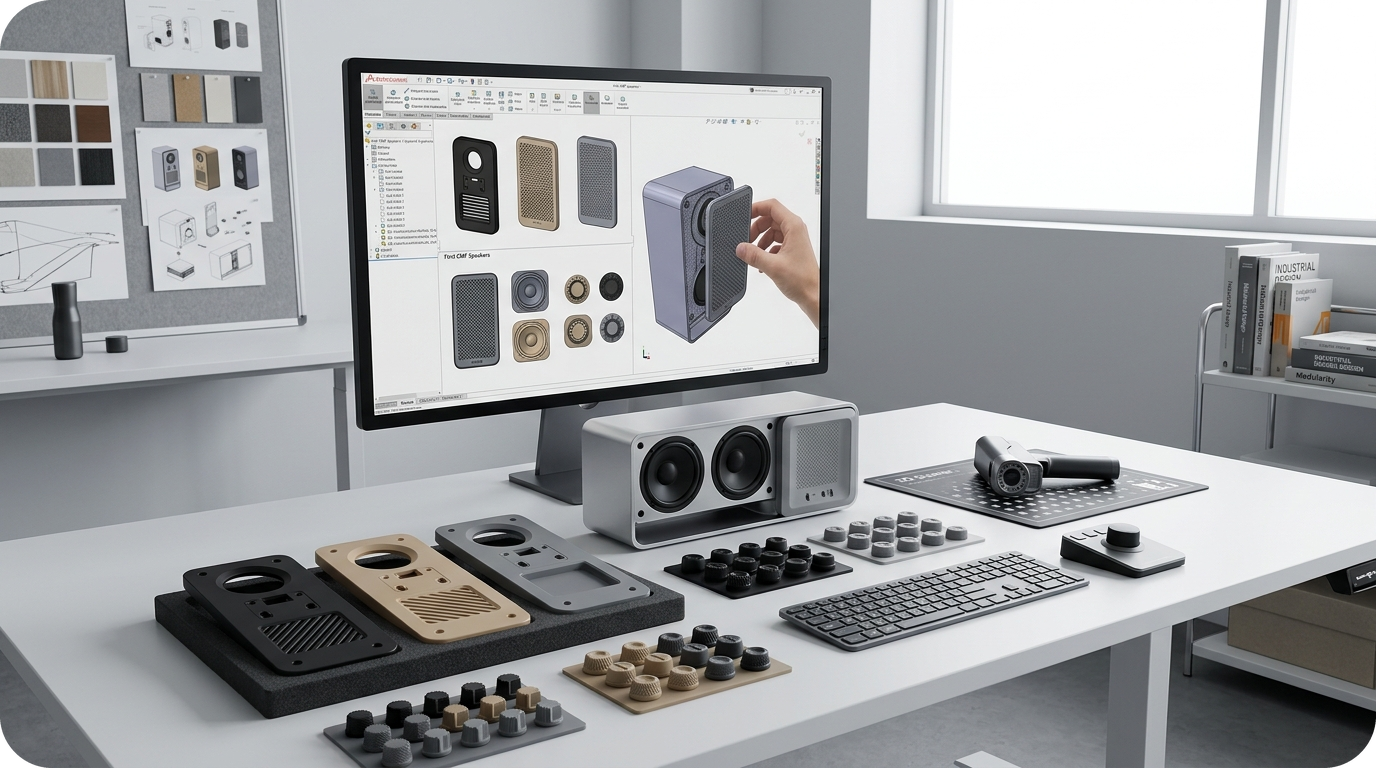
스마트폰에서 이어진 흐름 : 외장 파트를 공식 리소스로 받치다
Nothing의 이번 시도는 갑자기 등장한 것이 아닙니다. CMF는 스마트폰에서 이미 같은 방식을 써왔습니다. 2024년 CMF Phone 1은 교체 가능한 백커버와 부착형 액세서리를 갖췄고, 디자인 콘테스트 참가자에게 후면 케이스의 STEP 파일과 치수를 제공했습니다. 이듬해 CMF Phone 2 Pro에서는 백커버·부착물·액세서리용 파일과 치수, 디자인 레퍼런스를 다시 공개했습니다.
Nothing 밖에서도 비슷한 움직임이 있었습니다. PC 하드웨어 제조사인 Cooler Master는 2022년 공식 프로필을 열고 PC 케이스의 교체용 파트와 액세서리를 3D프린팅 파일로 배포하며 커스터마이징 폭을 넓혔습니다. 모두 소비자 하드웨어 브랜드의 제품을 '사용자가 집에서 뽑을 수 있는 파일'과 연결했다는 공통점이 있습니다.
이 사례들이 제조에 던지는 시사점은 분명합니다. 외장 파트가 '한 번 설계해 끝나는 고정 부품'이 아니라 계속 변형되고 추가되는 품목군으로 바뀌고 있다는 점입니다. 브랜드가 직접 공식 액세서리로 판매하려면, 설계 변경이 잦고 색상·형상이 다양한 파트를 금형 없이 유연하게 만들 수 있는 생산 인프라가 필요합니다.
- 설계 변경이 상수인 구조: 교체형 외장은 시즌·콜라보·한정판마다 형상이 바뀌므로, 변경 때마다 금형을 다시 파는 방식은 비효율적입니다.
- 품목 합산 반복 양산: 색상·형상이 여러 갈래로 나뉘어도 전체 수요는 꾸준히 발생하므로, 다품종을 묶어 반복 양산하는 체계가 유리합니다.
결국 핵심은 '한 품목을 얼마나 많이 찍느냐'가 아니라 '다양한 품목을 얼마나 유연하게, 금형 없이 반복 생산하느냐'로 옮겨갑니다.
교체형 외장 파트 양산, 글룩의 산업용 SLA로 푸는 방법
이렇게 수요가 불확실하고 색상·형상이 다양한 외장 파트는, 산업 현장에서는 글룩의 산업용 SLA 3D프린팅으로 현실적으로 풀 수 있습니다. 금형을 파지 않고 디지털 파일만으로 생산에 들어가므로, 색상이나 형상이 바뀌어도 금형을 새로 제작할 필요가 없습니다. 설계를 수정하면 바로 다음 생산에 반영돼, 교체형 파트처럼 변형이 잦은 품목에 잘 맞습니다.
표면 품질도 교체형 외장 파트의 핵심 요건과 맞닿아 있습니다. 글룩의 산업용 SLA는 300mm 기준 최대 ±0.05mm의 정밀도와 Ra 0.8 수준의 표면조도를 구현하며, 후가공을 거치면 사출품과 구별이 어려운 마감을 얻을 수 있습니다. 소비자가 손으로 만지고 눈으로 보는 외장 파트에서 표면 완성도는 곧 제품의 완성도로 이어집니다. 글룩은 로봇 외장 커버, 의료기기 하우징·커버 같은 산업 부품의 소량 양산을 이미 다뤄왔고, 브랜드 굿즈·하우징을 금형 없이 반복 생산하는 각도에서 이런 교체형 외장 파트에도 적용할 수 있습니다.
생산 규모 측면에서도 글룩은 45기의 산업용 SLA를 365일 24시간 운용하며 연간 23만 개 이상의 부품을 생산합니다. 색상·형상별로 품목이 나뉘더라도 이를 묶어 수백~수천 개 규모로 반복 양산할 수 있어, 한정판·액세서리처럼 '한 번에 조금씩, 그러나 꾸준히' 나가는 수요에 대응하기 유리합니다.
물론 SLA가 모든 경우에 유리한 것은 아닙니다. 색상·형상이 완전히 고정된 하나의 외장을 수만~수십만 개 이상 동일하게 찍어내는 초대량 구간이라면, 개당 단가 측면에서 사출 성형이 여전히 더 경제적입니다. 높은 하중을 견뎌야 하는 구조 부품이라면 금속 가공이 맞습니다. SLA는 형상이 다양하고 설계 변경이 잦으며 수요가 불확실한 외장 파트라는 조건에서 특히 강점을 발휘하는 선택지입니다.
처음의 질문으로 돌아가 보겠습니다. 브랜드 가전의 교체형 외장 파트를 금형 없이 소량으로 반복생산하려면 어떻게 해야 할까요? 답은 수요가 확정되기를 기다리며 금형을 파는 대신, 디지털 파일을 바탕으로 색상·형상별 파트를 주문만큼 반복 양산하는 체계로 전환하는 것입니다. Nothing의 CMF 스피커가 외장을 '구매 후 바꾸는 상품'으로 재정의한 지금, 그 상품을 실제로 공급할 제조 방식 역시 금형 중심에서 유연한 온디맨드 양산으로 옮겨가고 있습니다.
GLUCK은 반복 생산이 가능한 산업용 SLA 3D프린팅 인프라를 기반으로
교체형 외장 파트·브랜드 굿즈 개발과 양산 전환 과정에 필요한 3D프린팅 제조 솔루션을 지원하고 있습니다.
지금 글룩을 확인해보세요!
📩 글룩 홈페이지 & 온라인 견적: https://www.glucklab.com
📂 글룩 포트폴리오: 글룩 포트폴리오 확인하기
References
[1] 3D Printing Industry, "Nothing's First CMF Speakers Support 3D Printed Knobs and Panels," 3D Printing Industry. Link: https://3dprintingindustry.com/news/nothings-first-cmf-speakers-support-3d-printed-knobs-and-panels-255707/
English Version
Nothing's CMF Speakers Let Users Swap Exterior Panels Themselves: How Replaceable Parts Reshape Consumer Hardware Customization
Looking at consumer electronics and audio products lately, their character is shifting from "something you use as-is" to "something you modify." A customization culture of swapping cases, changing colors, and adding accessories is spreading from smartphones into household electronics.
The first portable speakers from Nothing's sub-brand CMF, the CMF Speaker S and the larger CMF Speaker M, illustrate this trend well. Both models have removable front panels and volume knobs, and the company has published a guide on its community site for owners who want to 3D print replacement parts. Owners can print knobs and panels in colors and shapes beyond the four factory options.
What's interesting is that this approach goes beyond simply "encouraging hobbyist 3D printing." When a brand designs exterior parts as replaceable components and backs them with official resources, it means the exterior itself can become a line of accessory products. So how can a consumer-electronics brand produce replaceable exterior parts in small, repeated batches without molds? This article examines Nothing's case from a manufacturing perspective.
Nothing CMF Speakers: Designing the Exterior as "Something to Change After Purchase"
The CMF Speaker S costs £49/$59/€59, and the Speaker M costs £99/$109/€99; both come in dark grey, white, turquoise, and orange. An unlock switch on the back of each speaker releases the front panel and volume knob, and owners can trade these parts with other users or follow the published guide to print them directly.
From a manufacturing standpoint, this structure poses a considerable challenge. Even if the factory ships only four colors, the combinations of colors and shapes owners desire are effectively limitless. For a brand to embrace this demand as official accessories, it must produce exterior parts of varying colors and shapes in small, repeated batches.
The problem is that this is hard to solve with traditional methods. Mass-producing a single exterior panel via injection molding requires a separate mold for each color and shape, and mold costs range from tens of thousands to hundreds of thousands of dollars. Moreover, accessory-type parts make it hard to predict which colors will sell how well, so cutting a mold and stockpiling inventory immediately becomes a risk.
- Uncertain demand: Limited-edition and custom exterior parts make color- and shape-specific demand hard to predict, so both mold investment and large inventories carry significant risk.
- Multi-color, multi-shape requirements: Embracing combinations beyond the base four colors sharply increases the number of SKUs, making the per-mold approach unaffordable.
In such conditions, a "make it when there's an order" model is far more sensible than a "make it first, then sell" one.
A Flow Carried Over from Smartphones: Backing Exterior Parts with Official Resources
Nothing's move didn't appear out of nowhere. CMF had already used this approach on its smartphones. In 2024, the CMF Phone 1 featured replaceable back covers and attachable accessories, and participants in a design contest received a STEP file and dimensions of the rear case. A year later, the CMF Phone 2 Pro again released files, measurements, and design references for back covers, attachments, and other accessories.
Beyond Nothing, there were similar moves. PC hardware maker Cooler Master opened an official profile in 2022 and distributed 3D printable replacement parts and accessories for its PC cases, expanding customization options. All of these tie a consumer hardware brand's own products to files that owners can print at home.
The manufacturing lesson from these cases is clear. Exterior parts are shifting from "fixed components designed once and done" into a product group that keeps changing and expanding. For a brand to sell these as official accessories, it needs a production infrastructure that can flexibly make parts with frequent design changes and diverse colors and shapes without molds.
- Design change as a constant: Replaceable exteriors change shape with each season, collaboration, or limited edition, so re-cutting a mold for every change is inefficient.
- SKU-aggregated repeat production: Even when split across many colors and shapes, total demand is steady, so a system that bundles multiple variants into repeated production is advantageous.
Ultimately, the key shifts from "how many units of one SKU" to "how flexibly and mold-free you can repeatedly produce diverse SKUs."
Producing Replaceable Exterior Parts: Solving It with GLUCK's Industrial SLA
Exterior parts like these—uncertain in demand and diverse in color and shape—can be realistically produced in industrial settings with GLUCK's industrial SLA 3D printing. Because production starts from digital files without cutting molds, there is no need to build a new mold when colors or shapes change. A design revision feeds straight into the next run, which suits parts like replaceable exteriors that change frequently.
Surface quality also aligns with a core requirement for replaceable exterior parts. GLUCK's industrial SLA achieves up to ±0.05mm precision on a 300mm basis and surface roughness of around Ra 0.8, and with post-processing it can achieve a finish hard to distinguish from injection-molded parts. For exterior parts that consumers touch and see, surface completeness directly translates into product completeness. GLUCK has already handled small-batch production of industrial parts such as robot exterior covers and medical device housings and covers, and from the angle of mold-free repeat production of brand goods and housings, this can be applied to such replaceable exterior parts as well.
In terms of production scale, GLUCK operates 45 industrial SLA machines around the clock, 365 days a year, producing over 230,000 parts annually. Even when SKUs are split by color and shape, they can be bundled and repeatedly produced at scales of several hundred to several thousand—well suited to demand that flows "a little at a time, but steadily," like limited editions and accessories.
Of course, SLA is not advantageous in every case. For an ultra-high-volume run that prints tens of thousands or hundreds of thousands of identical units of a single fixed-color, fixed-shape exterior, injection molding remains more economical in per-unit cost. For structural parts that must bear heavy loads, metal machining is the right fit. SLA is the choice that shines especially under the condition of exterior parts with diverse shapes, frequent design changes, and uncertain demand.
Let's return to the opening question. How can a consumer-electronics brand produce replaceable exterior parts in small, repeated batches without molds? The answer is to shift—rather than waiting for demand to settle and cutting a mold—to a system that repeatedly produces color- and shape-specific parts on demand based on digital files. Now that Nothing's CMF speakers have redefined the exterior as "a product you change after purchase," the manufacturing method that actually supplies such products is also moving from mold-centric to flexible on-demand production.
GLUCK supports the development of replaceable exterior parts and brand goods, as well as the transition to mass production, with 3D printing manufacturing solutions built on an industrial SLA 3D printing infrastructure capable of repeated production.
Check out GLUCK now!
📩 GLUCK website & online quote: https://www.glucklab.com
📂 GLUCK portfolio: View the GLUCK portfolio
References
[1] 3D Printing Industry, "Nothing's First CMF Speakers Support 3D Printed Knobs and Panels," 3D Printing Industry. Link: https://3dprintingindustry.com/news/nothings-first-cmf-speakers-support-3d-printed-knobs-and-panels-255707/
#글룩 #GLUCK #3D프린팅 #산업용3D프린팅 #SLA3D프린팅 #교체형외장 #커스텀가전 #브랜드굿즈 #온디맨드양산 #금형없는생산 #NothingCMF #3DPrinting #SLA3DPrinting #AdditiveManufacturing #OnDemandManufacturing #ConsumerHardware #CustomParts #FlexibleSeriesProduction
이미지 출처·라이선스
원문 기사 이미지 출처
'인사이트 (Insights)' 카테고리의 다른 글
| 699달러 SLA 프린터 시대, 레진은 대중화됐지만 '양산'은 왜 여전히 다른 문제일까 (0) | 2026.10.15 |
|---|---|
| 사진 한 장으로 완성되는 화병, Fahz 2.0이 보여준 '1인 1제품' 자동 양산 (0) | 2026.10.14 |
| 로봇 고객 매출이 1년 만에 2배로 : 로봇 부품 조달의 변화 (0) | 2026.10.02 |
| anrealage 색변환 드레스 : 2,000개 '비늘'을 금형 없이 반복 성형하는 법 (0) | 2026.10.01 |
| 프린터를 안 사고도 부품을 찍는다 : AM 서비스 시장이 25억 달러에 다가선 이유 (0) | 2026.09.30 |