
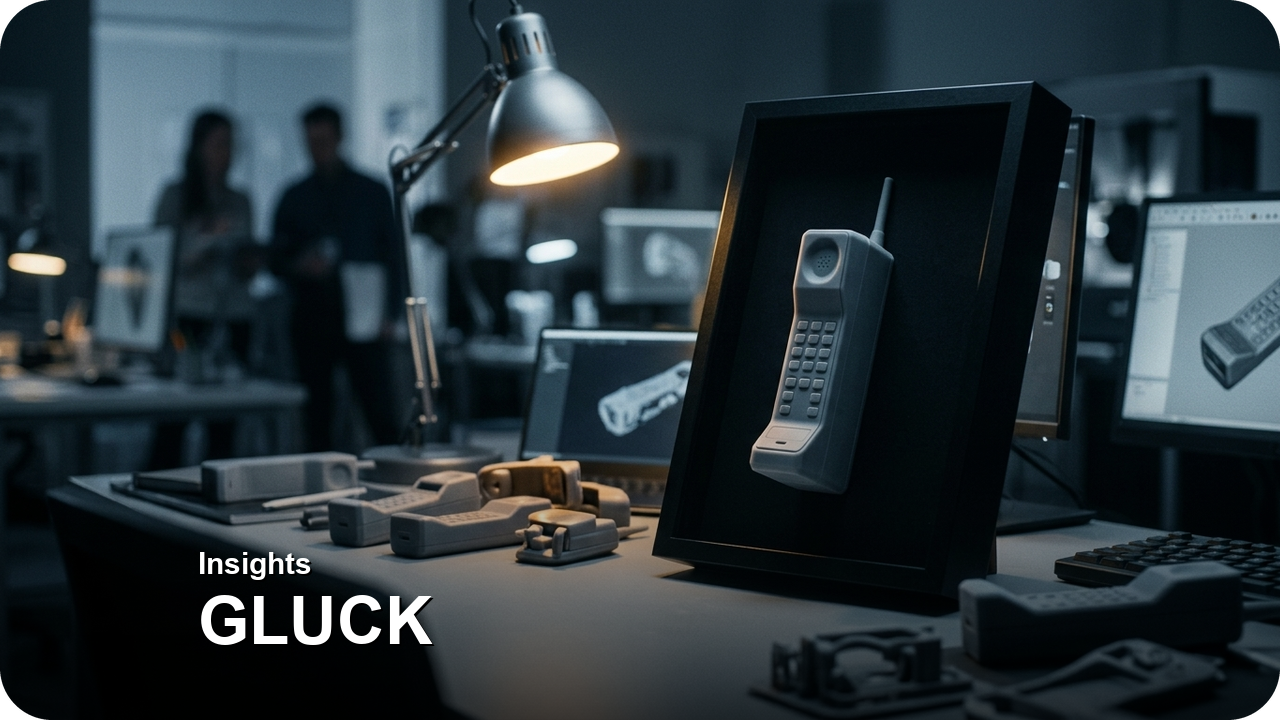
스마트폰이 하루 평균 사용 시간을 계속 늘려가는 가운데, 정반대 방향으로 가는 작은 움직임도 함께 커지고 있습니다. 알림을 줄이고, 화면을 없애고, '그냥 전화만 되는 기기'를 다시 찾는 사람들이 생겨난 것입니다. 이런 흐름 속에서 과거의 투박한 벽돌폰이 디자인 오브제로 되살아나는 장면은 흥미로운 신호입니다.
디자이너 케빈 노키(Kevin Noki)는 벽돌폰의 형태를 그대로 빌려와, 안쪽에 블루투스 모듈을 넣은 3D프린팅 핸드셋을 만들었습니다. 스마트폰과 연결해 전화만 받고 거는 '안티 디스트랙션(집중 방해 차단)' 기기로, 거대한 안테나와 묵직한 바디까지 레트로 감성을 그대로 재현했습니다. 화면도, 앱도 없는 이 기기는 기술 사양보다 디자인과 서사로 사람을 끌어당깁니다.
흥미로운 건 이 제품이 대량 생산을 전제로 한 가전이 아니라는 점입니다. 이런 레트로 하우징을 한정판이나 시딩용으로 소량만 만들려고 할 때, 금형 없이 외장을 어떻게 양산할 수 있을까요? 이 글에서는 벽돌폰 사례를 디자인 가전의 소량 외장 양산이라는 제조 문제로 바꿔 짚어봅니다.
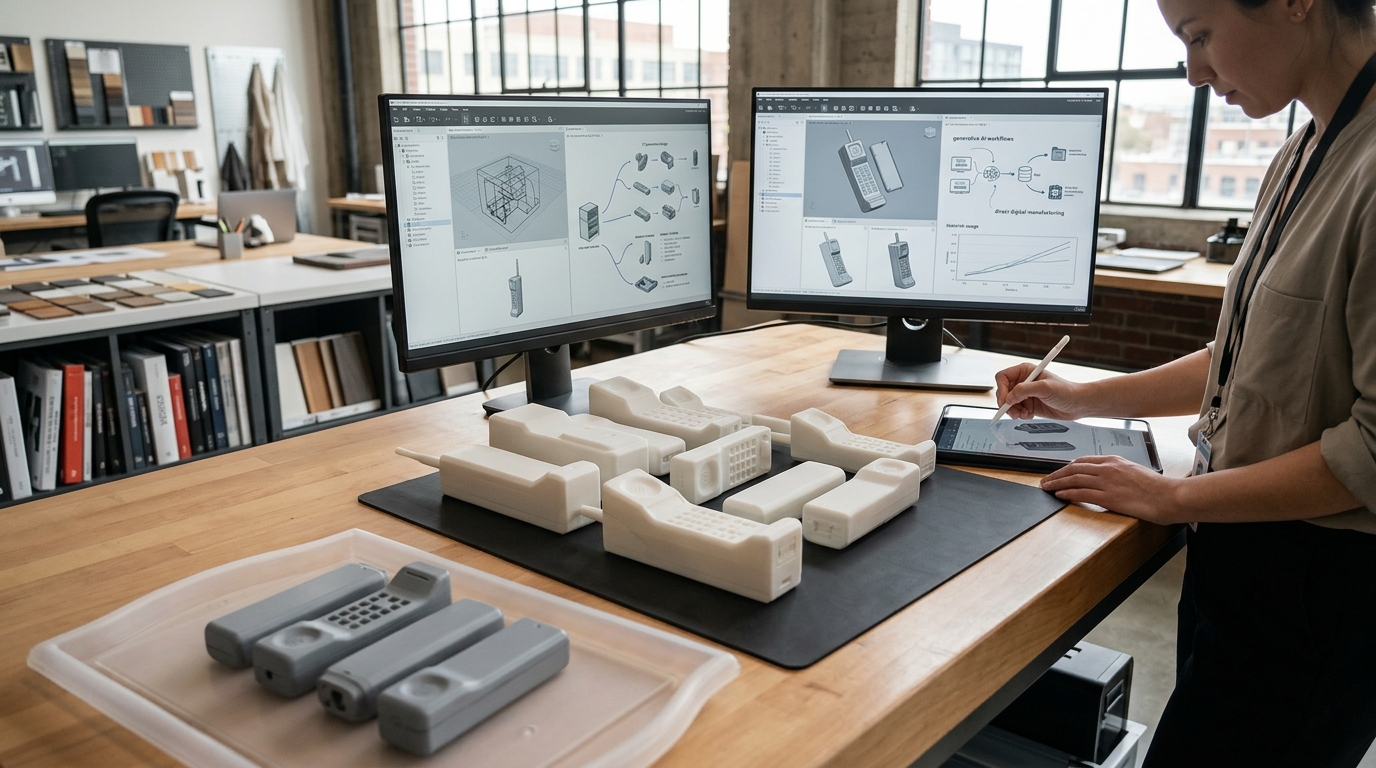
벽돌폰 핸드셋이 보여준 소량 디자인 제품의 제조 조건
레트로 벽돌폰처럼 개성 강한 디자인 가전은 대부분 '많이 팔릴지 모르는 상태'에서 출발합니다. 반응을 보려고 수백 개를 먼저 만들고, 팔리면 더 만드는 식입니다. 바로 이 지점에서 기존 양산 방식과 충돌이 생깁니다.
기존 방식으로 이런 외장을 만들려면 사출 금형을 파야 했습니다. 문제는 두 가지입니다. 첫째, 금형비가 수천만 원에서 억 단위로 들어가, 수백 개만 팔아서는 회수가 거의 불가능하다는 점입니다. 둘째, 벽돌폰처럼 곡면과 단차가 많고 안테나·버튼 하우징이 복잡한 형상은 금형 설계 난도와 비용을 더 끌어올립니다. 디자인을 한 번 수정할 때마다 금형을 다시 손봐야 하고, 그만큼 시간과 돈이 또 들어갑니다.
- 금형비의 벽: 소량 한정판은 판매 수량이 금형 투자액을 넘기 어려워, 초기 투자 자체가 프로젝트를 가로막습니다.
- 설계 변경의 부담: 디자인 제품은 색·질감·형태를 자주 바꾸는데, 금형 방식은 변경 한 번이 곧 추가 비용과 리드타임입니다.
노키의 핸드셋이 3D프린팅으로 완성될 수 있었던 이유도 여기에 있습니다. 금형이라는 고정비 없이 디지털 설계 파일만으로 복잡한 하우징을 바로 출력할 수 있었기 때문입니다. 이 방식은 실제 소량 디자인 가전의 외장 생산에도 그대로 적용될 수 있습니다.
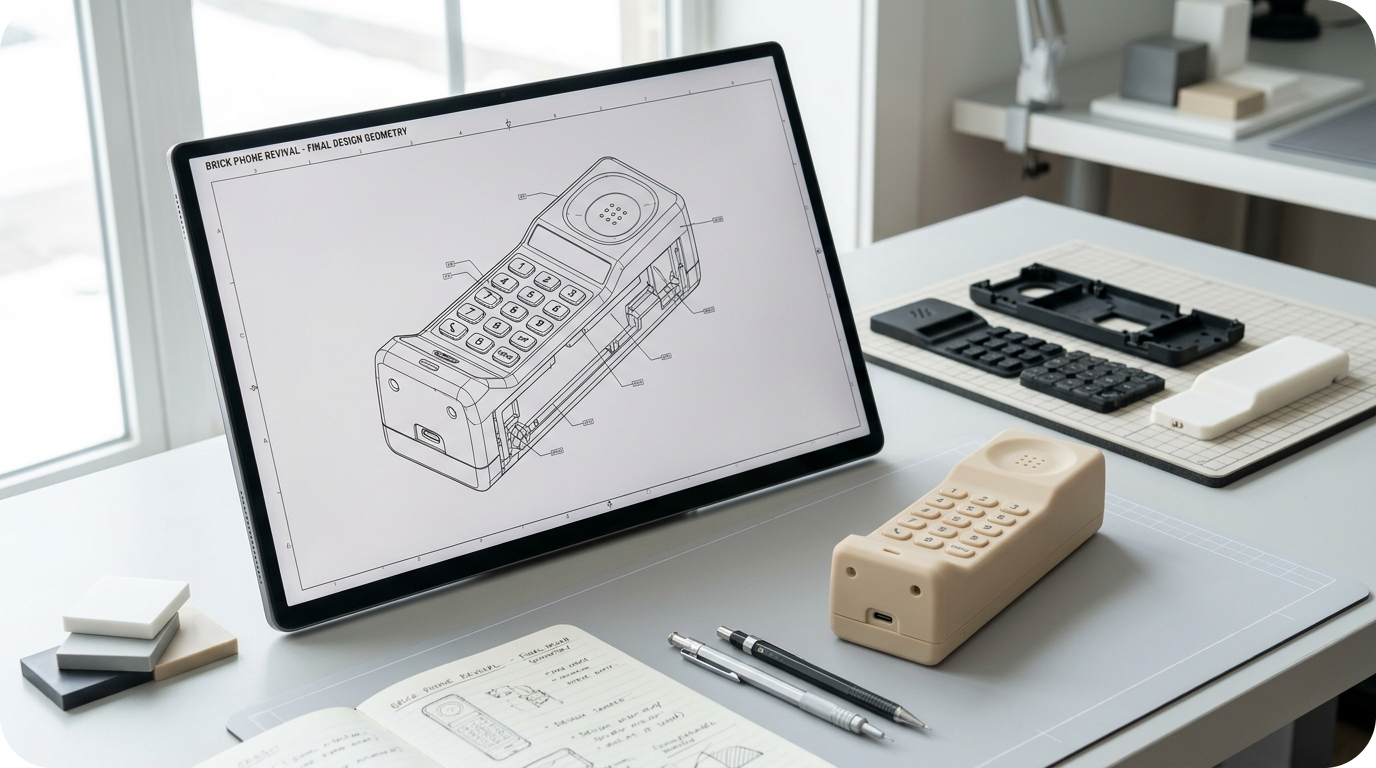
한정판·시딩 제품에서 '수량'보다 중요한 판단 기준
디자인 가전을 소량으로 만들 때 흔히 "몇 개부터 3D프린팅이 유리한가"를 묻습니다. 하지만 실제 판단 기준은 절대 수량이 아니라 형상 다양성과 설계 변경 빈도입니다.
같은 형상을 수십만 개 찍어낸다면 사출이 개당 단가에서 유리할 수 있습니다. 반대로 색상·마감이 다른 여러 버전을 수백~수천 개씩 나눠 만들거나, 반응을 보며 디자인을 계속 다듬는 한정판·시딩(seeding) 제품이라면 이야기가 달라집니다. 이때는 금형을 여러 벌 파는 대신, 디지털 파일만 바꿔 바로 다시 출력하는 쪽이 비용과 속도 모두에서 앞설 수 있습니다.
벽돌폰 핸드셋 같은 제품은 '완성품을 창고에 쌓아두는' 방식과도 맞지 않습니다. 주문이 들어오는 만큼 생산하는 온디맨드(On-demand, 수요 기반 생산) 방식이면, 팔리지 않은 재고가 비용으로 남는 리스크를 줄일 수 있습니다. 결국 소량 디자인 가전의 외장은 '얼마나 많이 만드느냐'가 아니라 '얼마나 자주 바뀌고, 얼마나 다양한가'로 제조 방식을 골라야 하는 영역입니다.
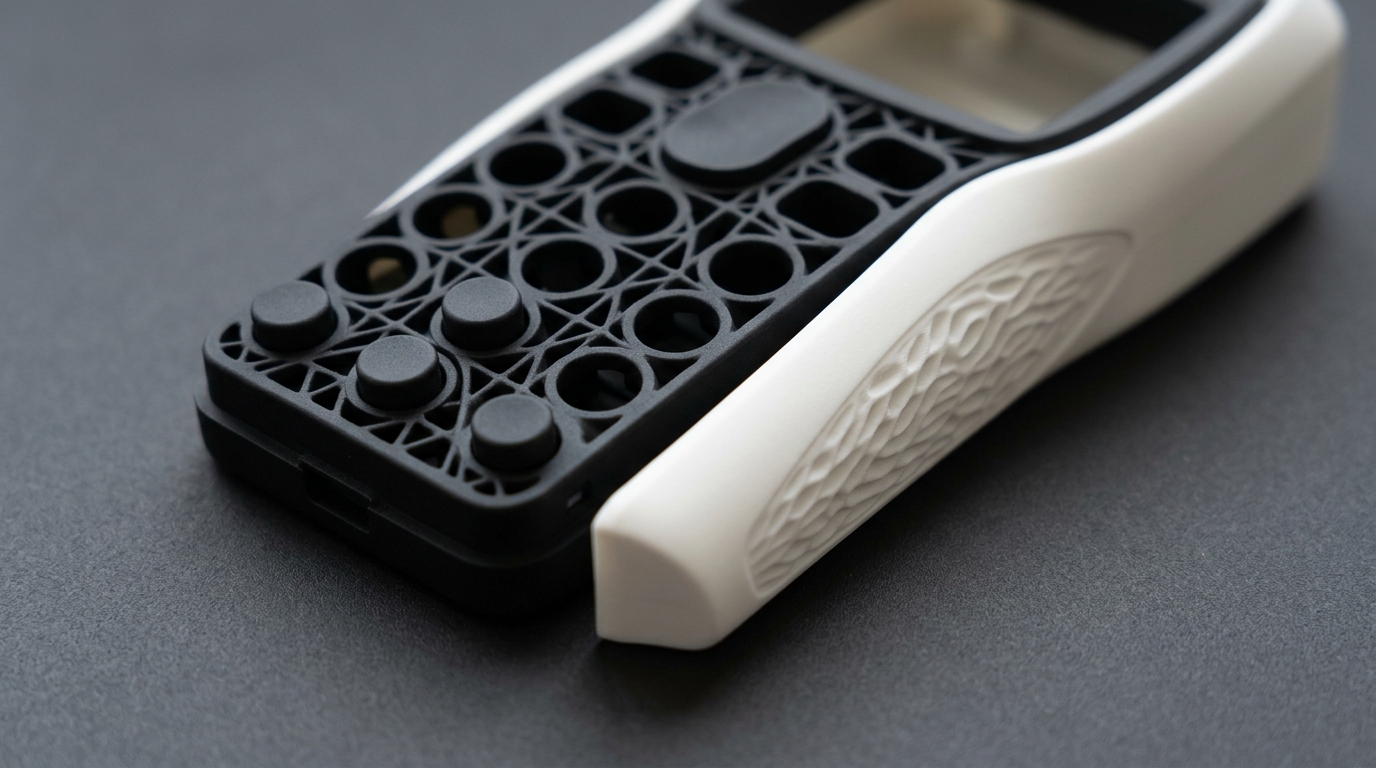
소량 디자인 가전 외장, 글룩의 산업용 SLA로 양산하기
이런 가능성은 실제 제조 현장에서 산업용 SLA 3D프린팅으로 구현됩니다. 글룩은 금형 없이 디지털 설계 데이터만으로 하우징·커버를 반복 생산하는 체계를 갖추고 있어, 소량 디자인 가전의 외장 양산에 현실적인 선택지가 됩니다.
표면 품질과 정밀도가 특히 중요합니다. 디자인 가전은 사용자가 손으로 쥐고 눈으로 보는 제품이라, 적층 결이 보이거나 치수가 어긋나면 완성도가 떨어집니다. 글룩의 산업용 SLA는 300mm 기준 최대 ±0.05mm의 정밀도와 Ra 0.8 수준의 표면조도를 확보하며, 후가공 시 사출품과 구별이 어려운 마감까지 구현합니다. 벽돌폰처럼 곡면·단차가 많은 복잡한 외장도 정밀하게 출력할 수 있습니다.
규모 측면에서도 글룩은 45기의 산업용 SLA 장비를 365일 24시간 운용해 연간 23만 개 이상의 부품을 생산합니다. 한정판 수백 개부터 시딩 이후 수천 개 규모의 반복 양산까지, 품목을 바꿔가며 다품종으로 대응할 수 있는 디지털 파운드리 역량입니다. 실제로 로봇 외장 커버 소량 양산, 의료기기 하우징/커버 같은 산업 부품에서도 같은 공정이 쓰입니다.
다만 모든 경우에 SLA가 정답은 아닙니다. 단일 형상을 수십만 개 이상 찍어내는 초대량 생산이라면 금형을 투자해 사출로 가는 편이 개당 단가에서 유리하고, 높은 하중을 견뎌야 하는 구조 부품이라면 금속 가공이 더 맞습니다. 소량·다품종·잦은 설계 변경이라는 조건이 맞을 때, 금형 없는 SLA 양산의 강점이 가장 선명해집니다.
처음의 질문으로 돌아가 보면, 소량 디자인 가전 외장을 금형 없이 만드는 길은 이미 열려 있습니다. 벽돌폰 핸드셋이 증명한 것처럼, 수백 개짜리 한정판도 디지털 파일 하나로 시작해 반복 양산으로 확장할 수 있다는 것 — 그것이 금형을 파지 않고도 디자인을 제품으로 바꾸는 방법입니다.
GLUCK은 반복 생산이 가능한 산업용 SLA 3D프린팅 인프라를 기반으로
디자인 가전 외장 개발과 양산 전환 과정에 필요한 3D프린팅 제조 솔루션을 지원하고 있습니다.
지금 글룩을 확인해보세요!
📩 글룩 홈페이지 & 온라인 견적: https://www.glucklab.com
📂 글룩 포트폴리오: 글룩 포트폴리오 확인하기
References
[1] designboom, "3D-printed brick phone brings back the art of simply answering calls," designboom. Link: https://www.designboom.com/technology/anti-distraction-handset-device-3d-printed-brick-phone-kevin-noki/
English Version
The Return of the Brick Phone: Making Small-Batch Design Electronics Housings Without Molds
As daily smartphone usage keeps climbing, a small counter-movement is growing in the opposite direction. People are seeking to cut notifications, remove screens, and return to a device that "just makes calls." Against this backdrop, the clunky brick phone of the past reemerging as a design object is an intriguing signal.
Designer Kevin Noki borrowed the exact form of a brick phone and built a 3D-printed handset with a Bluetooth module inside. Pairing with a smartphone to only answer and place calls, this "anti-distraction" device faithfully recreates the retro mood—right down to the oversized antenna and chunky body. With no screen and no apps, it draws people in through design and story rather than technical specs.
What's interesting is that this product is not a home appliance built for mass production. When you want to make such a retro housing only in small quantities for a limited edition or seeding run, how can you mass-produce the exterior without a mold? This article reframes the brick phone case as a manufacturing problem: small-batch exterior production for design electronics.
Manufacturing Conditions Revealed by the Brick Phone Handset
Design electronics with strong, distinctive looks—like the retro brick phone—usually start from a state where "we don't know how many will sell." You make a few hundred first to gauge reaction, then make more if they sell. This is exactly where traditional mass production clashes.
Producing such an exterior the conventional way means cutting an injection mold. The problem is twofold. First, tooling costs run from tens of thousands to hundreds of thousands of dollars, making it nearly impossible to recover by selling only a few hundred units. Second, shapes with many curves and steps, plus complex antenna and button housings like a brick phone, push mold design difficulty and cost even higher. Each design revision requires reworking the mold, adding more time and money.
- The tooling-cost wall: For small limited editions, sales volume struggles to exceed the mold investment, so the upfront cost itself blocks the project.
- The burden of design change: Design products frequently change color, texture, and form, but with molds, each change means added cost and lead time.
This is precisely why Noki's handset could be completed with 3D printing. Without the fixed cost of a mold, the complex housing could be printed directly from the digital design file. This approach applies directly to producing exteriors for small-batch design electronics.
Beyond Quantity: The Real Criteria for Limited and Seeding Products
When making design electronics in small batches, people often ask, "From how many units does 3D printing become advantageous?" But the real criterion is not absolute quantity—it is shape diversity and design-change frequency.
If you stamp out the same shape hundreds of thousands of times, injection molding can be cheaper per unit. Conversely, if you split production into several versions with different colors and finishes in the hundreds to thousands, or keep refining the design while watching reactions for a limited-edition or seeding product, the picture changes. Here, editing a digital file to reprint immediately—rather than cutting multiple molds—can win on both cost and speed.
A product like the brick phone handset also doesn't fit the "stockpile finished goods in a warehouse" model. With on-demand production—making only as many as orders come in—you reduce the risk of unsold inventory becoming cost. In the end, exteriors for small-batch design electronics are a domain where the method should be chosen by "how often it changes and how diverse it is," not "how many you make."
Producing Small-Batch Design Electronics Housings with GLUCK's Industrial SLA
These possibilities are realized on the actual shop floor through industrial SLA 3D printing. GLUCK has a system to repeatedly produce housings and covers using only digital design data without molds, making it a realistic option for small-batch design electronics exteriors.
Surface quality and precision matter especially here. Design electronics are held in the hand and seen with the eye, so visible layer lines or dimensional errors lower the finish. GLUCK's industrial SLA secures up to ±0.05mm precision (at 300mm) and Ra 0.8 surface roughness, with post-processed finishes hard to distinguish from injection-molded parts. Even complex exteriors with many curves and steps, like a brick phone, can be printed precisely.
In terms of scale, GLUCK operates 45 industrial SLA machines 24/7, 365 days a year, producing over 230,000 parts annually. From limited editions of a few hundred to repeat production of thousands after seeding, it offers digital-foundry capability that handles multiple variants by switching items. The same process is used for industrial parts such as small-batch robot exterior covers and medical device housings/covers.
That said, SLA is not the answer in every case. For initial volumes exceeding hundreds of thousands of a single shape, investing in a mold for injection is more favorable per unit; for structural parts that must bear high loads, metal machining is a better fit. The strengths of mold-free SLA production stand out most clearly when the conditions—small batch, multi-variant, frequent design changes—line up.
Returning to the opening question, the path to making small-batch design electronics exteriors without molds is already open. As the brick phone handset proved, even a few-hundred-unit limited edition can start from a single digital file and scale into repeat production—that is how you turn design into product without ever cutting a mold.
GLUCK supports the 3D printing manufacturing solutions needed throughout design electronics exterior development and the transition to production, based on an industrial SLA 3D printing infrastructure capable of repeat production.
Check out GLUCK now!
📩 GLUCK Website & Online Quote: https://www.glucklab.com
📂 GLUCK Portfolio: View the GLUCK Portfolio
References
[1] designboom, "3D-printed brick phone brings back the art of simply answering calls," designboom. Link: https://www.designboom.com/technology/anti-distraction-handset-device-3d-printed-brick-phone-kevin-noki/
#글룩 #GLUCK #3D프린팅 #산업용3D프린팅 #SLA3D프린팅 #디자인가전 #한정판굿즈 #소량양산 #금형없는양산 #하우징양산 #온디맨드 #디지털파운드리 #3DPrinting #SLA3DPrinting #AdditiveManufacturing #DesignElectronics #LimitedEdition #LowVolumeProduction #OnDemandManufacturing #DigitalFoundry
'인사이트 (Insights)' 카테고리의 다른 글
| Nothing CMF 스피커, 외장 패널을 사용자가 직접 뽑아 바꾼다 : 교체형 파트가 여는 가전 커스텀 양산 (0) | 2026.10.16 |
|---|---|
| 699달러 SLA 프린터 시대, 레진은 대중화됐지만 '양산'은 왜 여전히 다른 문제일까 (0) | 2026.10.15 |
| 사진 한 장으로 완성되는 화병, Fahz 2.0이 보여준 '1인 1제품' 자동 양산 (0) | 2026.10.14 |
| 로봇 고객 매출이 1년 만에 2배로 : 로봇 부품 조달의 변화 (0) | 2026.10.02 |
| anrealage 색변환 드레스 : 2,000개 '비늘'을 금형 없이 반복 성형하는 법 (0) | 2026.10.01 |