
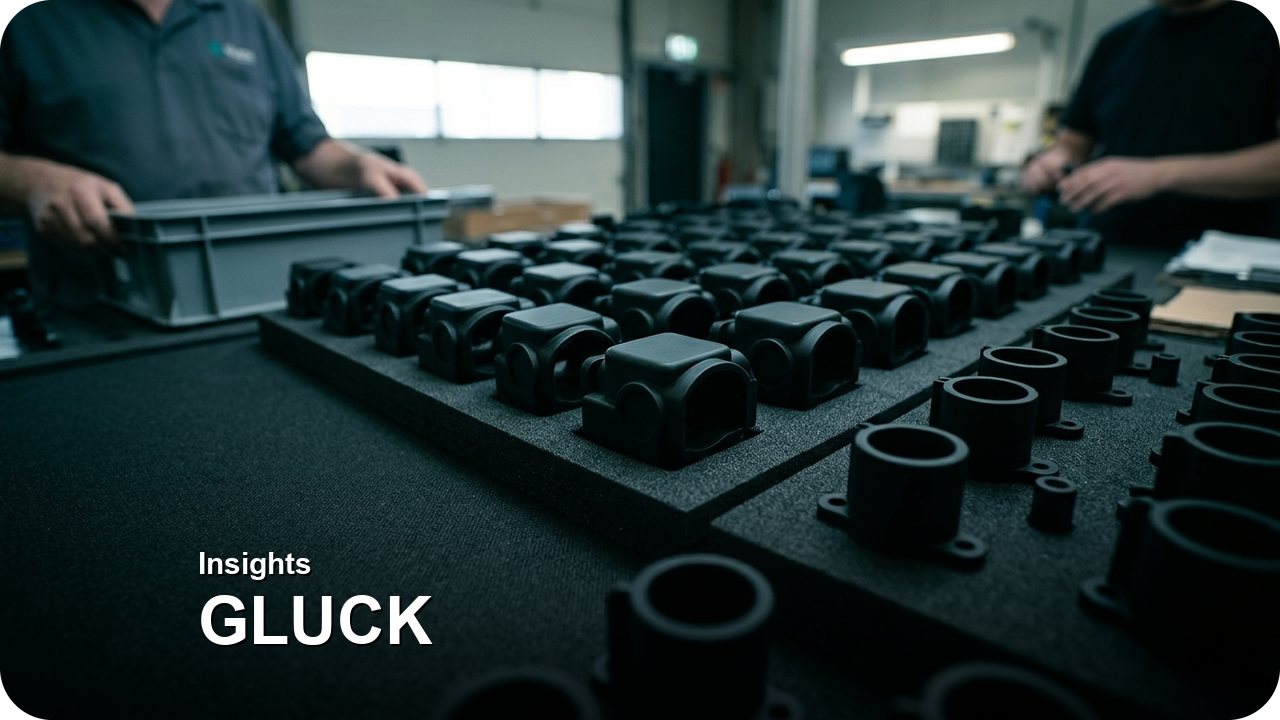
3D프린팅이 빠르다고 말할 때, 대부분은 프린터를 떠올립니다. 절삭이나 금형이라면 몇 주가 걸릴 부품이 빌드 플레이트 위에서 하룻밤 만에 완성됩니다. 맞는 말입니다. 그런데 이것이 이야기의 전부는 아니고, 프로그램이 실제로 시장에 도달하는 속도를 바꾸는 부분도 아닙니다.
현장에서 자주 벌어지는 장면이 있습니다. 출력은 밤새 끝났는데 정작 고객 손에 들어가기까지는 2주가 걸립니다. 그러면 자연스럽게 의문이 생깁니다. 출력이 하룻밤 만에 끝났는데, 리드타임은 대체 어디서 결정되는 걸까요? 답은 프린터 안이 아니라 프린터 바깥, 그러니까 출력 전후의 공정에 있습니다.
이 글에서는 '출력 속도 = 빠른 양산'이라는 흔한 오해를 제조 관점에서 다시 짚어봅니다. 설계검증·후가공·품질관리·생산계획이 실제 납기를 어떻게 좌우하는지, 그리고 왜 리드타임이 단일 부품 속도가 아니라 연결된 제조 환경에서 결정되는지를 정리합니다.
출력은 하룻밤, 납품은 2주 : 진짜 병목은 어디에 있나
3D프린팅의 진짜 강점은 '단일 부품을 얼마나 빨리 만드느냐'가 아닙니다. 멈추거나, 다시 금형을 짜거나, 처음부터 시작하지 않고 프로토타입에서 양산까지 얼마나 끊김 없이 넘어가느냐입니다. 설계가 성숙하고, 수요가 늘고, 요구사항이 바뀌는 동안에도 프로젝트가 계속 굴러가게 하는 생산 전략인 셈입니다.
기존 제조에서 프로토타입에서 양산으로 넘어가는 구간은 프로그램 전체를 멈춰 세우곤 합니다. 설계가 검증되면 일이 잠시 멈추고, 그동안 스틸 금형을 설계하고, 깎고, 샘플을 뽑고, 수정합니다. 사출 성형이라면 이 과정만으로 양산 부품 출하까지 몇 달이 더 붙을 수 있습니다. 금형이 한번 가공되고 나면 설계 변경은 더 복잡하고 비싸집니다.
문제는 두 지점입니다. 첫째, 금형 리드타임이라는 공백: 검증이 끝난 좋은 설계가 있어도 금형이 나오기 전까지는 양산 부품이 한 개도 나오지 않습니다. 이 공백이 수 주에서 수 개월입니다. 둘째, 변경 비용의 급등: 금형을 깎은 뒤 설계를 바꾸려면 금형 수정, 재샘플링, 그리고 수정된 부품을 다시 기다리는 시간이 또 붙습니다.
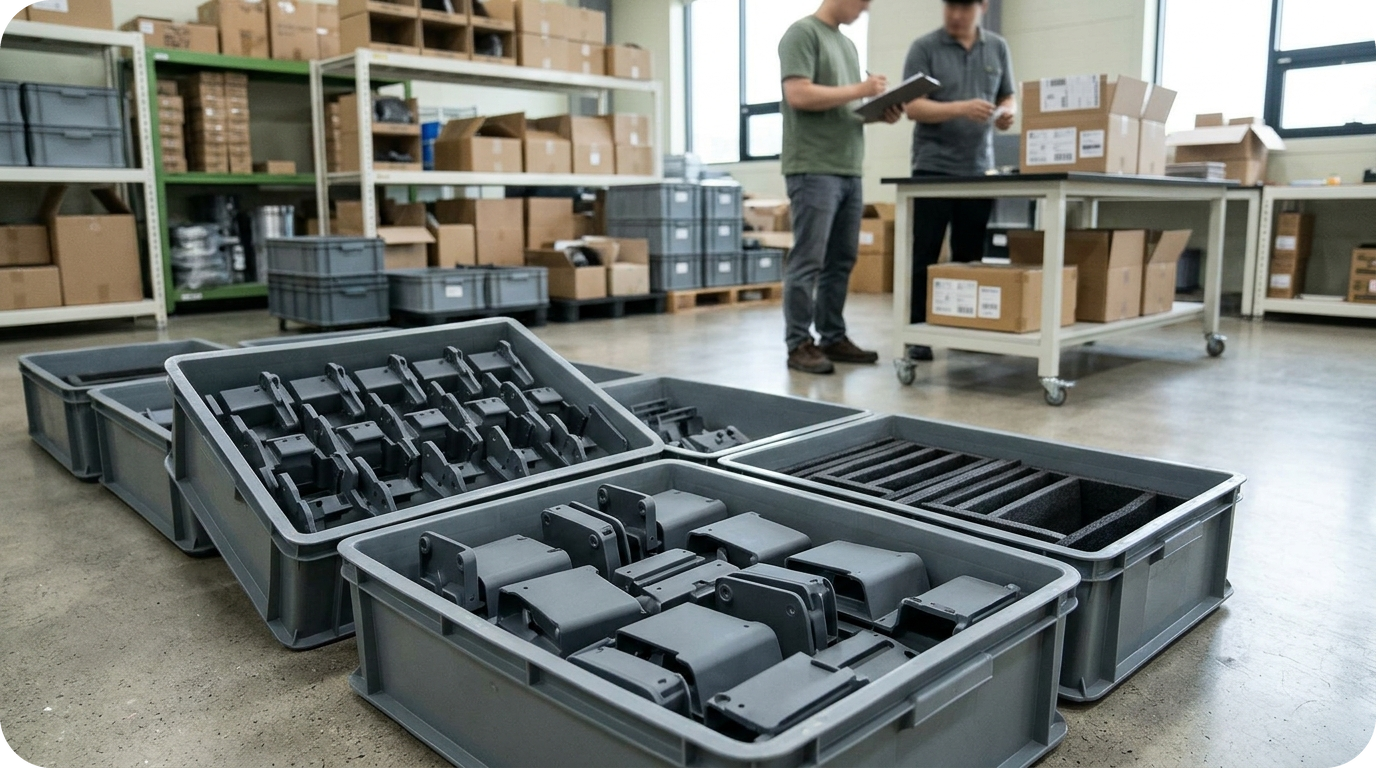
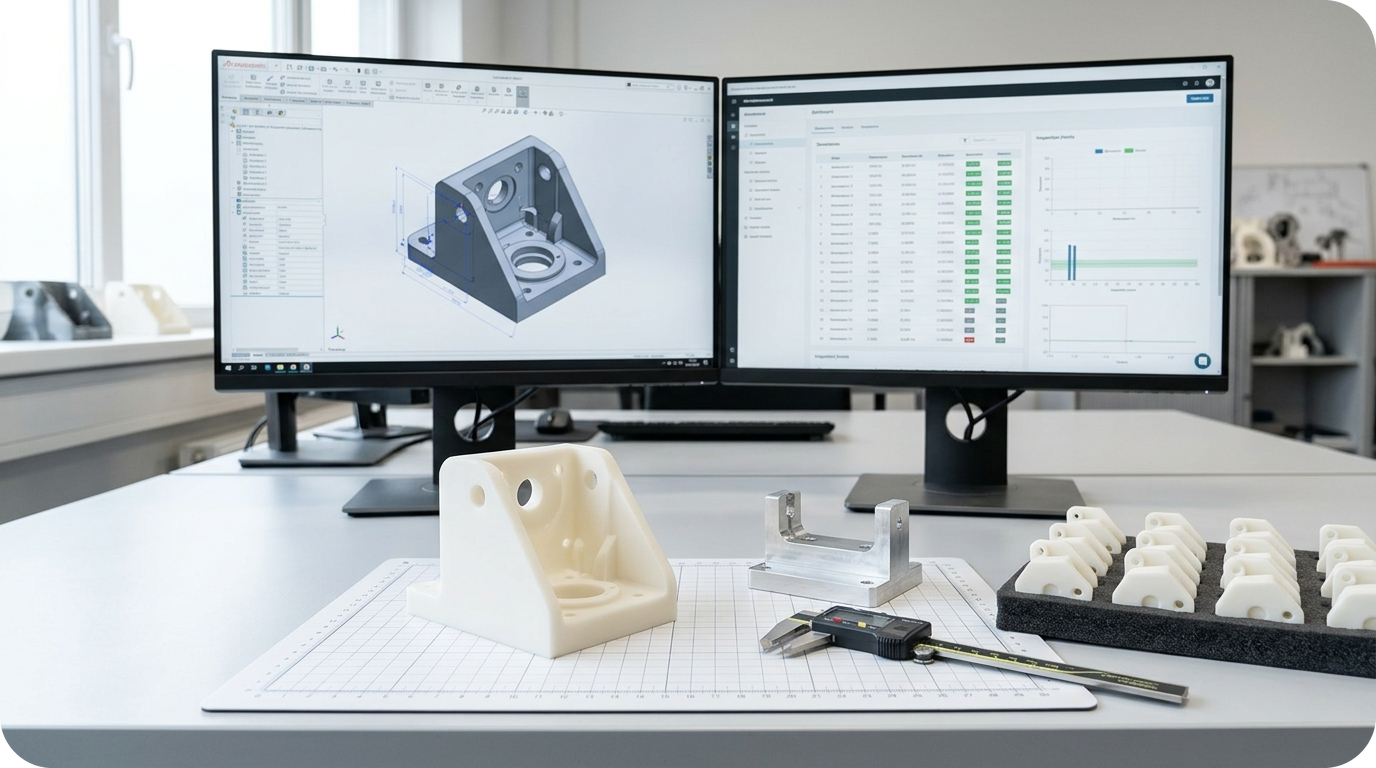
출력 그 자체는 빠릅니다. 하지만 '출력됐다'와 '납품 가능하다' 사이에는 지지 제거, 세척, 후경화, 표면 후가공, 치수 검사, 품질관리 같은 공정이 줄줄이 놓여 있습니다. 세상에서 가장 빠른 프린터를 들여도, 이 사이 공정이 정리돼 있지 않으면 리드타임은 줄지 않습니다.
10개는 빨랐는데 10,000개에서 막히는 이유
프로토타입 물량에서의 속도는 양산이 시작될 때 사라지면 아무 의미가 없습니다. 10개를 빠르게 내주던 공급처가 수요가 수천 개로 뛰는 순간 버거워지는 경우가 많습니다. 설비 용량이 부족하면 백로그가 쌓이고, 공급처를 바꿔야 하거나, 프로그램이 한창 가속해야 할 때 공정을 다시 검증해야 하는 일이 생깁니다.
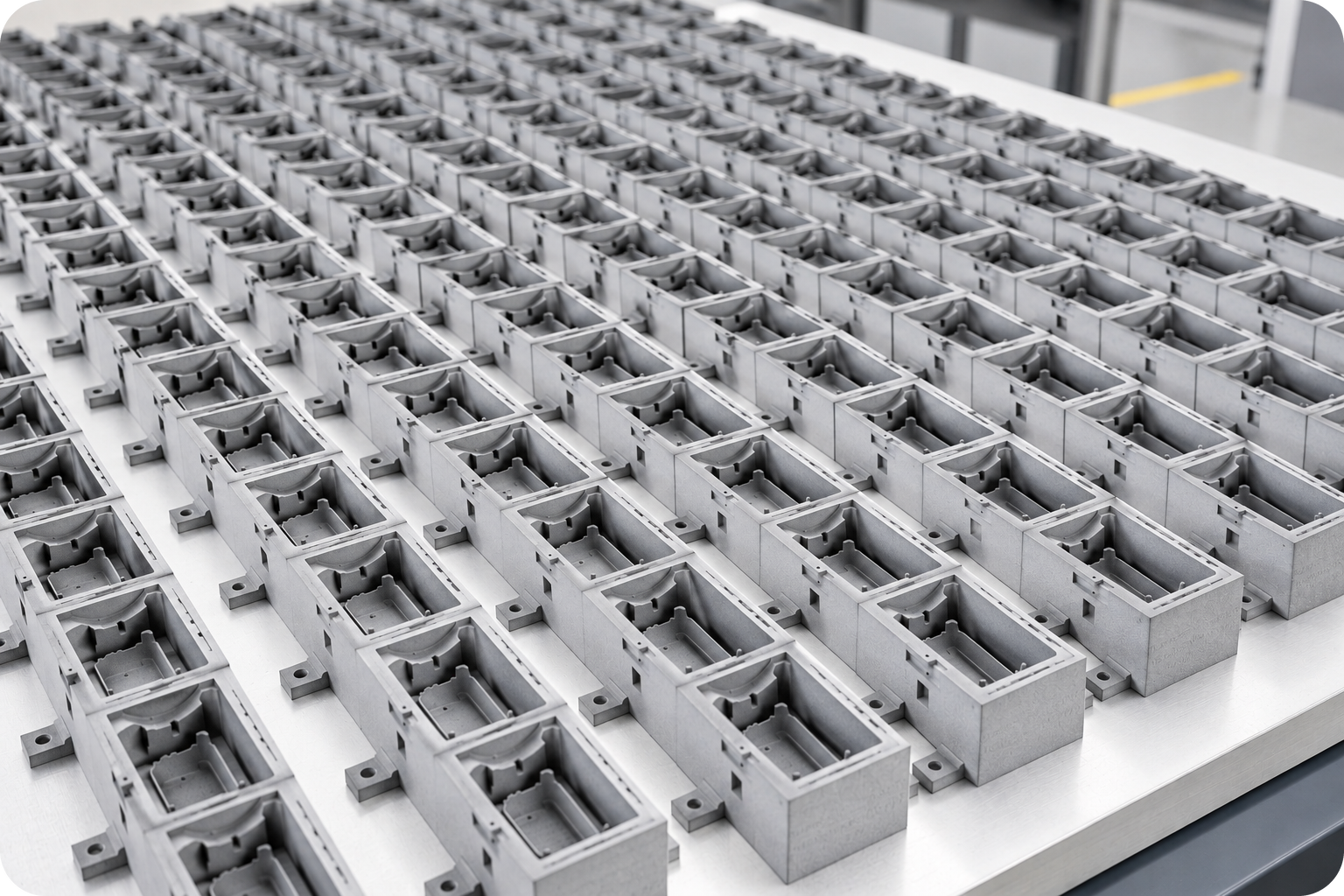
양산으로 규모를 키우는 일은 프린터 몇 대를 더 들이는 것과는 다릅니다. 충분한 용량, 반복 가능한 공정, 효과적인 후가공, 품질관리, 그리고 물량이 늘어도 일정한 출력을 유지하는 생산계획이 함께 갖춰져야 합니다. 이 요소들이 자리 잡혀 있을 때 비로소 같은 제조 방식을 유지한 채 생산을 확장할 수 있습니다.
- 용량의 연속성: 10개든 10,000개든 같은 소재·같은 공정으로 이어져야 백로그와 재검증 없이 수요 급증에 대응할 수 있습니다.
- 반복 가능한 품질: 1번째 부품과 10,000번째 부품의 치수·표면이 같아야 '빠른 양산'이 실제 납기로 연결됩니다.
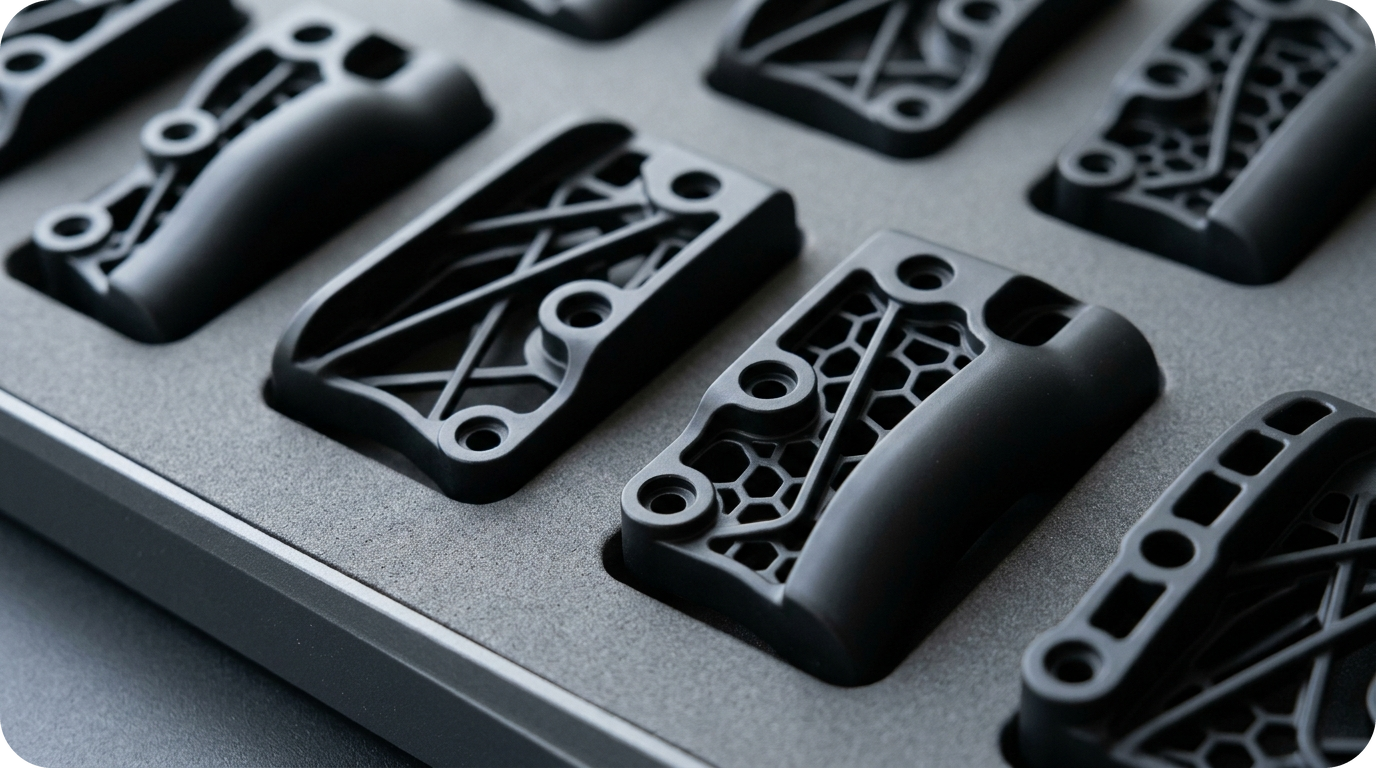
결국 제조사가 일관된 방식을 유지하며 생산을 늘릴 수 있을 때, 고객은 납기 일정에 더 큰 확신을 갖고 수요 변동에도 유연하게 대응할 수 있습니다. 속도는 양산 구간까지 끊기지 않을 때에만 진짜 속도입니다.
설계가 계속 바뀌는데도 라인이 멈추지 않으려면
양산에 도달하면서 설계가 바뀌지 않는 프로그램은 거의 없습니다. 테스트에서 개선점이 드러나고, 현장 조건이 새로운 문제를 드러내며, 사용자 피드백이 설계 수정을 부릅니다. 이런 변경은 양산이 시작된 뒤에도 일어납니다.
금형 기반 환경에서는 작은 설계 변경 하나도 금형 수정, 추가 샘플링, 그리고 수정된 부품을 다시 기다리는 과정을 요구합니다. 변경이 잦을수록 이 비용과 대기 시간은 누적됩니다. 반면 금형 없이 디지털 데이터로 생산하는 방식에서는 변경을 설계 파일에 반영해 다음 빌드로 바로 넘길 수 있습니다.
이 유연성 덕분에 엔지니어링 팀은 제조 전략 전체를 흔들지 않고도 새로운 정보에 대응할 수 있습니다. 설계를 다듬고, 성능 이슈를 손보고, 현장에서 얻은 교훈을 반영하면서도 양산으로 가는 길을 그대로 유지합니다. 방위·무인 시스템처럼 투입 시한이 수년에서 수개월로 압축된 분야에서는, 이 연속성이 제품을 얼마나 빨리 전달하느냐를 결정합니다.
글룩이 리드타임을 압축하는 지점 : 연결된 산업용 SLA 양산
여기까지 보면 리드타임을 줄이는 것은 '더 빠른 프린터'가 아니라 연결된 제조 환경임이 분명해집니다. 프로토타입, 브릿지 생산, 양산이 반복 가능한 공정·충분한 용량·각 단계를 운영하는 역량으로 이어질 때 비로소 일정이 압축됩니다. 이 지점이 바로 글룩이 다루는 영역입니다.
글룩은 산업용 SLA 3D프린터 48기를 365일 24시간 운용하며, 출력뿐 아니라 후가공과 품질관리를 하나의 프로세스로 통합해 운영합니다. '출력됐다'에서 '납품 가능하다'로 넘어가는 그 2주짜리 병목 구간 — 지지 제거, 후경화, 표면 후가공, 치수 검사 — 을 공정 안으로 끌어들여 끊김을 줄이는 구조입니다. 글룩의 산업용 SLA는 300mm 기준 최대 ±0.05mm의 정밀도와 Ra 0.8 수준의 표면조도를 확보하고, 후가공 시 사출품과 구별이 어려운 마감을 구현합니다. 그래서 외장 하우징·커버·브라켓 같은 부품을 복잡한 추가 후가공 없이 최종 부품으로 쓸 수 있습니다.
금형이 없다는 점은 설계 변경에서 특히 큽니다. 글룩은 변경을 디지털 데이터에 반영해 다음 빌드로 바로 넘기므로, 금형 수정·재샘플링 대기가 생기지 않습니다. 10개에서 수천 개로 물량이 뛰어도 같은 소재·같은 공정으로 이어지며, 다양한 산업 분야에서 누적 100만 파트 이상을 제작한 반복 양산 역량이 이 연속성을 뒷받침합니다.
다만 SLA가 모든 경우에 정답은 아닙니다. 수만 개가 완전히 동일한 형상으로, 설계 변경 없이, 고하중 금속 특성이 필요한 경우라면 사출 성형이나 금속 가공이 여전히 유리합니다. SLA의 이점이 뚜렷해지는 쪽은 형상이 복잡하거나, 다품종이거나, 설계 변경이 잦거나, 수요가 불확실한 다품종 중·대량 양산 구간입니다. 수량 하나로 선을 긋기보다 이 조건들을 함께 놓고 판단하는 편이 현실적입니다.
처음의 질문으로 돌아가 봅니다. 출력이 하룻밤 만에 끝났는데 리드타임은 어디서 결정될까요. 답은 프린터의 속도가 아니라 그 앞뒤를 잇는 공정의 연속성에 있습니다. 설계검증에서 후가공, 품질관리, 양산 확장까지 끊기지 않고 이어질 때 2주가 며칠로 줄어듭니다. 리드타임을 짧게 만드는 것은 빠른 한 대의 프린터가 아니라, 각 단계를 하나로 묶어낸 제조 환경입니다.
GLUCK은 반복 생산이 가능한 산업용 SLA 3D프린팅 인프라를 기반으로
제품 개발과 양산 전환 과정에 필요한 3D프린팅 제조 솔루션을 지원하고 있습니다.
지금 글룩을 확인해보세요!
📩 글룩 홈페이지 & 온라인 견적: https://www.glucklab.com
📂 글룩 포트폴리오: 글룩 포트폴리오 확인하기
References
[1] 3DPrint.com, "Speed to Production Isn't About Print Speed. It's About Everything In Between," 3DPrint.com. Link: https://3dprint.com/335456/speed-to-production-isnt-about-print-speed-its-about-everything-in-between/
English Version
Printed Overnight, Delivered in Two Weeks: Where Lead Time Is Really Decided
When people say 3D printing is fast, most of them picture the printer. A part that would take weeks to machine or mold comes off the build plate overnight. That's true, but it isn't the whole story, and it isn't the part of the story that changes how programs actually reach the market.
A scene plays out often on the floor: the printing finished overnight, yet it still takes two weeks to reach the customer. And a natural question follows. The printing was done in a single night, so where is the lead time actually decided? The answer lies not inside the printer but outside it—in the processes before and after printing.
This article revisits the common misconception that "print speed equals fast production," from a manufacturing point of view. We look at how design validation, post-processing, quality control, and production planning actually govern delivery dates, and why lead time is decided by a connected manufacturing environment rather than by a single part's speed.
Printed Overnight, Delivered in Two Weeks: Where the Real Bottleneck Lives
The real advantage of 3D printing isn't how quickly a single part gets made. It's how quickly a program moves from prototype to production without stopping, retooling, or starting over. It is a production strategy that keeps a project moving even as the design matures, demand grows, and requirements change.
In traditional manufacturing, the transition from prototype to production often brings a program to a standstill. Once a design is validated, work may pause while steel tooling is designed, cut, sampled, and corrected. For injection molding, this process alone can add months before production parts are ready to ship. Once tooling is cut, design changes become more complicated and costly.
Two points are the problem. First, the gap of tooling lead time: even with a validated, good design, not a single production part appears until the mold is ready. That gap runs from weeks to months. Second, the surge in change cost: after the mold is cut, altering a design means mold modification, additional sampling, and another wait for updated parts.
Printing itself is fast. But between "it's printed" and "it's ready to ship" lie a chain of steps—support removal, washing, post-curing, surface finishing, dimensional inspection, quality control. Even the fastest printer in the world won't shorten lead time if these in-between processes aren't in order.
Fast at Ten Parts, Stuck at Ten Thousand
Speed at prototype volume means nothing if it disappears when production ramps up. A supplier that quickly delivers ten parts often struggles when demand jumps to thousands. Limited capacity creates backlogs, forces supplier changes, or demands fresh process validation just when a program needs to accelerate.
Scaling into production is not the same as simply adding a few more printers. It takes sufficient capacity, repeatable processes, effective post-processing, quality controls, and production planning that maintains consistent output as volumes grow. Only when these elements are in place can production expand while keeping the same manufacturing approach.
- Continuity of capacity: whether ten parts or ten thousand, the same material and process must carry through, so demand spikes are met without backlogs or re-validation.
- Repeatable quality: the first part and the ten-thousandth part must share the same dimensions and surface for "fast production" to translate into real delivery dates.
When a manufacturer can scale while keeping a consistent approach, customers gain greater confidence in delivery schedules and more flexibility against demand shifts. Speed is only real speed when it doesn't break at the production ramp.
Keeping the Line Running Even as Designs Keep Changing
Few programs reach production without evolving. Testing reveals improvements, field conditions expose new challenges, and operator feedback drives design revisions—even after production begins.
In a tooled environment, even a small design change requires mold modifications, additional sampling, and another wait for updated parts. The more frequent the changes, the more this cost and waiting accumulate. By contrast, in a mold-free workflow driven by digital data, a revision can be incorporated into the design file and carried straight into the next build.
This flexibility lets engineering teams respond to new information without disrupting the entire manufacturing strategy. They refine designs, address performance issues, and incorporate lessons learned while keeping the path to production intact. In sectors like defense and unmanned systems, where fielding timelines have collapsed from years to months, this continuity determines how quickly a product gets delivered.
Where GLUCK Compresses Lead Time: Connected Industrial SLA Production
Seen this far, it becomes clear that what shortens lead time is not a "faster printer" but a connected manufacturing environment. Timelines compress only when prototyping, bridge production, and scaled manufacturing are linked by repeatable processes, sufficient capacity, and the expertise to run each stage. This is exactly the domain GLUCK works in.
GLUCK operates 48 industrial SLA 3D printers around the clock, 365 days a year, integrating not only printing but post-processing and quality control into a single process. That two-week bottleneck between "it's printed" and "it's ready to ship"—support removal, post-curing, surface finishing, dimensional inspection—is pulled into the workflow to reduce the breaks. GLUCK's industrial SLA achieves precision of up to ±0.05mm over 300mm and surface roughness around Ra 0.8, with a finish that is hard to distinguish from injection-molded parts after post-processing. So exterior housings, covers, and brackets can serve as end-use parts without complex additional finishing.
The absence of tooling matters most for design changes. GLUCK reflects a revision in the digital data and carries it straight into the next build, so there is no wait for mold modification or re-sampling. Even when volumes jump from ten parts to thousands, the same material and process carry through, backed by repeatable production experience of over one million parts across diverse industries.
That said, SLA is not the answer in every case. If tens of thousands of fully identical parts are needed, with no design changes and high-load metal properties required, injection molding or metal machining still holds the advantage. SLA's benefits become clear where shapes are complex, product lines are varied, design changes are frequent, or demand is uncertain—in high-mix, mid-to-high-volume production. Rather than drawing a line at a single quantity, it is more realistic to weigh these conditions together.
Back to the opening question. The printing finished overnight, so where is the lead time decided? The answer lies not in the printer's speed but in the continuity of the processes that connect its front and back ends. When design validation, post-processing, quality control, and scaling flow without a break, two weeks shrink to days. What shortens lead time is not one fast printer, but a manufacturing environment that ties every stage into one.
GLUCK supports the 3D printing manufacturing solutions needed across product development and the transition to production, built on an industrial SLA 3D printing infrastructure capable of repeatable production.
Check out GLUCK now!
📩 GLUCK website & online quote: https://www.glucklab.com
📂 GLUCK portfolio: View the GLUCK portfolio
References
[1] 3DPrint.com, "Speed to Production Isn't About Print Speed. It's About Everything In Between," 3DPrint.com. Link: https://3dprint.com/335456/speed-to-production-isnt-about-print-speed-its-about-everything-in-between/
#글룩 #GLUCK #3D프린팅 #산업용3D프린팅 #SLA3D프린팅 #리드타임 #양산 #후가공 #품질관리 #금형없이 #온디맨드 #브릿지생산 #3DPrinting #SLA3DPrinting #AdditiveManufacturing #LeadTime #MassProduction #PostProcessing #BridgeProduction #DfAM
원문 기사 이미지 출처
'인사이트 (Insights)' 카테고리의 다른 글
| 리쇼어링이 만든 건 공장이 아니라 '선택권'입니다 : 기업이 약정보다 유연성에 지갑을 여는 이유 (0) | 2026.10.30 |
|---|---|
| 브랜드 굿즈 1,000개, 금형 없이 만들 수 있는 국내 제조 방법 (0) | 2026.10.29 |
| 얼굴 수십만 개를 찍기 전, 화면에서 색을 먼저 보는 LAIKA의 양산 품질관리 (0) | 2026.10.23 |
| SYZMIK 헤드기어가 받은 5성 안전 등급, 머리 스캔으로 보호장비를 맞춰 만드는 법 (0) | 2026.10.22 |
| 도면이 사라진 선박 프로펠러, 스캔 하나로 60% 빠르게 되살린 방법 (0) | 2026.10.21 |